


Criminal,
Constitutional Law
Jan. 6, 2026
Bail realities and policy fictions: The truth about affordable bail
California's bail system crisis isn't the result of recent reforms--it stems from courts refusing to follow constitutional requirements that have existed since 1849.



Eric H. Schweitzer
Partner
Schweitzer & Davidian APC
Email: lawyericisin@yahoo.com
He is a past president of California Attorneys for Criminal Justice with over 30 years in practice focused on criminal defense in state and federal matters.
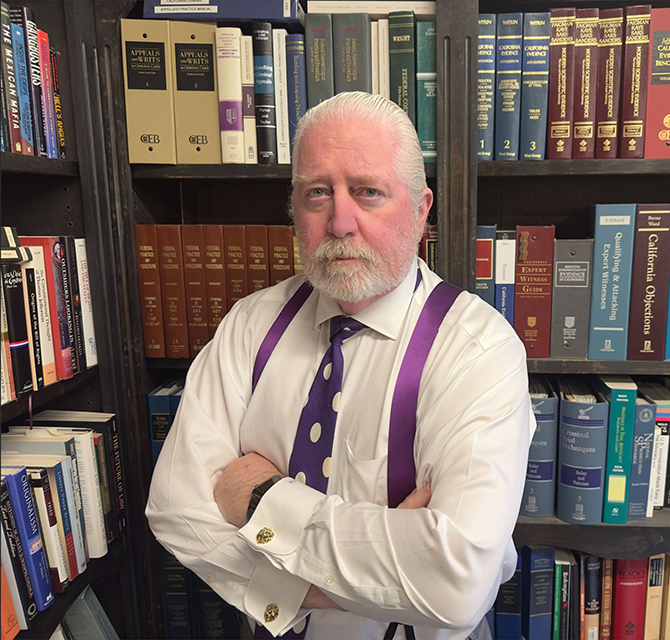
Rick Horowitz
Email: rick@rhdefense.com
Rick Horowitz is a Fresno-based sole practitioner working in criminal defense for almost 20 years. Even as a student, he argued before the 5th District Court of Appeal. A Trial Lawyers College graduate, he writes on Substack and elsewhere about a wide range of topics.

The Daily Journal article of Dec. 29,
2025 ("Policy changes falter as courts resist individualized hearings") by John
Roemer describes a system struggling to implement individualized bail hearings,
constrained by cost, congestion and institutional inertia. What it never
confronts is the more basic truth: California already has a constitutionally
complete, rule-bound system governing pretrial liberty. That system has
existed, in substantially the same form, since 1849. The crisis the article
portrays is not the result of legal uncertainty or reform overreach. It exists
because courts have refused -- for decades -- to follow the Constitution under
which they already operate.
This is not a new debate. Humphrey and
its progeny do not constitute a novel reform or the unintended consequences of
appellate and Supreme Court rulings. From the moment California adopted its
first Constitution, the right to bail has been embedded as a foundational
safeguard of personal liberty. Article I has always
treated pretrial detention as the exception and release as the rule. Judges
were never given broad license to jail people before trial because it was
administratively convenient, fiscally efficient or politically expedient. The
Constitution narrowly circumscribes the circumstances under which a person may
be detained without bail, and it does this deliberately.
That structure has not changed. What has changed is practice.
Over time, California's courts drifted
from a constitutional model that presumes liberty to an operational model that
too often presumes detention. Money bail became a stand-in for individualized
determinations. The result is a system that looks orderly on paper but operates
as a wealth-based detention regime in reality. This
regime incarcerates people by speculating they are dangerous or likely to
flee--a practice courts have repeatedly rejected--and because they are poor.
The Daily Journal article gestures
toward this problem but then treats it as an unfortunate byproduct of
underfunding and crowded dockets. That framing obscures the real issue. The
Constitution does not guarantee expedience. It does not yield to workload. And
it does not become optional because compliance takes time.
Since our first draft of a
Constitution in 1849, Article I, section 12--then grounded in sections 6 and
7--forcefully stated there is a presumptive right to bail. Pretrial detention is
permitted only in a narrow band of cases and only upon specific findings. The
burden rests with the prosecution. The standard is clear and convincing
evidence. And the court must consider whether any condition or combination of
conditions short of detention can reasonably assure public safety and
appearance. This is not aspirational language. It is operative constitutional
law.
When courts ignore those
requirements--by setting unaffordable bail based on perfunctory findings, by
defaulting to pretrial detention because they don't like the allegations
against unconvicted persons, by treating "public safety" as a talisman and the
law as a burden--they are not exercising discretion. They are violating the
Constitution.
In re Humphrey did not exhaustively define every
procedural and evidentiary question that arises in a constitutional bail
determination. The Court described its holding as a "general framework" and
acknowledged that additional questions, including how competing constitutional
provisions interact and what standards govern detention determinations, would
require further development. In re Humphrey 11 Cal.5th 135, 152 &
fn. 7. (2021). Trial courts were on notice from the outset that Humphrey was
the floor, not the ceiling.
That additional structure has since
been supplied. With In re Harris 16 Cal.5th 292 (2024), the Supreme
Court clarified that guilt may not be presumed at any stage of a bail or
detention determination, that the prosecution bears the burden on every
required finding, and that evidentiary shortcuts must still satisfy due process.
Most recently, Nunez-Dosangos v. Superior Court 107 Cal.App.5th 283
(2024) recognized explicitly what had already become apparent: Harris did
not change the law so much as it enforced the implications of Humphrey's framework.
What some courts now describe as an unmanageable procedural burden is, in reality, the predictable consequence of finally being
required to do the constitutional analysis that had long been deferred.
The Daily Journal article to which we
are responding quotes prosecutors who complain that individualized bail
determinations are labor-intensive, expensive and difficult to administer at
scale. That may be true. It is also beside the point. Due process has never
been optional because it is inconvenient. The suggestion that constitutional
safeguards must yield because they require time and resources is not a public
safety argument. It is an argument that due process is too expensive and
therefore should be ignored.
Constitutional compliance should not
require full-blown detention litigation in every case. Pretrial detention is
meant to be rare, and the Constitution assumes that most arraignments will be
resolved quickly through release on affordable bail or non-monetary conditions.
When courts normalize detention, however, they impose immediate and
irreversible costs on the defense, including increased plea pressure before the
state has been required to prove anything at all.
The damage is not merely theoretical.
In many counties, defense counsel must obtain advance clearance to review key
evidence with incarcerated clients. Body-worn camera footage, recorded
interviews, surveillance video and audio evidence that could be reviewed freely
out of custody become logistically difficult or impossible to examine pretrial.
The state gains a tactical advantage not because its case is stronger, but
because the defense's ability to prepare has been artificially constrained.
Public safety is not advanced by a
system that detains people based on their bank balance. High money bail does
not measure risk, only wealth. If wealth determines release, then wealthy
people deemed "dangerous" are released, while poor people deemed "safe" are
detained. That's not public safety. It's economic sorting.
The hypocrisy embedded in this logic
is rarely acknowledged. Prosecutors routinely argue that bail must be set high
to protect the public, while simultaneously defending a system that allows
those with means to purchase their freedom regardless of the asserted risk. If
a person truly presents an unacceptable danger, the Constitution permits
detention--but only after seriously embracing the law so that the required
findings are made and the burden is met. What the
Constitution does not permit is the use of unattainable bail as a workaround
for a judicial preference of pretrial detention.
The article also invokes judicial
discretion as though it were a constitutional virtue unto itself. Discretion,
however, does not exist in a vacuum, but within a structure. Article I does not grant judges unbounded authority to jail people
pretrial based on instinct, habit, or administrative or political pressure. It
grants discretion only within carefully defined constitutional limits--limits
that Humphrey identified, Harris clarified
and subsequent cases have enforced. Discretion is constrained by evidentiary
standards and required findings made on the record. To treat resistance to
those constraints as a reasonable exercise of discretion is to invert the
Constitution's design.
This is where the current posture of
the California Supreme Court matters.
The court is often divided on
questions of criminal procedure. On bail, it is not. Across cases and across
years, the court has spoken with remarkable consistency: liberty is the norm,
detention is the exception and money cannot be used as a substitute for
constitutionally required findings. That consistency matters because it
directly contradicts the suggestion that trial courts are navigating unsettled
law.
The Supreme Court's decision to grant
review in In re Kowalczyk 85 Cal.App.5th
667 (2022) underscores the point. The court asked two narrow and revealing
questions: which provision of Article I governs the denial of bail in
noncapital cases, and whether a court may ever set bail above an arrestee's
ability to pay.
The Court of Appeal in Kowalczyk attempted
to reconcile Article I, sections 12 and 28 in a way that risks normalizing
unaffordable bail. The Supreme Court's grant of review suggests discomfort with
that result. The court has not yet issued a final opinion, and it may yet
refine its reasoning. But in light of the court's bail
jurisprudence over the last decade, there is little reason to believe it will
endorse a regime that permits detention by pricing freedom out of existence.
This is why habeas litigation remains
necessary and why defense counsel must continue to utilize it whenever trial
courts balk at the default. As a reminder: "liberty is the norm, and detention
prior to trial...is the carefully limited exception." Yedinak v. Superior
Court 92 Cal.App.5th 876, 881 (2023). These are not ceremonial words to be
intoned by priests in robes waving incense to smoke up the room just before an
order of pretrial detention. And habeas is not an innovation; it is a
constitutional safety valve designed precisely for moments when courts refuse
to enforce the limits placed upon them. The fact that defense lawyers must
repeatedly resort to habeas petitions to secure compliance with settled
constitutional law is not evidence that the law is unclear. It is evidence that
the law is being ignored.
The constitutional problem has never
been the existence of bail. It is the routine use of unaffordable bail as a
substitute for detention without due process as cabined by the Constitution and
the individualized findings the Constitution requires.
In re Humphrey and similar cases did not invent new
rights. They reminded us of established ones. Humphrey did not announce
a new policy preference; it reaffirmed an original constitutional command.
Courts that treat it as aspirational rather than binding are not exercising
restraint. They are engaging in defiance.
Those of us who have practiced
criminal defense long enough have watched this drift happen in real time. We
have seen bail hearings reduced to rote exercises, clients jailed for days or
weeks because a schedule said so, and constitutional inquiries deferred
indefinitely.
And yes, we get it. As former CDAA
president and Yolo County District Attorney Jeffery W. Reisig noted, due
process is expensive. It should be. Taking away someone's liberty should not be
easy for the state. Pretrial detention makes plea agreements easier to wrench
from accused people. It does nothing to protect the public from people who are
going to be released on probation once those pleas have been forced from them.
We have also seen what happens when
courts are required to follow the rules. People are released. Families remain
intact. Jobs are preserved. Court appearances are made. Public safety is not
compromised.
And real opportunities for people--more
of whom are falsely accused or overcharged than most people realize--to force
the state to prove its accusations beyond a reasonable doubt able to work
within the system, rather than being smothered into submission by it.
The Constitution already struck the
balance long before modern bail schedules, commercial surety industries or
overcrowded arraignment calendars entered the picture.
The Daily Journal article asks readers
to sympathize with a system under strain. What it should ask instead is why
that system continues to resist a constitutional framework that has been in
place for more than a century and a half to protect the rights of the People.
The CDAA should remember and embrace this. But when we say
"The People of the State of California vs John Doe" it's easy to forget that
John Doe is a person: one of "the People." The problem is not that California
lacks guidance. It is that too many actors within the system have grown
accustomed to operating without it.
No. This is not a call for reform. Humphrey
and its progeny do not call for reform. This is a call for compliance with a
law written into our Constitution even before California became a state.
Until courts treat Article I, section
12 as binding law rather than background noise, the "crisis" will persist--not
because the Constitution failed, but because the institutions sworn to uphold
it don't.
Submit your own column for publication to Diana Bosetti
For reprint rights or to order a copy of your photo:
Email
Jeremy_Ellis@dailyjournal.com
for prices.
Direct dial: 213-229-5424
Send a letter to the editor:
Email: letters@dailyjournal.com