


Administrative/Regulatory
Jan. 7, 2026
Iran's lessons for US oil policy in post-Maduro Venezuela
Britain's control of Iran's oil industry in the 20th century was technically successful but politically catastrophic. The lessons from that failure offer crucial insights for anyone considering U.S. engagement in Venezuela's oil sector today.



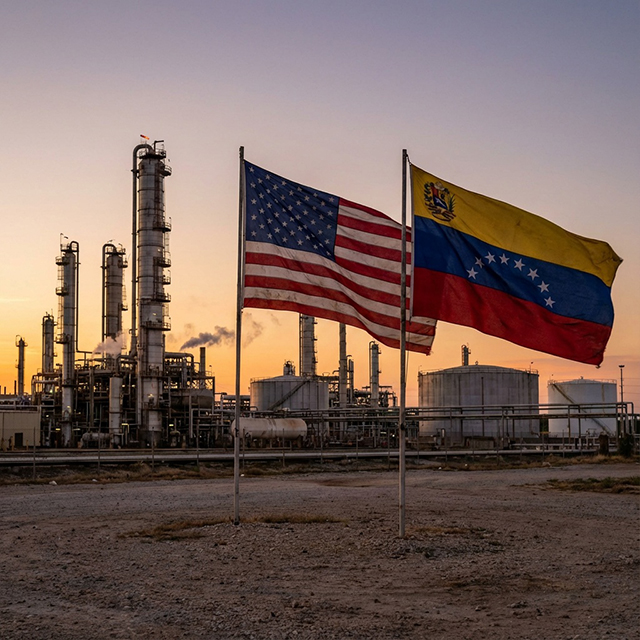
Recent statements suggesting that the United States could
"go into Venezuela to help it drill oil" have been framed largely as questions
of technical capacity and economic efficiency. Whether such engagement is wise
as a matter of energy or foreign policy is a legitimate debate--but it is not
the one addressed here.
This piece takes no position on whether the United States
should engage in Venezuela's oil sector. Instead, it asks a narrower and more
practical question: if the United States chooses to support or permit such
engagement, how should it be structured to avoid a historically proven
failure--one that destabilized an entire region and continues to shape global
politics today.
We have been here before. The precedent is Iran.
A cautionary history
In the first half of the 20th century, Britain dominated
Iran's oil industry through the Anglo-Iranian Oil Company, the predecessor to
BP. The arrangement was technically successful. Oil flowed. Revenues were
generated. The company operated what became the largest refinery in the world
at Abadan.
But the structure of the relationship mattered more than
its output.
Britain controlled production, pricing and accounting.
Iran received royalties but had no audit rights and no meaningful role in
management. By the late 1940s, the company was paying more in taxes to the
British government than it was paying to Iran for oil extracted entirely from
Iranian territory.
This imbalance was not merely economic; it was political.
Iranian leaders did not object to foreign participation as such. They objected
to exclusion from sovereignty over their most valuable national resource.
That objection became explosive when Britain refused to
renegotiate the arrangement--even as other oil-producing countries were securing
fairer terms, including 50/50 profit-sharing agreements with U.S. companies.
Iran's elected prime minister, Mohammad Mossadegh, responded by nationalizing
the oil industry in 1951, framing the move as a lawful assertion of sovereignty
rather than ideological hostility to foreign investment.
Britain's response--an embargo, international litigation
and diplomatic pressure--failed to restore legitimacy. Instead, it hardened
Iranian public opinion and turned oil into a symbol of national humiliation.
Labor conditions were not a side issue
One of the most underestimated aspects of the Iranian
experience was labor.
At Abadan, British employees lived in segregated compounds
with electricity, clean water, medical care and recreational facilities.
Iranian workers often lived in overcrowded settlements without sanitation,
earned a fraction of British wages and were excluded from skilled and
managerial positions.
These conditions were visible, daily and politically
potent. Labor disputes became nationalist protests. Oil was no longer just a
commodity; it was a lived experience of inequality.
This matters because policymakers often treat labor
conditions as secondary to production targets. History suggests the opposite.
Worker dignity is political infrastructure. When it is absent, resentment fills
the gap.
The illusion of a short-term fix
In 1953, the United States and Britain orchestrated a
covert operation that removed Mossadegh and restored the Shah to power. Oil
production resumed. Western companies returned under a consortium arrangement.
On paper, the crisis was resolved.
In reality, the damage had been done.
The coup discredited constitutional politics and secular
nationalism in Iran. It taught a generation that lawful reform could be undone
by foreign power. Over time, opposition movements shifted away from moderate,
legal frameworks toward religious and populist ones that framed resistance in
moral and civilizational terms.
Oil revenues increased dramatically in later decades,
especially during the 1970s boom. But political legitimacy did not. The memory
of foreign domination, unequal control and lost sovereignty remained central to
public consciousness.
When the Islamic Revolution came in 1979, it was not
driven solely by religion or economics. It was also the culmination of a long
narrative in which oil symbolized exploitation, external manipulation and the
failure of Western-backed modernization to deliver dignity or justice.
The consequences did not stop at Iran's borders. They
reshaped regional politics and U.S. relations with the Middle East for
generations.
Why this matters for Venezuela
Venezuela's oil industry is nationalized and controlled by
PDVSA. Its production decline reflects sanctions, underinvestment and
institutional decay--not a lack of resources or technical potential.
Rhetoric suggesting that Venezuela "does not know how to
drill" echoes the language once used to justify foreign control in Iran. That
language is not merely impolitic; it is strategically dangerous. It frames
engagement as rescue rather than partnership and invites nationalist backlash.
History suggests a clear pattern: oil arrangements
perceived as coercive or inequitable may succeed briefly, but they rarely
survive political change. They are reversed through expropriation, contract
repudiation or regime change--and often at significant geopolitical cost.
The real lesson
The lesson of Iran is not that foreign engagement in oil
sectors is inherently illegitimate. It is that the manner of engagement is
outcome-determinative.
Arrangements that maximize control while minimizing
transparency, participation and worker dignity tend to transform commercial
relationships into political symbols. Once that happens, efficiency no longer
matters. Oil becomes a rallying point, not a revenue stream.
For U.S. decision-makers, the takeaways are pragmatic
rather than moral:
• Deals perceived as unfair are unstable
• Agreements signed under pressure are remembered as
coercion
• Labor practices are not operational details; they are
legitimacy signals
• Rhetoric implying incapacity can undo technical success
• Most importantly, short-term leverage often produces
long-term loss
A narrow, practical conclusion
This analysis does not argue for or against U.S.
involvement in Venezuela's oil sector. It argues that if such involvement
occurs, it must be structured with an awareness of historical failure modes
that are well documented and costly.
Britain's experience in Iran shows that oil policy can
destabilize not only a country, but an entire region--when control is pursued
without fairness, and efficiency without legitimacy.
That is not ideology. It is history.
Submit your own column for publication to Diana Bosetti
For reprint rights or to order a copy of your photo:
Email
Jeremy_Ellis@dailyjournal.com
for prices.
Direct dial: 213-229-5424
Send a letter to the editor:
Email: letters@dailyjournal.com