


Administrative/Regulatory
Jan. 8, 2026
What California's plastic bag ban reveals about regulating waste by material type
California's 2026 carryout bag law closes the thick plastic loophole but still relies on outdated material categories instead of lifecycle performance metrics to guide sustainable packaging policy.


Roberto Escobar
Roberto "Bobby" Escobar is general counsel, and an environmental and labor and immigration advisor.
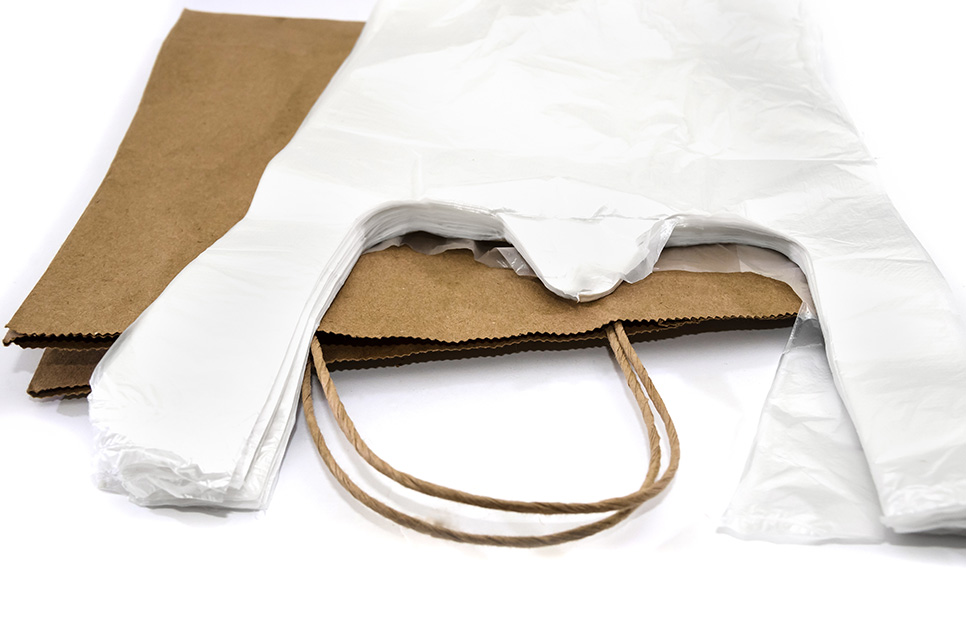
California's 2026 carryout bag reform eliminates plastic
checkout carryout bags at covered grocery and retail stores statewide and makes
recycled paper carryout bags, sold for a minimum charge of 10 cents, the
default single-use option at the point of sale. The law decisively closes the
"thick plastic" loophole that followed SB 270, but it continues to regulate
primarily by material category rather than by quantified lifecycle performance
metrics such as carbon intensity, water use or land-use impacts.
From thin plastic to paper
California's statewide carryout bag regime began with SB
270, which prohibited most single-use plastic carryout bags and required
covered stores to sell either recycled paper bags or certified "reusable"
plastic film bags for at least 10 cents. That framework, later ratified by
voters, defined "reusable" largely through thickness and durability criteria
rather than demonstrated reuse.
Retailer and consumer behavior under SB 270 was
predictable. Stores rapidly replaced ultra-thin plastic bags with thicker
plastic film bags that met statutory "reusable" standards but were often
discarded after a single use. Consumers paid the fee, used the bag once and
disposed of it. In many cases, total plastic resin use increased because each
thicker bag contained substantially more material than the bags it replaced.
SB 1053 represents a direct response to this substitution
failure. Effective Jan. 1, covered stores including supermarkets, large
retailers with pharmacies, liquor stores and many convenience outlets, may no
longer provide any plastic film carryout bags at checkout, regardless of
thickness or claimed reusability, and instead must rely on compliant non-plastic
options. At the point of sale, these stores may provide only recycled paper
carryout bags and must charge at least 10 cents per bag. Beginning Jan. 1,
2028, those paper bags must contain at least 50% postconsumer recycled content,
firmly entrenching paper as the default single-use checkout substrate.
CalRecycle now treats the SB 270 program
structure as archived, with SB 1053 and its implementing guidance governing
carryout bag requirements beginning Jan. 1, 2026. SB 1053 governs carryout bag
requirements going forward.
Material-proxy design
CalRecycle's implementation guidance makes
clear that the 2026 regime is categorical rather than performance based.
Certain materials may appear at checkout, and others may not. Compliance is
achieved by offering qualifying recycled paper carryout bags and refraining
from distributing plastic carryout bags of any kind. It is not tied to
demonstrated reuse rates, verified recyclability or lifecycle-impact
thresholds.
This design choice is as notable for what it omits as for
what it mandates. The statute does not require that paper bags, or any other
permitted option, meet benchmarks for greenhouse gas emissions, water use or
land-use change. Nor does it establish a framework for comparing the
environmental impacts of paper, plastic, textiles or emerging bio-based
materials used in reusable designs.
Instead, California continues a familiar regulatory
approach: using visible materials at checkout as proxies for environmental
harm. The regulatory focus remains on what consumers see and hold, rather than
on upstream extraction, processing and downstream disposal where many of the
most significant environmental impacts occur.
Material substitution and lifecycle blind spots
Experience under SB 270 demonstrates the risks of
regulating by material proxy rather than by outcome. After the first-generation
ban took effect, thicker "reusable" plastic bags increased plastic consumption
in some contexts because they required more resin while reuse behavior remained
largely unchanged.
The 2026 expansion seeks to sever the link between grocery
transactions and plastic carryout packaging by eliminating plastic film at
checkout entirely. Yet in doing so, the law redirects demand toward wood-based
recycled paper bags as the sole permissible checkout carryout option.
Paper production is energy- and water-intensive, relies on
chemical pulping processes, and implicates forestry practices with significant
land-use, carbon and biodiversity consequences that vary widely across supply
chains. Even with recycled-content mandates, increased paper demand can place
pressure on virgin fiber markets, particularly during periods of pulp scarcity
or price volatility.
Plastic reduction at checkout therefore does not
automatically equate to environmental harm reduction. Without lifecycle-based
metrics for carbon emissions, water use or land conversion, the law regulates
what consumers see at the register rather than the environmental burdens
embedded in each bag.
Compostables and pre-checkout complexity
Certified compostable bags retain a limited role in
California's framework, but not as checkout carryout bags. Instead, they appear
primarily in pre-checkout contexts, such as bags used to contain loose produce
or prevent contamination of other items, subject to separate statutory
standards.
Most compostable plastics, including those made from
polylactic acid or starch-based polymers, require high-temperature industrial
composting facilities to break down as advertised. In jurisdictions lacking
such infrastructure, these materials may persist in landfills, generate methane
under anaerobic conditions, or contaminate recycling streams.
The continued presence of compostables elsewhere in the
retail environment underscores a broader regulatory challenge: material
substitution without infrastructure alignment. Compostable labeling may signal
environmental benefit to consumers even where real-world disposal conditions
prevent those benefits from materializing.
Small business compliance burdens
SB 1053 applies uniformly across covered stores rather
than scaling obligations by revenue, transaction volume or floor area. As a
result, small retailers may face disproportionate compliance costs compared
with larger chains that enjoy greater purchasing power and supply-chain
leverage.
For corner stores and small-format retailers, shifting
from low-cost plastic to compliant paper bags can significantly increase
per-transaction costs, particularly as pulp price volatility, transportation
expenses and certification premiums are passed through by suppliers.
The enforcement structure compounds these pressures. The
statute authorizes civil liability of $1,000 per day for a first violation,
$2,000 per day for a second violation and $5,000 per day for third and
subsequent violations. These penalties are not calibrated to a retailer's
environmental footprint or economic capacity and bear little relationship to
actual environmental harm.
The absence of phased-in compliance, de minimis thresholds
or tailored safe harbors raises concerns about proportionality and economic
equity. Small businesses risk becoming the financing mechanism for a highly
visible but imperfectly targeted waste-reduction strategy, even though their
individual contribution to statewide plastic pollution is minimal.
Bioplastics, labeling and green marketing risks
California law restricts unqualified "biodegradable" and
"compostable" claims unless products meet specific standards, reflecting
longstanding concerns that many such items fail to degrade under real-world
conditions. Nonetheless, compliance guides and local programs often present
certified compostables as environmentally preferable options in certain
contexts.
This disconnect between marketing
signals and actual end-of-life conditions creates classic greenwashing risks.
Consumers may infer that compostable bags are environmentally benign, even
where local jurisdictions lack industrial composting infrastructure capable of
processing them at scale. Misplaced disposal behavior can contaminate recycling
streams and reinforce a "single-use but guilt-free" mindset that undermines
broader waste-reduction goals.
Alternative policy architectures
Other jurisdictions and policy advocates are increasingly
exploring performance-oriented approaches that regulate outcomes rather than
specifying materials. Reuse mandates can require that any bag provided at
checkout meet durability standards and be designed for a minimum number of
uses, with compliance tied to observed reuse behavior through audits or
retailer reporting.
Economic instruments can complement these approaches.
Deposit-return systems for durable bags, weight-based or carbon-adjusted bag
fees, and extended producer responsibility mechanisms move policy closer to
internalizing environmental costs rather than shifting them across materials.
Toward outcome-oriented reform
A more coherent next generation of California bag
regulation would shift statutory focus from materials to metrics such as reuse,
carbon intensity and water footprint. Legislators could require lifecycle
analysis as a condition for approving any carryout bag eligible for checkout,
embedding performance standards into CalRecycle's
regulatory authority and guidance.
Public lifecycle disclosures through labeling, retailer reporting or centralized databases could illuminate
trade-offs among plastic, paper, textiles and bio-based alternatives.
Small-business safe harbors calibrated to volume, revenue or hardship could
allow phased implementation, reduced penalties or pooled purchasing without
undermining environmental objectives.
Regulating outcomes, not optics
California's 2026 plastic checkout bag ban represents a
politically powerful response to plastic pollution and decisively closes the
loophole created by thick plastic "reusable" bags. Yet its legal design
continues to regulate waste primarily by material proxy, privileging visible
change at the checkout counter over measurable lifecycle outcomes.
Unless paired with reuse-centered mandates,
lifecycle-based performance standards, and calibrated compliance pathways for
small businesses, the policy risks exchanging visible plastic litter and marine
debris for a less visible suite of climate, water and land-use impacts embedded
in paper and other substitutes. The disappearance of plastic bags from
checkouts will matter most if future reforms reward genuine reuse and penalize
lifecycle harm, rather than simply steering consumers from one material category
to another.
Submit your own column for publication to Diana Bosetti
For reprint rights or to order a copy of your photo:
Email
Jeremy_Ellis@dailyjournal.com
for prices.
Direct dial: 213-229-5424
Send a letter to the editor:
Email: letters@dailyjournal.com