


9th U.S. Circuit Court of Appeals
Dec. 10, 2025
Judge Tung makes early mark on 9th Circuit with solo dissent, statement
While most new 9th Circuit judges remain quiet for months, Judge Eric C. Tung has already issued a dissent and statement in politically charged cases, aligning with the Trump administration on presidential authority and challenging a colleague's constitutional analysis.


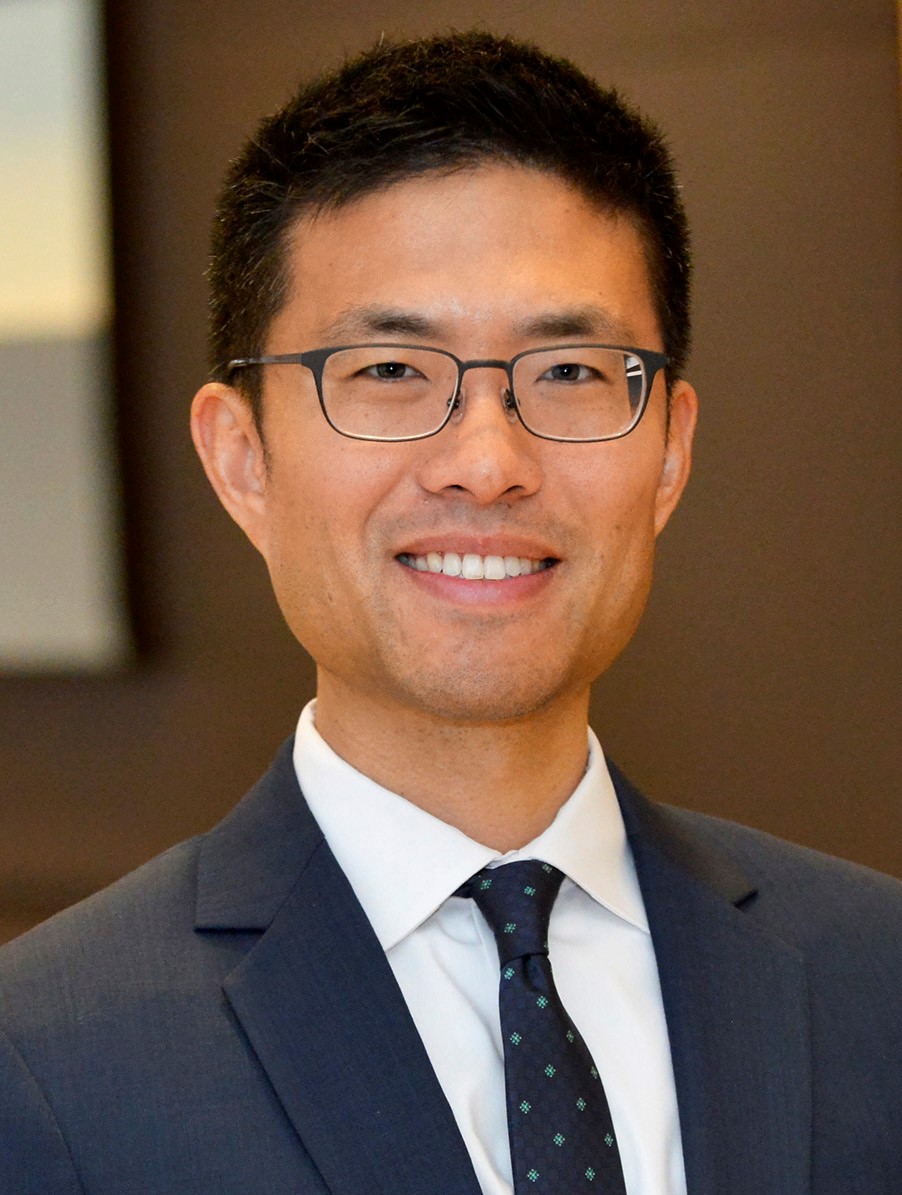
Less than a month after he was sworn in, 9th U.S. Circuit Court of Appeals Judge Eric C. Tung is already making a splash on the court, writing a solo dissent in a transgender rights case and a solo statement supporting President Donald Trump's right to deploy National Guard troops to Portland.
In the latter case, he opined Monday to oppose a statement by Senior 9th Circuit Judge Jay S. Bybee, who argued that the appellate court should consider a provision in the U.S. Constitution in a case involving Trump's federalization of state National Guards.
Tung's statement in the case, which had been accepted for rehearing en banc more than two weeks before he was sworn in as a 9th Circuit judge on Nov. 12, followed a separate dissent he filed Friday.
"I'm quite confident that in modern times that no judge has jumped in this quickly," Arthur D. Hellman, professor emeritus at the University of Pittsburgh School of Law, said in a phone interview Tuesday.
Judges who are new to the 9th Circuit are rarely heard from until months after they take office, in part because they are not assigned to panel hearings until then, he added.
But Tung has not waited, wading into the legal battle over deployment of National Guards in cities even if governors object.
The 9th Circuit voted Oct. 28 to vacate a three-judge panel decision that stayed an Oregon district judge's order. That order granted a temporary restraining order enjoining the president's order to federalize members of the Oregon National Guard. The court will rehear the case en banc.
Bybee, an appointee of President George W. Bush who was not on the three-judge panel, weighed in with a 64-page statement arguing that the en banc panel should consider a provision in the U.S. Constitution that he says limits federal military intervention in state affairs.
"States are not only owed protection by the federal government, they are owed protection from it," Bybee wrote. "Although long overlooked, the Domestic Violence Clause plays a central role in constraining the federal government's power under the Militia Clause."
Tung, however, argued that the president doesn't need the states' permission to send the National Guard and that judges should not get involved either.
"Allowing a judge to second-guess a presidential determination of exigency -- while superimposing an entire fact-finding and adjudicatory process -- would undermine the 'nature of the power' to meet the exigency and eviscerate the 'prompt[ness]' with which Congress authorized the President to act in calling forth the militia," he wrote. "Nothing in our constitutional order requires that result."
Tung pointedly dismissed Bybee's constitutional argument. "Judge Bybee's work (mountainous as it is) does nothing to refute that principle -- his is, in the end, a great labor producing a mouse," he wrote. State of Oregon v. Trump, 2025 DJDAR 11175 (9th Circ., filed Oct. 5, 2025).
It has become more common for new judges and justices, especially those on the minority of a court, to weigh in quickly and forcefully to disagree with the majority.
U.S. Supreme Court Justice Ketanji Brown Jackson, an appointee of President Joe Biden who joined the court in June 2022, issued her first solo dissent 4 1/2 months later in a death penalty case and has followed up with a number of pointed dissents, sometimes solo, blasting the rationale of the Republican-appointed majority.
9th Circuit Judge Jennifer Sung, a Biden appointee who like Tung had never been a judge before joining the 9th Circuit, first issued a solo dissent in January 2023, about five months after she joined the court.
9th Circuit Judges Lawrence VanDyke and Patrick J. Bumatay, two justices who were appointed by Trump and are frequent dissenters on the appellate court, did not file a dissent for 10 months.
They joined Tung's dissent from the panel's decision to deny en banc rehearing of a challenge to Washington state laws that allow operators of emergency shelters to notify state authorities, rather than parents, when children seek refuge as they pursue gender-affirming care and support services.
The court majority ruled that a nonprofit and parents lacked legal standing to sue. VanDyke and Bumatay wrote a dissent, but Tung also wrote his own.
"It is difficult to see how these parents, who allege that they cannot raise their children as they see fit because of Washington's regulatory scheme, have not been harmed in a manner sufficient to confer standing," he wrote. International Partners for Ethical Care Inc. et al. v. Ferguson et al., 2025 DJDAR 11099 (9th Circ., filed June 11, 2024).
Craig Anderson
craig_anderson@dailyjournal.com
For reprint rights or to order a copy of your photo:
Email
Jeremy_Ellis@dailyjournal.com
for prices.
Direct dial: 213-229-5424
Send a letter to the editor:
Email: letters@dailyjournal.com