

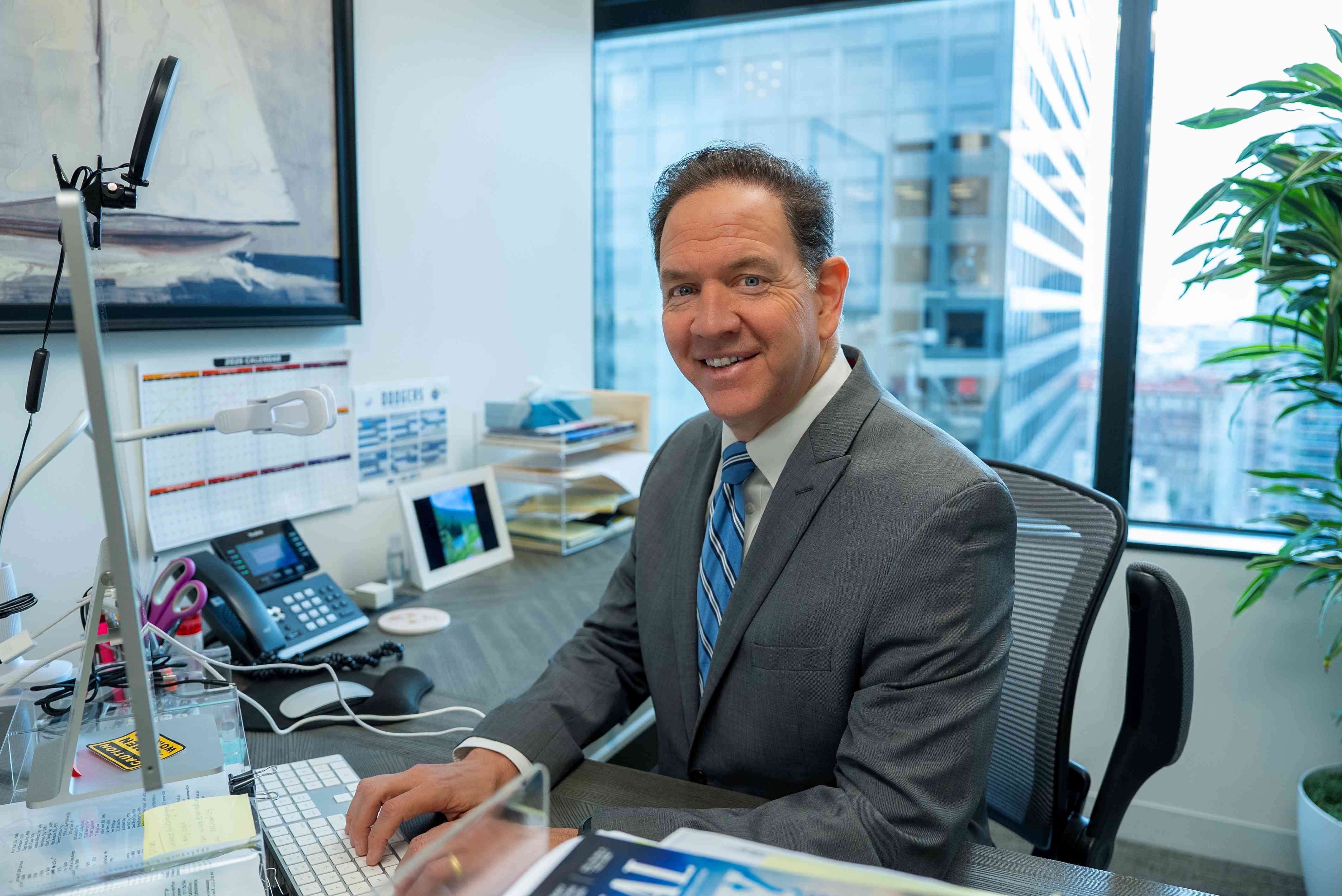
Career Highlights: Over the course of his career, Jack Schaedel has represented and advised both employees and employers in high-stakes litigation while also mediating cases through the LA Superior Court. He founded and chaired the Labor & Employment Section of the Pasadena Bar Association and serves on the Executive Committee of the Labor & Employment Section of the Los Angeles County Bar Association.
Law School: UCLA Law School
Alternative Resolution Centers
Employment
Longtime employment litigator Jack Schaedel was just 17 when he mediated his first dispute.
"It was small claims stuff," Schaedel recalled of his work at a community mediation center in Suffolk County, New York. "It was two neighbors or just two people who were in some kind of dispute, who were having an argument and couldn't resolve it. And rather than go to small claims court, they would be diverted to us."
Growing up on Long Island, Schaedel also learned about negotiation from his father, a teacher and union representative who frequently discussed collective bargaining and grievance disputes.
"And I just realized every human interaction requires some kind of mediation," Schaedel said. "There's always a discussion. There's always a negotiation."
A 1995 UCLA School of Law graduate, Schaedel spent nearly three decades litigating employment disputes for plaintiffs and defendants before becoming a full-time private neutral in 2023. He now mediates employment cases with Alternative Resolution Centers (ARC) and arbitrates disputes for the American Arbitration Association.
Although he enjoys the intellectual challenge of arbitration, Schaedel said mediation accounts for most of his work. And he approaches each employment dispute as two distinct cases.
"There's the legal case, which is what the lawyers highlight when they're talking about causes of action they're bringing and the amount of money they're demanding, and then on the other side, the defenses they're asserting," he explained. "But there's also a very human case involved in any employment dispute."
That second case, he said, often determines whether the first can be resolved.
"The human case is usually about identity, dignity, fairness, respect, reputation and sometimes feelings of betrayal, feelings of loyalty," Schaedel said. "Those are sentiments or passions or motivations that can't really be reduced to a number, but they need to be addressed."
Before each mediation, Schaedel speaks with counsel to assess the legal arguments and better understand the emotions driving the dispute.
"I'm asking each lawyer, 'What is it your client really feels or needs that you haven't been able to articulate in the brief?'" he said. "Because if people feel like they haven't gotten that out yet, it's hard to focus on just getting down to business."
Los Angeles plaintiffs' attorney Chantal M. Payton, who used Schaedel six months ago to resolve an employment discrimination case, praised his preparation, persistence and ability to engage directly with her client.
"He's likable from the plaintiff's standpoint," Payton said. "And he can see both sides in that we can have a very frank discussion about the key issues and the strengths and weaknesses in the case."
Unlike mediators who appear to favor one side, she said, Schaedel listens carefully to competing positions and offers candid assessments without becoming confrontational.
"I felt like he did hear both sides and understood both positions," Payton said. "And he shared his thoughts about the case without being overly aggressive."
Pasadena defense attorney Faryar Sheikhpoor described a similarly effective approach in a difficult employment dispute involving breach of contract claims and strong personalities.
"It was a pretty tough case," Sheikhpoor recalled. "There were a lot of, obviously, competing interests and strong personalities on all sides, and he did a very good job of managing everything."
Sheikhpoor said Schaedel also persuaded her to depart from her planned negotiating strategy.
"He did things in a different order than I was initially wanting to, and it ended up paying off," she said. "After spending enough time with both parties, he suggested a different route -- one I've taken before but wasn't going to apply to this case. And he was right."
Los Angeles plaintiffs' attorney Parisa Khademi, who has used Schaedel to resolve disability discrimination and wrongful termination disputes, said his greatest strength is building trust with clients.
"Every time I mediate with Jack, he takes an opportunity to really genuinely speak directly to the client and tries to gain their trust in a genuine way," Khademi said. "He just excels at that."
Schaedel is willing to challenge parties' assessments of their cases, Khademi added, but does so without undermining their confidence in him.
"He doesn't do it with any sort of condescension," she said. "It's not coming from a place of judgment. ... He has a way of doing it where he maintains that trust with the client, which I think is important."
That direct engagement matters, Khademi said, because mediators who communicate exclusively with attorneys risk leaving clients feeling excluded from decisions about their own disputes.
"The client may end up feeling like they don't have any ownership in the process," she said.
For Schaedel, ensuring that parties feel heard is as important as reaching a settlement.
"When the parties leave, I don't just want them to have survived, ... but to actually feel better about the whole process for having gone through it -- because they were heard," he said.
A successful mediation, he added, should acknowledge the parties' experiences and the impact the dispute has had on their lives.
"I don't just want to patch up the wound. I want to start to heal it."
Here are some attorneys who have used Schaedel's services: Chantal R. Payton, Payton Employment Law PC; Faryar Sheikhpoor, Hackler Flynn & Associates; Parisa Khademi, Ranen Khademi PC; Daniel P. Jett, Freeman Mathis & Gary LLP; Cynthia H. Flynn, Hackler Flynn & Associates