


U.S. Supreme Court
Oct. 2, 2026
Supreme Court returns to 9th Circuit as new term opens
The justices have already agreed to hear six appeals from the 9th Circuit, nearly matching last term's total, as major disputes over firearms, ERISA and Apple's battle with Epic Games reach the high court.


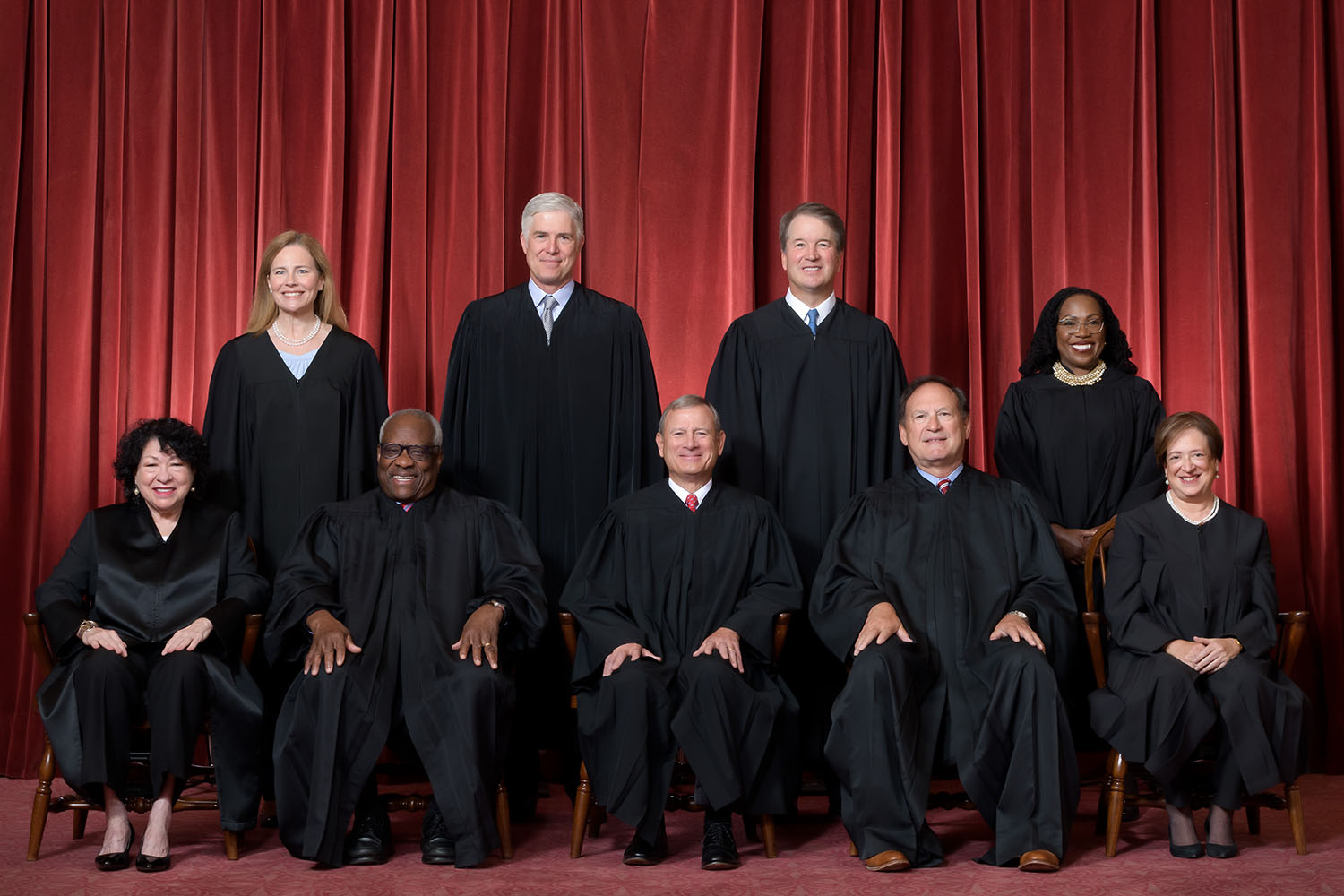
As the U.S. Supreme Court opens its 2026-27 term Monday, the justices are again turning their attention to the 9th U.S. Circuit Court of Appeals, with six appeals from the circuit already on the merits docket.
That nearly matches the seven 9th Circuit cases argued during the entire 2025-26 term and exceeds the number heard the previous term.
The cases span a wide range of issues, from an Employee Retirement Income Security Act dispute involving Intel Corp. to Apple Inc.'s challenge to a contempt finding by Northern District of California Chief Judge Yvonne Gonzalez Rogers in its long-running fight with Epic Games Inc.
The Intel case will be argued Tuesday. The Apple case, which the court agreed to hear in June, has not yet been scheduled. Anderson v. Intel Corporation Investment Policy Committee, 25-498 (S. Ct., filed Oct. 20, 2025); Apple Inc. v. Epic Games Inc., 25-1311 (S. Ct., filed May 21, 2026).
"There's likely a mix of reasons for the large share of 9th Circuit cases on the merits docket this term," said Julian W. Poon, co-chair of Gibson, Dunn & Crutcher LLP's appellate and constitutional law practice. "The business cases, Apple and Intel, probably would have piqued the Justices' interest coming from any circuit."
Benjamin J. Horwich, a partner with Munger, Tolles & Olson LLP, said the increase does not appear to mark a return to the frequent clashes between the traditionally liberal 9th Circuit and an increasingly conservative Supreme Court from 2017 through 2024, when merits cases from the circuit averaged 13 per term.
"I don't think this is a return to the era ... when the late Judge [Stephen] Reinhardt joked about his reversal rate that 'they can't catch 'em all,'" Horwich said.
"I see more cases in areas where the Supreme Court's jurisprudence is genuinely in transition, and there's a real need to give lower courts guidance on things like standing, implied causes of action, voting procedures, and administrative law," he added.
Still, Horwich said he expects many of the 9th Circuit decisions to be reversed.
Among the term's most closely watched disputes are consolidated challenges to Illinois and Connecticut bans on semiautomatic rifles, which gun-rights advocates contend violate the Second Amendment. The cases could have direct implications for a similar California law now before the 9th Circuit.
The justices are scheduled to hear the consolidated cases Dec. 2. Viramontes et al. v. Cook County, Illinois et al., 25-238; Grant v. Higgins, 25-566.
Legal experts say the ruling could also affect a challenge to California's ban on large-capacity magazines, which is pending before the Supreme Court after the 9th Circuit upheld the law.
"I think the Supreme Court's decision in this case will send a clear signal about California's ban on high-capacity magazines," said Adam D. Winkler, a UCLA School of Law professor and Second Amendment scholar. Duncan v. Bonta, 25-198 (S. Ct., filed Aug. 15, 2025).
The Supreme Court has largely steered clear of major Second Amendment cases since its 2022 decision establishing a "history and tradition" test for evaluating firearms restrictions. New York State Rifle & Pistol Association v. Bruen, 2022 DJDAR 6325 (S. Ct., filed Dec. 17, 2020).
The Trump administration has sided with the challengers in the Illinois and Connecticut cases and asked to participate in the Dec. 2 arguments.
C.D. Michel, senior partner at Michel & Associates PC, who filed an amicus brief on behalf of individuals and organizations seeking to overturn the laws, said he expects the ruling to reach beyond the two statutes.
"They will lay down the methodology that will be applicable in a lot of Second Amendment cases," he said.
The new term begins Monday with another potentially consequential dispute: whether Boulder, Colorado, may pursue state-law claims seeking to hold energy companies liable for their alleged role in climate change.
The Colorado Supreme Court allowed the lawsuit to proceed. The justices will first consider whether they have jurisdiction to review the case before a final judgment and, if so, whether federal law precludes Boulder's claims. Justice Samuel A. Alito Jr. has recused himself from the case.
The Trump administration has sided with the energy companies, with the solicitor general participating in Monday's argument.
A single city cannot "dictate how the rest of the world must address a global problem with global effects," Solicitor General D. John Sauer wrote. Suncor Energy Inc. et al. v. County Commissioners of Boulder County, 25-170 (S. Ct., filed Aug. 8, 2025).
The case is the first argument on the court's 2026-27 calendar.
Craig Anderson
craig_anderson@dailyjournal.com
For reprint rights or to order a copy of your photo:
Email
Jeremy_Ellis@dailyjournal.com
for prices.
Direct dial: 213-229-5424
Send a letter to the editor:
Email: letters@dailyjournal.com