


Technology,
Data Privacy
Oct. 28, 2025
Customer privacy battle pits FCC against telecoms in Supreme Court
FCC's multi-million-dollar penalties against mobile carriers for improperly selling customer location data face new legal uncertainty.


Anita Taff-Rice
Founder
iCommLaw
Technology and telecommunications
1547 Palos Verdes Mall # 298
Walnut Creek , CA 94597-2228
Phone: (415) 699-7885
Email: anita@icommlaw.com
iCommLaw(r) is a Bay Area firm specializing in technology, telecommunications and cybersecurity matters.
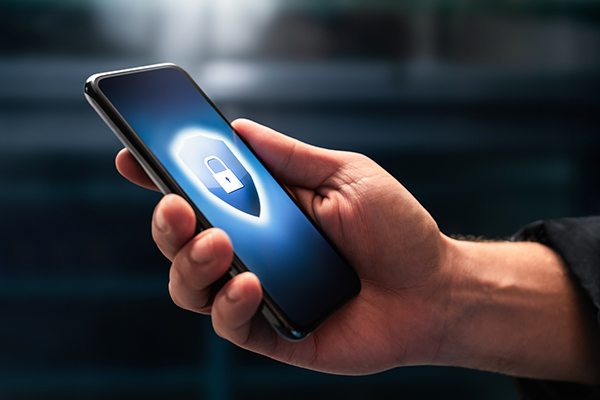
Protecting private data should be standard practice, not an exceptional notion, especially when that data exposes people to surreptitious tracking, stalking or personal harm. That's why customer proprietary data is protected from disclosure by federal law. 47 U.S.C. §222
But in 2018, all of the major cellular carriers were making a handsome profit selling geolocation data collected from their customers' phones to third-party aggregators such as Securus, Microbilt, LocationSmart and Zumingo. The mobile carriers left it entirely to the aggregators to vet and monitor the third parties to whom they resold the data. Unsurprisingly, sensitive customer location data fell into the hands of some unsavory characters and was misused.
The Federal Communications Commission's ability to enforce federal laws that protect against the misuse of customers' sensitive personal data and a host of other violations of federal law may be coming to an end, according to an FCC Petition for Writ of Certiorari filed earlier this month. The FCC is seeking review of a 5th Circuit decision that invalidated a $57.2 million penalty against AT&T for selling customer location data to aggregators who then sold it to practically anyone with a few hundred dollars to spare.
The FCC fined AT&T for failing to protect sensitive customer data over a long period and despite press reports that aggregators were misusing the data. The FCC found that access to customer data "made it possible for malicious actors to track AT&T mobile customers' whereabouts, including people in law enforcement, military, government or other highly sensitive positions -- thereby threatening national security and public safety ..."
In its Certiorari Petition, the FCC told the Supreme Court that the 5th Circuit decision "deprives [it] of one of its most important regulatory remedies and severely impairs the agency's ability to enforce federal communications law," such as protecting consumer privacy, prohibiting unlicensed broadcasting and restricting robocalls. The FCC noted in its petition that it has authority to seek remedies other than monetary penalties, such as forfeiture of equipment, cease-and-desist orders, and revoking or suspending licenses or permits. 47 U.S.C. 312(a) and (b) and 510. But the FCC said that such remedies are "more draconian" and "less flexible and less frequently used than monetary penalties."
The 5th Circuit decision, if upheld, calls into question other FCC penalties. The FCC fined T-Mobile $80 million and Sprint $12.2 million for providing customer location data to an aggregator without the customer's knowledge or consent. T-Mobile and Sprint paid the penalty and appealed to the U.S. District Court for the District of Columbia. The D.C. and 2nd Circuits rejected similar Seventh Amendment challenges to the FCC penalty scheme. Sprint Corp. v. FCC, No. 24-1224, 2025 WL 2371009 (D.C. Cir. Aug. 15, 2025); Verizon Communications Inc. v. FCC, No. 24-1733, 2025 WL 2609127 (2d Cir. Sept. 10, 2025).
Other notable FCC penalties in possible jeopardy include a $299,997,000 penalty assessed against a massive robocalling operation that placed five billion auto warranty robocalls during a three-month span, a $4.2 million penalty against Birch Communications for cramming (placing unauthorized charges on customer bills) and a $6 million penalty against a robocall campaign targeting voters in New Hampshire before the 2024 Democratic Presidential Primary Election.
The 5th Circuit vacated the FCC penalty against AT&T based on the U.S. Supreme Court decision SEC v. Jarkesy issued last year. AT&T, Inc. v. FCC, 149 F.4th 491 (2025) (citing SEC v. Jarkesy, 603 U.S. 109 (2024).) In Jarkesy, the U.S. Supreme Court ruled that the Seventh Amendment prohibited the Securities and Exchange Commission from using internal agency hearings in front of its own administrative judge rather than a trial by jury to impose monetary penalties for violations of securities laws.
The 5th Circuit reasoned that the two possible avenues for appeal of an FCC order imposing monetary penalties both failed to meet the requirements of the Seventh Amendment. "If AT&T wants an Article III court to review the forfeiture order's legality, it has to give up a jury trial" by filing an appeal for a review the FCC's legal findings. If AT&T instead wanted a jury trial, "it has to defy a multi-million dollar penalty, wait for DOJ to sue, and, even then, relinquish its ability to challenge the order's legality." AT&T v. FCC, *22-23.
The FCC argued in its Certiorari Petition that the 5th
Circuit's decision is wrong and conflicts with established Supreme Court
precedent. It pointed to two prior
Supreme Court cases that allow a non-Article III federal tribunal to adjudicate
a suit at common law without a jury, provided parties are entitled to a
subsequent de novo jury trial in an Article III
court. Capital Traction Co. v. Hof, 174 U.S. 1 (1899); Meeker v.
Lehigh V.R. Co., 236 U.S. 412 (1915).
The FCC asserted that its forfeiture scheme complies with constitutional
requirements because regulated parties need not pay penalties unless the United
States files suit to collect them, and defendants in such suits may demand jury
trials. The agency contends that regulated parties who choose to pay penalties
and seek appellate review have waived their Seventh Amendment rights.
The 5th Circuit's decision conflicts with recent decisions by the D.C. Circuit and 2nd Circuit in the Sprint and Verizon cases, so it appears likely that the U.S. Supreme Court will grant cert.
For reprint rights or to order a copy of your photo:
Email
Jeremy_Ellis@dailyjournal.com
for prices.
Direct dial: 213-229-5424
Send a letter to the editor:
Email: letters@dailyjournal.com