


LA Fires
Nov. 19, 2025
Rebuilding Los Angeles: Lessons from California's wildfire recovery
California's post-wildfire recovery efforts in early 2025 revealed both the promise and the pitfalls of its disaster laws -- exposing a system in urgent need of modernization as climate threats grow.


Roberto Escobar
Email: bobby@elaw.business
Roberto "Bobby" Escobar is general counsel, and an environmental and labor and immigration advisor.
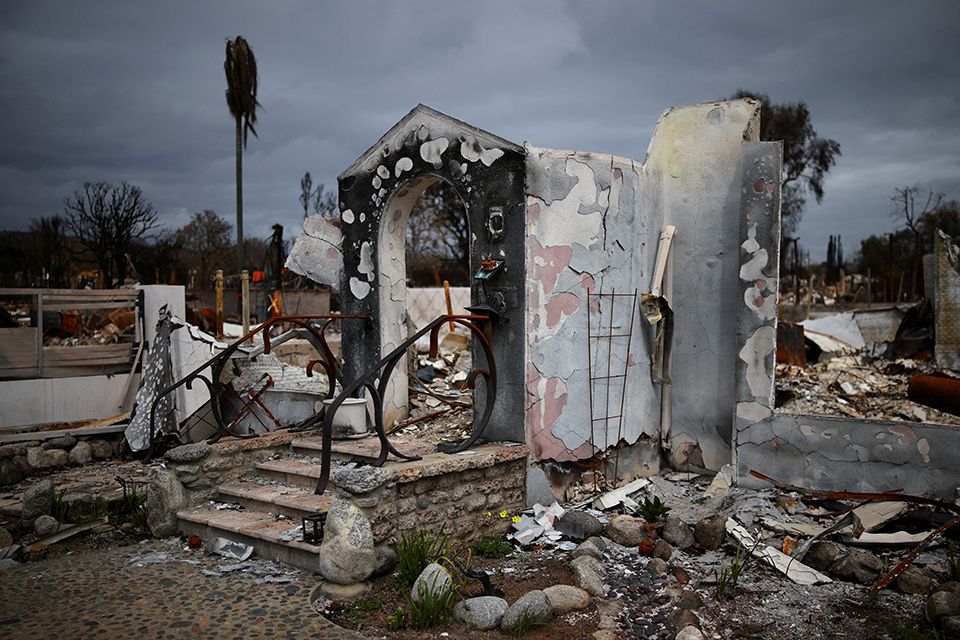
California's January 2025 Eaton and Palisades wildfires marked a turning point in the state's understanding of disaster recovery. With more than 16,000 homes and buildings destroyed across Los Angeles County, the months that followed became an unfiltered test of the legal and regulatory systems governing post-fire rebuilding. What emerged was a mixed picture: evidence of innovative reforms and strong emergency leadership, but also a stark demonstration of how fragmented processes and outdated frameworks can slow recovery, deepen inequities and erode public confidence. The rebuilding experience is now a case study in how California's laws both protect and hinder fire survivors, and what will be required to modernize disaster law in an era of intensifying climate impacts.
A recovery that began with bottlenecks
In theory, California's environmental and building frameworks exist to ensure public safety, protect natural resources and prevent development in hazardous or unstable areas. In practice, those same protections often become obstacles immediately after a catastrophe. Residents who survived the January fires, many displaced for months, encountered a permitting system that felt labyrinthine even when officials promised "all hands on deck" urgency.
Nine months into the recovery, only 782 of 1,843 rebuild permits had been approved in the City of Los Angeles. The county's progress was similarly underwhelming, with 568 approvals out of more than 2,200 applications. In Pacific Palisades, where nearly 6,800 homes burned, only four rebuild permits had been issued after two months, sparking intense public frustration. Most of these applications involved straightforward like-for-like replacement, homes rebuilt to previous footprints. Yet, they still required sign-off from multiple agencies: building and safety, planning, utilities, fire, public works, debris specialists and flood control. Each review is critical, especially soil contamination and debris-removal certification, but staff shortages and inconsistent timelines stretched a process survivors had expected to take weeks into one that took many months.
By mid-November 2025, city officials reported that more than 1,000 permits had been issued and over 1,200 rebuilding plans approved for addresses in Pacific Palisades, reflecting a recent but still incomplete acceleration in approvals.
Even during declared emergencies, laws such as the California Environmental Quality Act (CEQA) and the Coastal Act still apply unless waived through very specific mechanisms. Rebuilding in coastal zones, hillside areas or the wildland-urban interface meant some residents remained trapped in long environmental review cycles despite having a legal right to return to their homes. Emergency orders provided partial relief, but not enough to guarantee speed, leaving many families facing extended displacement and, in some cases, permanent relocation.
Financial and insurance barriers compound delays
Legal permission to rebuild does not equate to financial ability to do so. Construction costs in Southern California, already among the highest in the nation, rose sharply after the fires, particularly for ignition-resistant siding, Class A roofs, ember-resistant vents and mandatory internal sprinkler systems required under updated codes. Even families with good insurance discovered their coverage limits were far below the true cost of reconstruction in 2025 dollars.
California's insurance market, increasingly destabilized by wildfire risk, added further complications. Some carriers withdrew from high-risk ZIP codes, while others sharply raised premiums or capped replacement cost coverage. Survivors confronted a painful contradiction: They had clear statutory rights to rebuild, but financial tools to exercise those rights were shrinking. Property tax rules, insurance deadlines and loan obligations often operated on rigid timeframes that did not align with the slow reality of the permitting process, heightening the risk of foreclosure, reassessment or lapse in coverage.
Tensions between speed and safety
At the policy level, California has been trying to strike a delicate balance between building back quickly and building back safer. Updated wildfire building standards adopted in 2025 aimed to reduce future losses, but they substantially increased costs and design rigidity. While many survivors supported tougher safety rules, others argued that applying the newest codes, especially those requiring enhanced defensible space and exterior hardening, made rebuilding financially impossible.
Governor Newsom's Executive Order N-4-25 initially suspended CEQA and California Coastal Act requirements for substantially like-for-like wildfire rebuilds. Later, Executive Order N-29-25 expanded those emergency environmental waivers and, crucially, allowed Los Angeles and Ventura County fire survivors to rebuild under the 2022 building code (rather than the upcoming 2025 standards) for qualifying projects. Still, disagreement persists among policymakers, environmental groups and residents: Should emergency rebuilding default to maximum speed, or maximum resilience? Is it prudent to relax standards in the very places where the next wildfire is almost guaranteed?
Persistent equity gaps
Perhaps the most sobering lesson from the 2025 fires is that recovery does not unfold equally. Homeowners with strong insurance, personal savings or ready access to contractors moved through the system faster. Meanwhile, tenants, mobile-home residents and low-income homeowners faced steep obstacles.
Rent spikes in the aftermath of the fires displaced thousands of tenants whose housing units had not burned but whose landlords raised prices due to sudden market scarcity. Mobile-home parks, often located in or near fire-prone corridors, were devastated, and many residents lacked clear guidance on whether property owners or tenants were responsible for debris clearance. Several new laws enacted in 2025 now clarify these responsibilities and require landlords to restore habitability and maintain pre-fire rent levels, but the recovery gap between affluent and working-class neighborhoods remains visible.
Low-income homeowners, meanwhile, are least able to afford the jump to fire-hardened construction. California's AB 888 and other grant programs help subsidize resilient roofs and defensible space, but funding is limited, and the need continues to outpace available support.
What has changed since the fires
The recovery sparked meaningful reforms at both the state and local level. In the first weeks after the blaze, Newsom issued emergency orders waiving environmental review for most like-for-like rebuilds, relaxing zoning restrictions and authorizing agencies to use streamlined procedures. Anti-price-gouging rules and temporary housing programs helped stabilize the immediate humanitarian crisis.
Subsequent executive orders expanded these measures, allowing use of the 2022 building codes and directing state agencies to provide accelerated approvals. Legislation passed in 2025 has begun to shore up the financial side of recovery. AB 245 extends the window for fire survivors to rebuild or replace their homes without a property-tax hike; AB 238 requires mortgage servicers to offer up to 12 months of wildfire-related forbearance; and AB 888 creates the California Safe Homes grant program, which helps low-income homeowners pay for fire-safe roofs and defensible-space work.
Los Angeles launched a suite of innovations as well. One-stop permit centers in the county and city now bring together multiple agencies under a single roof, giving survivors a designated point of contact instead of navigating a maze of separate offices. An online portal and "Permitting Progress Dashboard" enable permit tracking, real-time status updates and document uploads, reducing confusion and cutting the need for many in-person visits.
Perhaps the most promising reform is the Standard Plan Pilot Program: Homeowners can choose from a catalog of pre-approved, fire-resilient home designs that dramatically reduce plan-check time. Initial approvals are reported in under 60 days. The City and County also introduced fee waivers or deferrals for impacted rebuilds and launched public dashboards to monitor progress, supported by targeted surge staffing to speed review.
What still needs to change
Even with these improvements, the rebuilding system remains heavily reliant on temporary executive authority. Experts warn that California cannot continue to reinvent its emergency procedures with every new wildfire. Instead, the state needs a permanent statutory framework that automatically activates in declared disaster zones. Such a framework would establish predictable timelines, specify when CEQA exemptions apply, and insulate agencies from certain post-disaster lawsuits that currently create hesitation around expedited review.
Statewide expansion of pre-approved standard plans could radically accelerate rebuilding, especially if combined with modular or factory-built housing options already vetted for fire safety. But these options require dedicated funding and clear legal pathways to ensure local jurisdictions accept them without excessive additional review.
Capacity remains a significant barrier: even the best streamlined system stalls if agencies do not have the staff to execute it. Proposals for statewide surge teams (building inspectors, plan checkers and environmental health specialists) would provide much-needed relief to overwhelmed cities and counties immediately after a major fire.
To create true alignment, California also needs to reconcile insurance payment timelines, property tax relief periods and permit expiration rules, ensuring survivors are not penalized for delays outside their control. Expanding grants or low-cost loans for home hardening would open the pre-approved pathways to lower-income homeowners, allowing resilience and equity to advance together.
Finally, California must confront the unresolved question of rebuilding rights versus managed retreat. Some areas in the wildland-urban interface face recurring disaster risk, yet residents receive unclear or conflicting messages about whether rebuilding will be supported. A statewide policy, defining when rebuilding is presumptive, when retreat is required and how buyouts will be handled, would reduce confusion and minimize litigation.
A system at a crossroads
The Eaton and Palisades fires highlighted both California's capacity for innovation and the deep structural issues that still impede disaster recovery. Emergency orders, new legislation, one-stop centers and pre-approved plans represent meaningful progress. But the larger lesson is unavoidable: California's legal recovery system is still too dependent on temporary fixes, too fragmented across agencies and too inequitable in its impact.
A shift toward permanent statutory reform, statewide coordination and equity-driven support will determine whether future wildfire survivors face years of bureaucratic struggle or a more predictable, humane and resilient recovery system. As Los Angeles continues to rebuild, it is not only restoring neighborhoods but also shaping the blueprint for how the entire state will respond to the next inevitable wildfire.
Submit your own column for publication to Diana Bosetti
For reprint rights or to order a copy of your photo:
Email
Jeremy_Ellis@dailyjournal.com
for prices.
Direct dial: 213-229-5424
Send a letter to the editor:
Email: letters@dailyjournal.com