


International Law,
Constitutional Law
Nov. 20, 2025
America confronts the legal limits of its expanding drug war
A new U.S. military campaign targeting alleged drug-smuggling vessels raises profound constitutional, statutory and international law concerns because it uses lethal force without congressional authorization, due process or clear evidence that the targets pose an imminent threat.


John H. Minan
Emeritus Professor of Law
University of San Diego School of Law
Professor Minan is a former attorney with the Department of Justice in Washington, D.C. and the former chairman of the San Diego Regional Water Quality Board.
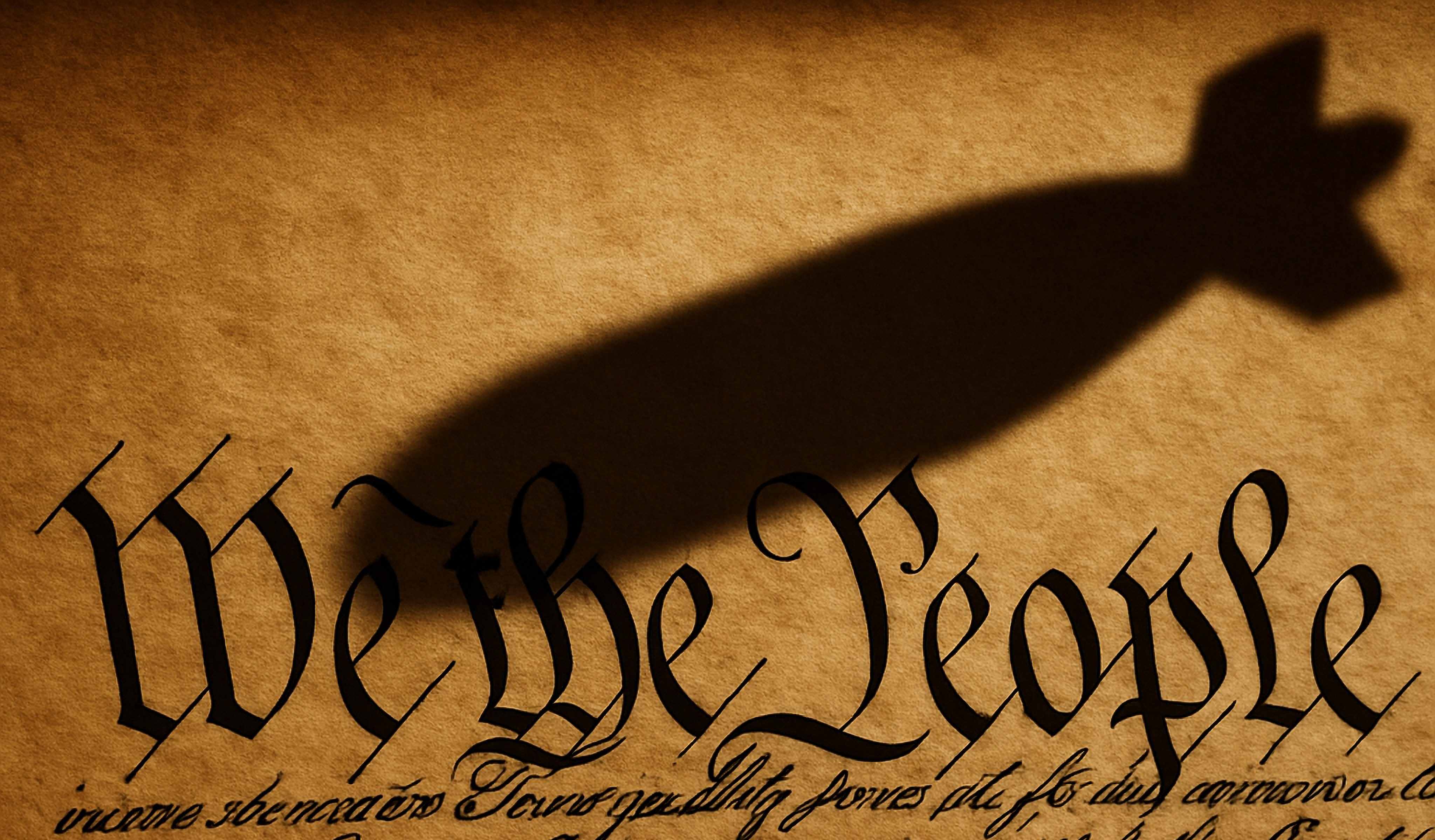
President Donald Trump and his administration have mounted a lethal military air campaign against alleged drug-smuggling vessels in the Caribbean and eastern Pacific Ocean. The air strikes have blown up 15 boats and killed more than 80 individuals. Apart from grainy videos showing the boats being blown to smithereens, the public has been given no evidence that the boats were carrying drugs or the identity of the crews.
The use of the military represents an unprecedented and controversial shift in the policy on the "war on drugs." It mistakenly conflates the alleged trafficking of illegal drugs in international waters with an armed attack on the U.S. by noncombatants.
Article II authorizes the president to prevent any actual or imminent attack against the country and its national security interests. Trump argues the powers of commander in chief and chief executive to conduct foreign relations give him the necessary authority to use military force against "nonstate armed groups" (designated drug cartels). He argues that the country is in an armed conflict with these foreign terrorist organizations.
Congress has not passed legislation authorizing the use of military force against the drug cartels, however. The founders conferred the sole constitutional power to "declare" war on Congress, not the president (Art. I, § 8, cl. 11). But they also realized that "emergency situations" might require an immediate response to protect the national interest that could not await deliberate debate and action by Congress.
The Supreme Court recognized this understanding in The Prize Cases, which upheld President Abraham Lincoln's decision to declare a blockade of the southern ports during the Civil War without a formal declaration of war by Congress (67 U.S. (2 Black) 635 (1863)). The majority held that a state of civil war existed and that Lincoln, as Commander in Chief under Article II, was justified in responding. The court reasoned that "if war is brought to the United States by invasion or rebellion, the President is not merely authorized but bound to resist force by force."
For this principle and exception to apply, a national emergency that demands immediate action must exist. The formal "war on drugs" to reduce the supply and demand of illegal drugs in the U.S. has been going on since the Nixon administration, if not before. The claim that an immediate response is necessary is not persuasive.
In 1973, Congress adopted the War Powers Resolution (WPR) (50 U.S.C. §§ 1541-1548) in the attempt to reassert Congress's role in committing the armed forces into hostilities by limiting the unilateral power of the president. It provides that the president's power is to be exercised only pursuant to 1) a declaration of war, 2) specific statutory authorization or 3) a "national emergency created by an attack" upon the U.S. (50 U.S.C. § 1541(c)). The country is not under an armed attack by the drug cartels.
The international community is alarmed about violations of international law. The purpose of the International Covenant on Civil and Political Rights, to which the U.S. is a party, is to protect and ensure fundamental freedoms and civil liberties. Article 6(1) provides: "Every human being has the inherent right to life. This right shall be protected by a law. No one shall be arbitrarily deprived of his life." This covenant guarantees the right of due process to those suspected of serious crimes. Many have expressed concern that Trump is violating the International Covenant by acting as "judge, jury, and executioner."
Using the military to conduct drug strikes also is a concern within its ranks. Admiral Alvin Holsey, the former commander of the U.S. Southern Command, recently retired amid reports of disagreement over using lethal military force to kill suspected traffickers as "unlawful combatants."
Federal law makes it a felony to commit murder within the special maritime and territorial jurisdiction of the United States (18 U.S.C. § 1111), which includes the high seas (7 U.S.C. § 7(1). The Uniform Code of Military Justice (UCMJ) establishes the criminal legal system for all U.S. military branches. Article 92 (10 U.S.C. § 892) provides that a service member is not required to carry out an unlawful order, but the failure to obey lawful orders is a crime under Article 90 (10 U.S.C. § 890).
While military orders are presumed lawful, the stakes are high and the concerns real. Article 118 (10 U.S.C. § 918) prohibits the premeditated and unlawful killing of a human being, and if convicted, subjects the defendant to death or imprisonment for life. No statute of limitations exists: Article 43 (10 U.S.C. § 843(a)) states "a person may be tried and punished at any time without limitation."
Justice Sonia Sotomayor argued in her dissent on presidential immunity from prosecution for crimes (Trump v. United States, 603 U.S. 593, 659-67 (2024)) - "the President is now a king above the law." Many are concerned that her view about Trump being "a king above the law" is not just a rhetorical flourish for dramatic effect.
Submit your own column for publication to Diana Bosetti
For reprint rights or to order a copy of your photo:
Email
Jeremy_Ellis@dailyjournal.com
for prices.
Direct dial: 213-229-5424
Send a letter to the editor:
Email: letters@dailyjournal.com