


Government
Nov. 24, 2025
Is CARE Court reaching California's 'Million Dollar Murrays'?
The state projected 7,000 to 12,000 Californians would qualify for CARE Court, yet from October 2023 to September 2025 courts recorded only 2,873 petitions, 6,489 hearings, 620 CARE agreements and 19 court-ordered plans. Judges say families are getting help, but it's unclear whether the program is reaching the chronically homeless who generate the highest public costs.


CARE Court is Gov. Gavin Newsom's signature program to address California's homeless crisis. But there is another name that sometimes comes up when talking about the issue: Million Dollar Murray.
Murray Barr was the subject of a 2006 The New Yorker magazine article. Malcolm Gladwell wrote that the alcoholic ex-Marine living on the streets of Reno may have accumulated more unpaid medical debt than any other person in Nevada before he died from his addiction. Police officers described having to detain him "several times a day."
Yet Murray occasionally got sober and thrived in treatment. Gladwell concluded that, at least for some people, "Homelessness may be easier to solve than to manage."
In the two decades since, cities across California have struggled with their own versions of Million Dollar Murray: a small number of chronically homeless people who generate excessive costs through repeated emergency services, hospitalizations, jail stays or other public system use.
Is CARE Court addressing this problem?
"I don't know," said Sacramento County Superior Court Judge Lawrence G. Brown.
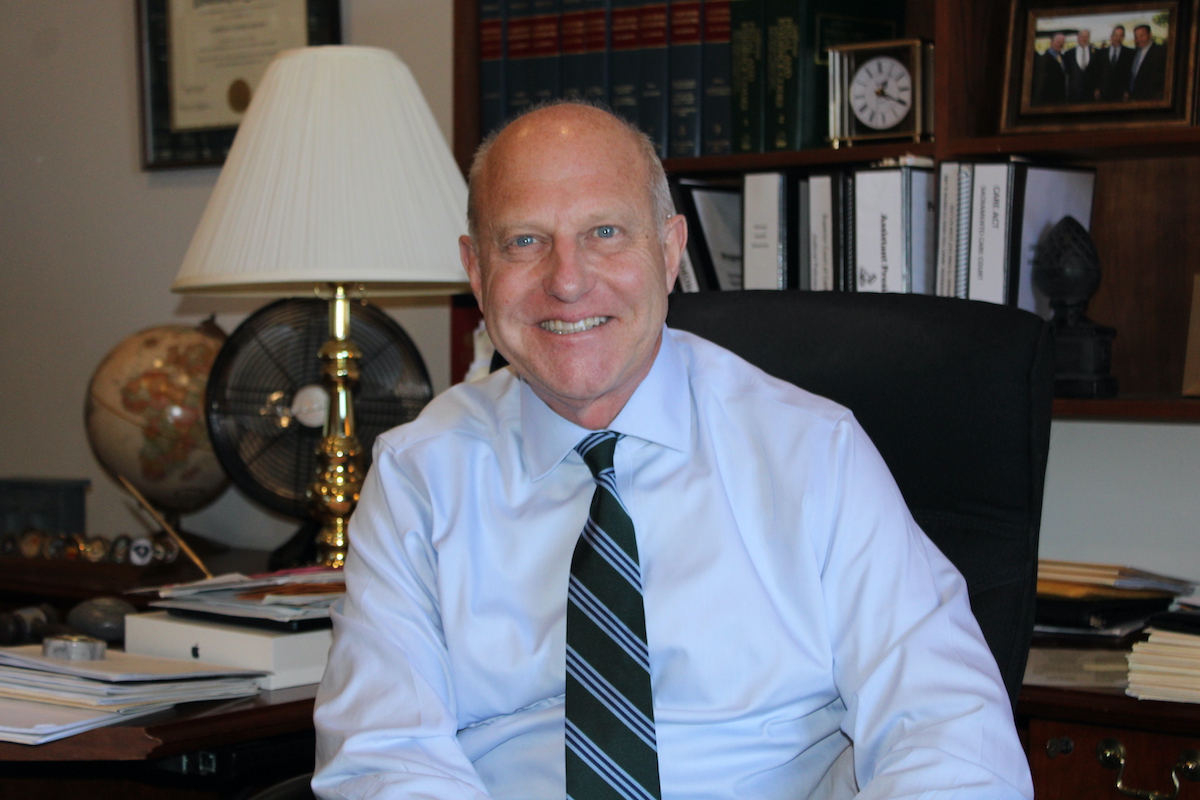
Brown is widely considered the dean of collaborative court judges in California. In 2013, he was assigned to preside over Sacramento's mental health, reentry, drug and homeless courts. He now oversees the county's CARE Court and will begin his two-year term as presiding judge on Jan. 1.
The program allows courts to supervise people who meet certain criteria. Brown said one major goal of CARE Court is to help people with some of the most persistent mental health and substance abuse problems. But his experience in collaborative courts has also made him realistic.
"We link the participants to providers who are dedicated to helping the person try to live life in the community, to try to cut down on being rehospitalized or incarcerated," Brown said. "But it's not for the faint of heart. These are challenging cases. These are challenging illnesses. And oftentimes, there's a co-occurring substance use disorder."
The state projected 7,000 to 12,000 Californians would qualify for CARE Court, yet from October 2023 to September 2025 courts recorded only 2,873 petitions, 6,489 hearings, 620 CARE agreements and 19 court-ordered plans.
Brown said he believes CARE Court is working. But many of the people benefiting the most have one thing in common: someone in their corner, often a family member, willing to file a petition.
"I think what impressed me most about the CARE process is that the family members have direct access to a judge," Brown said. "So, for all the parents out there who have an adult son or daughter suffering from schizophrenia -- perhaps the parents are at wits' end and trying to get their offspring to take medication or get off the streets -- they have some lifeline by filing a petition."
But many chronically homeless people may not have an involved family member -- something one of the "more controversial aspects" of the program was designed to address.
"We don't have a great number of matters where the petitioner is a first responder agency. That's a very small percentage of cases. ... First responder agencies can be petitioners, which I believe was one of the more controversial aspects," Brown said.
Judge Ross Moody, who manages San Francisco's CARE Court, told a different story.
"I think it's going well here in San Francisco," Moody said. "We're getting a steady stream of petitions, and they're from a mix of different petitioners: the family members, the Department of Public Health, the state hospital, and then from other sources as well."
If CARE Court is helping California's Million Dollar Murrays, it could change the prevailing narrative around the program. In recent months, some critics have pointed to lower-than-expected numbers of petitions filed in CARE Courts across the state. Others, often with long involvement in homelessness and mental health, have warned the program could be coercive and divert money from existing treatment and shelter programs.
But if many of those petitions are finally getting help for California's highest-risk -- and highest-cost -- homeless people, the argument for CARE Court becomes easier.
In 2011, the USC Annenberg Center for Health Journalism published, "The Million Dollar (Homeless) Patient." The article, directly inspired by Million Dollar Murray, told the story of Solano County's Angelo Solis.
"In three years, Solis racked up nearly $1 million in medical charges -- paid for by taxpayers," author Sarah Arnquist wrote. "Solis' case represents the immense health care costs associated with homelessness. Nearly every community has at least one chronically homeless person like him. Some have hundreds."
Arnquist wrote that "frequent flyers" like Solis racked up big bills in hospitals and other costs. Yet their condition often worsened again after they were released. She cited statistics showing the San Francisco Department of Public Health spent a disproportionate amount of money on about 1,000 chronically homeless people -- and that this spending was cut significantly after a quarter of them received housing.
But the CARE Court criteria were the result of a series of compromises. One result of this is that a substance abuse disorder on its own is not enough to place someone under supervision. Even people with debilitating alcoholism, like Murray or Solis, would also need to be diagnosed with a psychotic disorder.
Moody said he does not necessarily think many of the most chronically impacted people are being helped by CARE Court.
"I think that because it is mostly voluntary, the people that are in that kind of profile are usually not [enrolled]," Moody said. "They lack the insight and the ability to accept the services."
He added, "As a judge, I don't really see that as my role to sort of critique the way it was set up."
But Moody said he thinks CARE Court is succeeding in ways the numbers do not necessarily capture.
"I think that one of the things that is nice about CARE Court is that the family members are able to come in and file a petition," Moody said. "That's not permissible in LPS [Lanterman-Petris-Short Act] conservatorships. A lot of times they can at least get their loved one onto the radar. Even if they don't end up in a successful CARE agreement, they've been looked at by the Department of Public Health. It's my perception that some of these petitions that were dismissed, there still was a good outcome for the person because they were connected with services."
Judge Magdalena Cohen, who manages Riverside County's CARE Court, said some of the sharpest criticisms of the program have come from family members who do not think the rules are strict enough.
"Very early on, an article ... claimed it was a way for people to get their loved ones onto forced medication," Cohen said. "I cannot count the number of angry family members I had in my courtroom yelling about how the media said I could order their loved one to take meds."
She added, "There were misrepresentations. But I also think you're talking about a population of families that has been really desperate."
Cohen also said CARE Court is evolving. For instance, she said in the initial months, around 90% of petitions were filed by family members. But this has "evened out" over time, with first responder agencies and public health officials filing more petitions.
Meanwhile, the number of people eligible for petitions is growing. Cohen pointed to SB 27. Beginning in January, it will add bipolar disorder to the list of conditions eligible for CARE Court and make it easier to divert some people from criminal courts into the program.
"I think it's important to keep in mind that when CARE launched just over two years ago now, it was very narrow in its diagnostic criteria," Cohen said. "It was really aimed at people who were cycling in and out of hospitals over and over again. So, the most ill on the schizophrenic spectrum. That population is not huge."
Both Gladwell and Arnquist cited research by University of Pennsylvania Social Policy professor Dennis P. Culhane. Starting as a graduate in the early 1990s, Culhane's research showed that a power law distribution applied to spending on homelessness. This is a term for disproportionate numerical relationships--in this case, that a small percentage of homeless people caused most of the public spending.
He told The Daily Journal that his early findings have been widely confirmed in the years since.
"It has consistently been the case, in study after study, that a small portion of people account for most of the expenditures, like sort of that 80/20 rule that gets talked about," Culhane said. "But in our case, it's like 10%, 15% of the homeless population, most of whom are people with severe mental illness, account for half of the spending in shelter and even more than that in terms of Medicaid costs."
Culhane said he has not been closely following the rollout of CARE Court. But he said it could pay off in a big way "if they can use that process to get people into housing."
"Even though housing is expensive, and we think about rent as being a significant cost, it's cheaper than even three weeks in the hospital," Culhane said. "To be able to manage someone's treatment, possible recovery, through a place where they're living, and they have a stable place, that is the magic sauce that seems to work."
Malcolm Maclachlan
malcolm_maclachlan@dailyjournal.com
For reprint rights or to order a copy of your photo:
Email
Jeremy_Ellis@dailyjournal.com
for prices.
Direct dial: 213-229-5424
Send a letter to the editor:
Email: letters@dailyjournal.com