


Torts/Personal Injury,
Immigration
Dec. 1, 2025
From public health crisis to legal battle for engineered stone victims
California is facing a dual crisis as the engineered stone silicosis epidemic among immigrant workers grows -- now over 435 confirmed cases -- and courts struggle to manage hundreds of complex, coordinated lawsuits, creating both a public health and legal emergency.


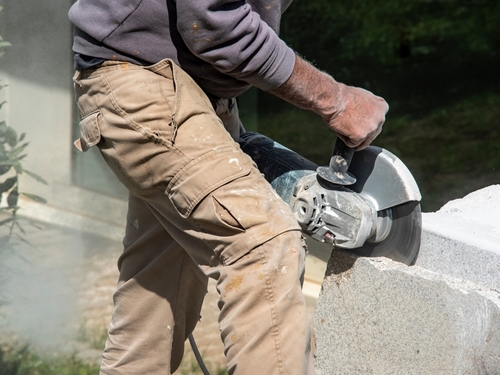
At the beginning of this year, I commented on the litigation regarding the engineered stone silicosis epidemic in California among Hispanic immigrants. ("Will our courts protect catastrophically injured immigrants?" Daily Journal (Jan. 9, 2025).
At that time, the California Department of Public Health confirmed about 235 engineered stone silicosis cases in California. As of today, the Department has confirmed 435 cases in California -- 200 more cases confirmed just this year!
On July 18, Judge Samantha Jessner granted Presiding Judge Serpio C. Tapia's petition to coordinate all the silicosis cases statewide. On Sept. 3, Judge Elihu Berle was appointed coordination judge. About 400 Silicosis Cases have now been assigned to Berle, with more cases being "added on" weekly.
Many more cases of silicosis will be diagnosed and many more silicosis lawsuits will be filed, because the deadly product that is causing this new epidemic is still being sold in the U.S., exposing thousands of countertop fabricators and installers to deadly engineered stone dust.
Thus, California is experiencing two emergencies as a result of the silicosis epidemic. The first is, of course, a public health emergency; the second is how our courts will handle these hundreds of cases, many of which will meet the standard for trial preference under California law.
New regulations may be on the way
In 2024, Australian regulators concluded that the only viable solution to the engineered stone silicosis epidemic in the Commonwealth was to prohibit the importation and use of engineered stone. Since July 1, 2024, these products have been banned throughout Australia.
In California, regulators to date have been loathe to ban engineered stone and thus far have opted to implement more stringent regulations. However, the number of silicosis cases continues to rise, because the cost of fabricating the product safely is more than fabrication shops can bear.
KQED just reported that 94% of 107 worksites investigated by Cal/OSHA had violations of the silica regulations as of Oct. 16. KQED also obtained a draft memorandum by a committee of doctors and occupational health experts convened by Cal/OSHA who recommend prohibition of processing engineered stone in California. (Farida Jhabvala Romero, "California Doctors urge Ban on Engineered Stone as Silicosis Cases Surge," KQED, Nov. 19, 2025).
While a ban or prohibition on processing engineered stone will prevent new immigrant workers from being exposed to engineered stone dust, a ban will not protect the many immigrants who have fabricated these deadly products over the past two decades. Nor will a ban solve the legal emergency facing Los Angeles Superior Court.
Litigation of the silicosis cases remains a challenge for our courts
In 2017, the California Legislature adopted the California Values Act (Senate Bill 54), which is now Government Code § 7284 et seq. The Act recognizes that immigrants are important to our community and economy and requires our courts to protect these vulnerable individuals by assuring that they have full access to our courts and are accorded full legal rights. Regretfully, I am concerned that our courts are failing to adequately address the legal emergency posed by these cases to the detriment of the immigrants harmed by engineered stone products.
Most of the cases were originally assigned to independent calendar judges in the Stanley Mosk Courthouse. However, these complex cases, involving an average of 60 parties, presented special burdens on these judges, each of whom had caseloads of about 600 to 800 unlimited civil cases. To relieve these judges from the burdens of handling these complex cases, Presiding Judge Tapia petitioned the Judicial Council to coordinate the cases so they could all be assigned to a single judge in the complex litigation department. Many of the I/C judges therefore issued orders staying the cases or continuing hearings pending coordination.
Some of the cases have been stayed for more than a year. Even after coordination, all but 25 cases remain stayed. While the cases are stayed, not only do our immigrant clients' health conditions worsen, but critical records in the possession of employers and others cannot be subpoenaed, so important records are being destroyed in the ordinary course of business.
Berle had a full caseload of complex litigation cases before he was appointed coordination judge for the silicosis cases. At the moment he was appointed, he suddenly had 400 more complex litigation cases, some with preferential trials already set. Indeed, Berle now has more silicosis cases to manage than there are asbestos cases in Los Angeles Superior Court. While the judge assigned to the asbestos cases has no other cases to manage, Berle has 400 silicosis cases to manage in addition to his preexisting full complex case load. Thus, the silicosis cases, all of which have now been assigned to Berle, present a legal emergency for the court.
An important step to solving this legal emergency would be for the Judicial Council to access emergency funds to enable Tapia to provide Berle appropriate staffing and resources to enable him to effectively manage the coordinated proceeding by devoting all of his attention, time and effort to the 400 silicosis cases that suddenly fell in his lap, just as the judge assigned the smaller asbestos caseload is able to effectively manage those cases. The Judicial Council and the Los Angeles Superior Court should carefully and fully investigate the legal emergency presented by these cases and provide appropriate funding and personnel so these tragic cases can reach disposition within three years of filing consistent with the Trial Delay Reduction Act.
Submit your own column for publication to Diana Bosetti
For reprint rights or to order a copy of your photo:
Email
Jeremy_Ellis@dailyjournal.com
for prices.
Direct dial: 213-229-5424
Send a letter to the editor:
Email: letters@dailyjournal.com