


Dec. 11, 2025
Court finds child support helpline fee unlawful, mandates restitution
A federal judge found a 50-cent helpline fee for Way2Go child support debit card users to be an unfair business practice, ordering Comerica and Conduent to pay $7.95 million and stop charging the fee.


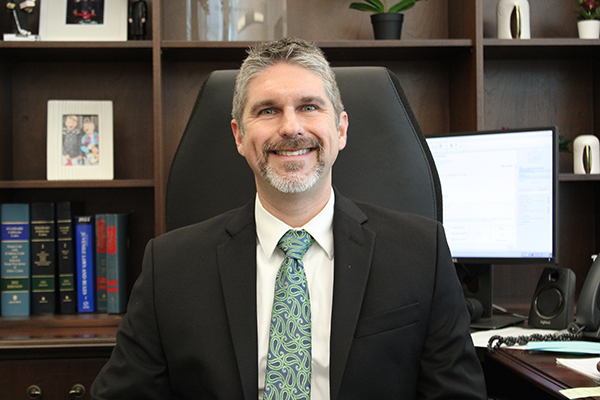
A federal judge in Sacramento ruled that a 50-cent fee charged to child support recipients to use an automated helpline constituted an unfair business practice and ordered the defendants, Comerica Bank and Conduent State and Local Solutions, to pay $7.95 million in restitution.
U.S. District Judge Daniel J. Calabretta noted in a summary judgment Tuesday that the state already pays Conduent $7.95 million to provide the service. Comerica Bank is contracted to hold payments, issue debit cards, and manage compliance.
Calabretta also rejected claims that the fee was too small to notice, saying the average user was charged $40 over a five-year span.
Calabretta ruled that under the state's Unfair Competition Law, the defendants can't charge the fee to child support recipients who use their "Way2Go" debit card. He noted that the companies have an exclusive contract with the state, leaving customers without other options.
According to Calabretta, the fee -- which only applies once a customer has made three calls in a month -- isn't necessary to operate the automated helpline, and the defendants admitted the helpline costs less than hiring customer service representatives.
"It is easy to shrug off the IVR fee as a minor charge of only fifty cents after three free calls each month," Calabretta wrote. "But the undisputed evidence is that Conduent has charged nearly eight million dollars in IVR fees from only 175,394 Class Members between July 20, 2020, and February 21, 2025."
"These fees are deducted from payments intended to allow parents to effectively support and raise their children and amount to a substantial cost to child support recipients," Calabretta wrote. "When balanced against the fact that Defendants are already paid to operate the automated phone line and that the existence of the automated phone line actually saves Defendants money, the unfair nature of the business practice becomes apparent." Sparkman v. Comerica Bank, et al., 2:24-cv-01206 (E.D. Cal., filed Dec. 8, 2025).
The defense has already filed an appeal.
The plaintiffs were represented by Seattle's Terrell Marshall Law Group PLLC, California firm Berger Montague PC and upstate New York's Schlanger Law Group LLP.
"We are pleased that the Court applied the Unfair Competition Law to protect California child support recipients from unfair fees for basic customer service," Sophia M. Rios, a Berger Montague attorney who represented the plaintiffs, said in an email. Rios declined to comment further since litigation is still ongoing.
The defendants, represented by Holland & Knight LLP and Ballard Spahr LLP, argued that the fee was clearly stated in their terms of use and was therefore a contract agreed to by the plaintiffs.
Calabretta rejected that argument, claiming the terms of use are a contract of adhesion, since Way2Go has an exclusive rights contract with the state. That means child support recipients can't simply select a different debit card, although the state allows them to receive payments by direct deposit or check.
"The evidence shows that the practice of charging the (Interactive Voice Response) fee is used by Conduent to take meaningful value from the child support payments of Class Members," Calabretta wrote. "This is done through an adhesion contract imposed in notably oppressive circumstances."
Applying the "balancing test," Calabretta decided that the harm caused to the plaintiffs by the fee outweighs its utility to Comerica.
"Even accepting the utility charging the fee might provide, this does not outweigh the harm inflicted on the Class Members," Calabretta wrote. "A fee taken from child support funds based on a contract term that Class Members had no opportunity to negotiate is oppressive, unscrupulous, and injurious to consumers, such that it overwhelms any utility and is a harmful business practice."
In addition to the restitution, Calabretta ordered that Way2Go stop charging the fee.
Daniel Schrager
daniel_schrager@dailyjournal.com
For reprint rights or to order a copy of your photo:
Email
Jeremy_Ellis@dailyjournal.com
for prices.
Direct dial: 213-229-5424
Send a letter to the editor:
Email: letters@dailyjournal.com