


Constitutional Law,
Civil Rights
Dec. 17, 2025
Criminalizing homelessness in Fresno? Lawsuit claims city's ordinance punishes poverty
A constitutional challenge in Fresno raises an issue faced by cities across the country: Whether municipalities can lawfully criminalize homelessness in the absence of viable alternatives to outdoor living.


K. Chike Odiwe
Civil Rights Attorney
The Law Offices of Kenneth C. Odiwe, PC
2880 Zanker Road, Ste 203
San Jose , CA 95134
Fax: (669) 315-4431
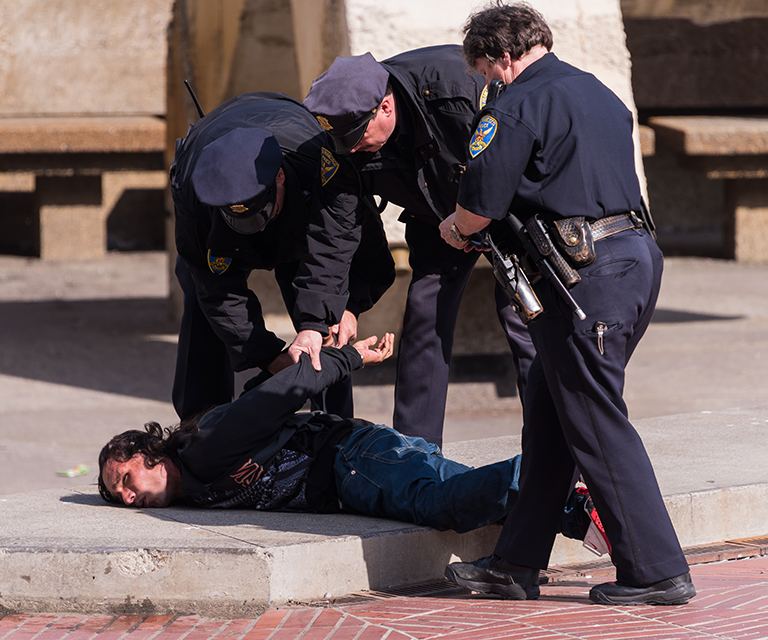
A class action lawsuit now pending in the U.S. District
Court for the Eastern District of California asks a question that cities across
the country continue to confront: Can a municipality respond to visible
homelessness by arresting people for existing in public space when it lacks the
capacity to offer them a real alternative? In Fresno, that question has
sharpened into a constitutional challenge that goes to the heart of civil
rights, dignity and the meaning of equal protection under law.
The lawsuit, filed by civil rights attorney Kevin Little,
alleges that Fresno's anti-camping ordinance unconstitutionally criminalizes
homelessness through arrests, citations, property seizures and prosecutions
that punish poverty rather than conduct. The suit seeks class-wide relief on
behalf of unhoused residents, naming two men, Joseph Quinney and Wickey Two
Hands, as representative plaintiffs. It asserts more than two dozen causes of
action, including false arrest, malicious prosecution, due process violations
and disability discrimination. At its core, the complaint argues that Fresno
has built a system that treats homelessness as a crime instead of a social
condition requiring accommodation and care.
Fresno adopted its ordinance in the wake of the U.S.
Supreme Court's June 2024 decision in Grants Pass v. Johnson, which held
that cities may enforce certain public camping restrictions even when shelter
beds remain unavailable. That ruling shifted the legal landscape, but it did
not erase constitutional limits. Cities still must enforce laws in a manner
consistent with due process, equal protection and federal disability statutes.
The Fresno lawsuit situates itself squarely in that remaining constitutional
space, arguing that the city crossed those lines in practice, even if the
ordinance appears neutral on its face.
The facts alleged in the complaint illustrate the human
consequences of enforcement-first policy. Wickey Two Hands, a 78-year-old man,
became the first person in California prosecuted under a post-Grants Pass
ordinance. His case drew public attention not because it was unusual, but
because it was emblematic. Prosecutors ultimately dismissed the case after a
judge found a speedy trial violation. Joseph Quinney, a 52-year-old man with
severely impaired vision who uses a walking stick, also saw his charges dismissed
months later without explanation. In both cases, officers seized personal
property that the city allegedly never returned.
Those dismissals did not erase the harm. Arrest, jail,
prosecution and property loss impose real costs, especially on elderly and
disabled people living without shelter. The lawsuit argues that these arrests
occurred in the context of "sweeps" that provided little to no meaningful
accommodation for individuals who could not quickly move, comply or secure
alternative shelter. In that sense, the suit frames Fresno's approach as one
that weaponizes administrative deadlines and police discretion against the most
vulnerable.
City Attorney Andrew Janz has responded by asserting
confidence in the ordinance's legality and by emphasizing that the law punishes
behavior, not housing status. He has pointed to Quinney's statements during
arrest as evidence that enforcement does not target unhoused people per se.
That defense echoes a familiar refrain in civil rights litigation: neutrality
in theory, fairness in name. But constitutional law has long recognized that
discriminatory enforcement and disparate impact can render facial neutrality
meaningless.
The complaint directly addresses that tension. It alleges
that Fresno uses a facially neutral ordinance as a tool to criminalize poverty,
destroy property without due process and expose unhoused people to repeated
arrest despite the city's acknowledged lack of shelter capacity. Fresno counts
more than 4,300 unhoused residents, with nearly 2,800 sleeping unsheltered. The
city offers fewer than 1,000 year-round emergency shelter beds, most of which
remain full. Even those limited options grow more fragile as funding shortfalls
threaten existing housing programs with closure.
These facts matter legally because constitutional rights
do not evaporate in the face of policy frustration. The Eighth Amendment,
Fourteenth Amendment, Americans with Disabilities Act and Rehabilitation Act
all impose obligations on state actors to avoid punishment that is arbitrary,
discriminatory or cruel in effect. Arresting elderly or disabled individuals
for sleeping outdoors when no realistic alternative exists raises serious
questions under each of those frameworks. So does seizing and destroying personal
property without notice or opportunity to reclaim it.
Beyond doctrine, the case forces a moral reckoning.
Homelessness does not arise from moral failure; it emerges from structural
conditions that include housing shortages, wage stagnation, disability, aging
and inadequate mental health care. When cities respond by expanding police
powers rather than housing capacity, they shift responsibility onto those least
able to bear it. Enforcement may clear sidewalks temporarily, but it does not
resolve homelessness. It displaces it, often at great human and financial cost.
Supporters of aggressive ordinances often frame them as
necessary tools to restore public order. That concern deserves acknowledgment.
Cities must manage shared space, ensure safety and respond to community
frustration. But constitutional governance requires proportionality and
humanity. Arresting someone for declining nonexistent shelter does not restore
order; it deepens instability. Prosecuting cases that collapse under
constitutional scrutiny does not promote safety; it erodes trust.
The Fresno lawsuit does not ask the court to solve
homelessness outright. It asks the court to enforce constitutional boundaries
and to recognize that enforcement without accommodation crosses those
boundaries. Injunctive relief could force the city to pause arrests, revise
procedures, return property or implement disability accommodations. Damages
could deter future misconduct. Perhaps most importantly, judicial oversight
could shift the policy conversation from punishment to problem-solving.
History offers reason for cautious optimism. Civil rights
litigation has repeatedly nudged public institutions toward more humane
practices, even when initial resistance runs strong. Courts do not govern
cities, but they can insist that cities govern within the law. When they do,
space opens for policy innovation: expanded shelter, supportive housing,
outreach-led engagement and services that meet people where they are.
The Fresno case arrives at a moment of national
recalibration. Grants Pass removed one constitutional barrier, but it
did not grant cities a blank check. How Fresno chooses to respond--to litigate,
to reform or to do both--will shape not only this case but also the city's civic
identity. A resolution grounded in rights, dignity and practical compassion
would benefit everyone who calls Fresno home--housed and unhoused alike.
If the law means anything, it must protect those with the
least power as vigorously as it protects those with the most. This lawsuit
insists on that principle. With thoughtful adjudication and good-faith policy
change, Fresno can move beyond criminalization and toward a model that
recognizes homelessness not as a crime to punish, but as a condition society
has a shared obligation to address.
Submit your own column for publication to Diana Bosetti
For reprint rights or to order a copy of your photo:
Email
Jeremy_Ellis@dailyjournal.com
for prices.
Direct dial: 213-229-5424
Send a letter to the editor:
Email: letters@dailyjournal.com