


Torts/Personal Injury
Dec. 19, 2025
Angels, Skaggs family settle wrongful death case as jury deliberations end
The Los Angeles Angels and the family of late pitcher Tyler Skaggs reached an undisclosed settlement as jurors prepared to deliberate, concluding a two-month trial that tested the boundaries of employer liability, scope of employment, and negligent supervision in professional sports.


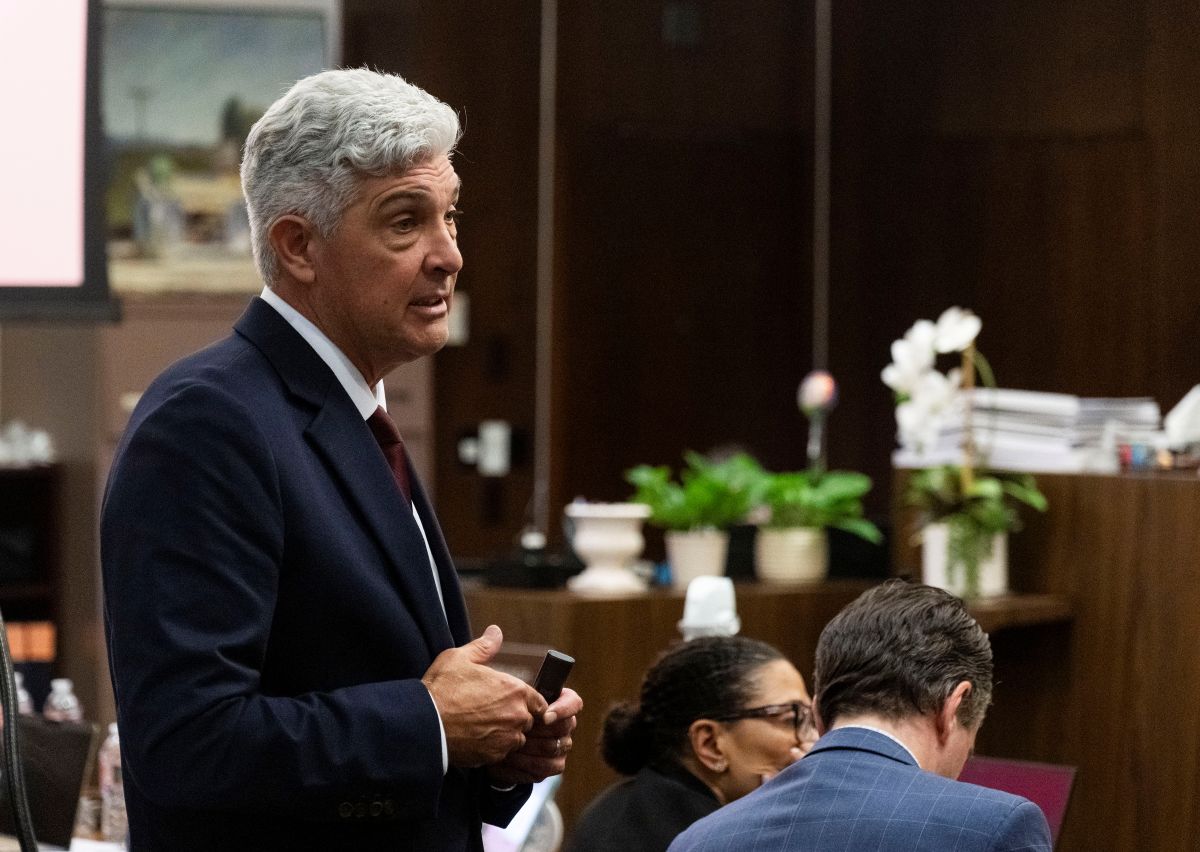
After weeks of gripping testimony, Orange County Superior Court Judge H. Shaina Colover ordered the jury to end their deliberations Friday morning pending a settlement agreement between the family of late pitcher Tyler Skaggs and the Los Angeles Angels of Anaheim, ending the high-stakes wrongful death lawsuit over his 2019 fatal overdose.
After a brief sidebar conference with the parties, the court thanked and dismissed the jury.
The undisclosed settlement ends a two-month trial over negligent supervision, ratification, and scope-of-employment issues in a Major League Baseball clubhouse that drew national attention.
Plaintiff's attorney Rusty Hardin, who represented the Skaggs family, said at a news conference that while he could not disclose the settlement amount, "the Skaggs family is extremely happy with the settlement."
A statement was released by the Skaggs family following the dismissal of the jury.
"The Skaggs family has reached a confidential settlement with Angels Baseball that brings to a close a difficult six-year process, allowing our families to focus on healing. We are deeply grateful to the members of this jury, and to our legal team. Their engagement and focus gave us faith, and now we have finality. This trial exposed the truth and we hope Major League Baseball will now do its part in holding the Angels accountable. While nothing can bring Tyler back, we will continue to honor his memory."
The Angels also issued a statement:
"The death of Tyler Skaggs remains a tragedy, and this trial sheds light on the dangers of opioid use and the devastating effects it can have. Throughout the course of court proceedings, both parties searched for a path to a mutually agreed upon resolution and a confidential settlement has been reached."
Outside of court, jury foreman Richard Chung told reporters that the panel had reached consensus on an award to Skaggs' estate totaling approximately $100 million--comprising $60 million to $80 million in economic damages, $5 million to $15 million for negligent infliction of emotional distress, and $10 million to $20 million in punitive damages--before the court halted deliberations.
Skaggs, 27, was found unresponsive in a Texas hotel room while the Angels were on a road trip. An autopsy revealed fentanyl, oxycodone, and alcohol in his system. Former Angels communications staffer Eric Kay was convicted in federal court and sentenced to 22 years in prison for supplying the counterfeit fentanyl pill that killed Skaggs. U.S.A. v. Kay, 4:20-cr-00269 (N.D. Tex., filed Oct. 15, 2020).
At trial, plaintiffs argued that Kay's access to players and his informal role as a trusted clubhouse intermediary made drug procurement foreseeable and placed his conduct within the scope of his employment. They contended the Angels ignored warning signs of Kay's addiction and illicit behavior, breaching a duty of care to players.
"There is no doubt that if Eric Kay was taken out of that clubhouse, that if Eric Kay was not employed, Tyler Skaggs would still be alive," plaintiffs' attorney Daniel Dutko told jurors during his closing.
The Angels disputed that characterization, portraying Kay as a rogue employee whose criminal conduct occurred off duty and in violation of team policy, and Skaggs as a secretive addict who concealed his drug use from teammates and management. Defense counsel argued the law does not permit holding an employer liable for an adult employee's private addiction or for criminal acts beyond the employer's knowledge or control.
Jurors heard extensive testimony from players, executives, medical experts, and Kay's ex-wife, Camela Kay, who said she warned Angels personnel about her husband's drug use and pill distribution. Defense attorneys challenged her credibility, emphasizing inconsistencies and her distance from Kay during the relevant period.
Team president John Carpino testified that he learned the full extent of Kay's and Skaggs' addictions only after Skaggs' death.
The jury was tasked with completing a detailed special verdict form covering negligence, scope of employment, ratification, negligent supervision and retention, comparative fault, damages, and punitive damages. Carli Skaggs et al. v. Angels Baseball Inc., 30-2021-01231706-CU-PO-NJC (O.C. Super. Ct., filed Nov. 9, 2021).
The jury was nearing a verdict favoring Skaggs' family. Chung said the panel was discussing how to apportion responsibility and would have finished by the noon lunch break if deliberations hadn't been stopped around 9:30 a.m.
He concluded the Angels were 50% responsible for Skaggs' death, Kay 35%, and Skaggs 15%.
"Ultimately, we felt the Angels needed to know that they were at fault," Chung said. "Just to say, 'Do better.' They needed to do better."
While the agreement ends the litigation, evidence presented at trial already has had broader impact.
Following Skaggs' death, Major League Baseball and the players' association implemented opioid testing and mandatory referral to a treatment board for players who test positive.
Carli Skaggs and Debbie Hetman, Tyler's mother, embraced their attorneys and one another after Colover announced the parties had reached a settlement and dismissed the jury.
For the Skaggs family, the settlement brings finality after years of criminal and civil proceedings. For the Angels and other professional sports organizations, the case underscored the legal risks surrounding employee access, oversight, and player health -- even where liability remains contested.
Douglas Saunders Sr.
douglas_saunders@dailyjournal.com
For reprint rights or to order a copy of your photo:
Email
Jeremy_Ellis@dailyjournal.com
for prices.
Direct dial: 213-229-5424
Send a letter to the editor:
Email: letters@dailyjournal.com