


Insurance
Jan. 2, 2026
Rebuilding California insurance law after the Palisades and Eaton fires


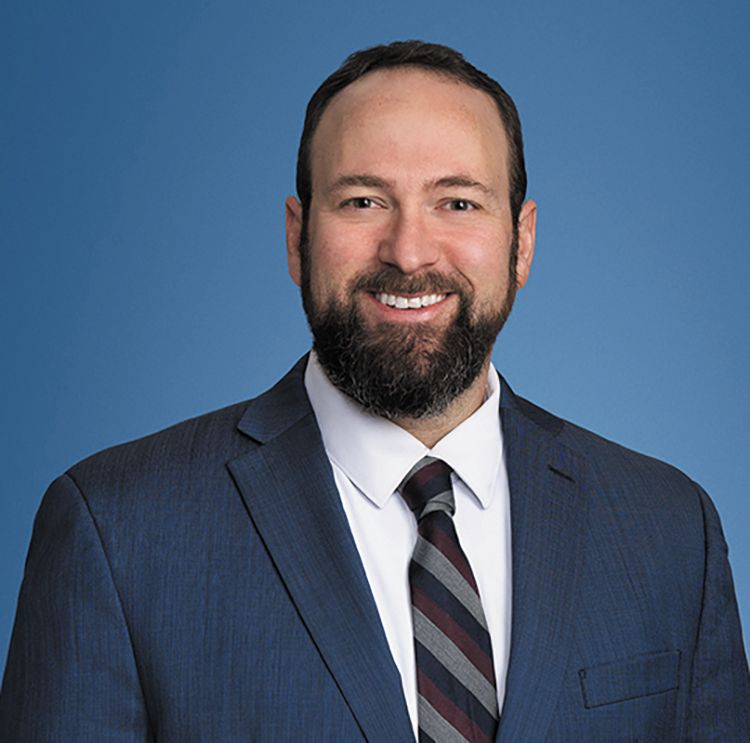
Daniel J. Veroff
Attorney
Merlin Law Group
Email: dveroff@merlinlawgroup.com
Veroff is a veteran of 15 of California's 20 most destructive wildfires in history and has handled numerous other types of property loss and business interruption claims.
The Palisades and Eaton fires incinerated the financial reserves of the California FAIR Plan Association, the state's insurer of last resort. The plan only sells insurance policies in fire-prone areas because the law says it must. The plan gets its funding from private insurance companies who choose to do business in the state -- the same insurers who were already leaving in droves. In October 2025, Gov. Gavin Newsom signed a legislative package that fundamentally restructures the plan for the next firestorm.
Stabilizing the finances. The centerpiece of the reforms is AB 226 (Calderon), the "FAIR Plan Stabilization Act." Previously, the plan relied on immediate cash assessments from insurers to pay catastrophe claims, a volatile mechanism that destabilized the private market. AB 226 authorizes the California Infrastructure and Economic Development Bank to issue bonds on the plan's behalf, secured by a "statutory lien" on future assets. This financial engineering allows the plan to spread disaster costs over decades rather than demanding immediate cash.
However, this stability comes at a direct cost to homeowners. Under the newly issued Bulletin 2025-4, private insurers paying these assessments are now permitted to recoup 50% of the cost directly from their policyholders through temporary surcharges. Effectively, the legislation acknowledges that the cost of insuring the Wildland-Urban Interface is now a collective statewide responsibility.
Closing the equity gap. Crucially, the reform package includes SB 525 (Jones), a measure essential to addressing the socio-economic disparities exposed by the Eaton Fire. That fire devastated working-class neighborhoods in Altadena, where many residents lived in manufactured homes insured only for their depreciated value. SB 525 mandates that the plan offer replacement cost coverage for manufactured and mobile homes, ensuring that vulnerable homeowners are not left with payouts insufficient to rebuild. This moves the plan toward greater social equity, matching the coverage previously reserved for site-built homes.
Modernization and oversight. The reforms also target the plan's antiquated operations. AB 290 (Bauer-Kahan) forces the plan to address its "tech debt" by implementing automatic payment systems by April 1, 2026, and prohibiting cancellations solely for non-enrollment. This addresses the wave of technical policy lapses that left many homeowners uninsured during the January crisis. Simultaneously, AB 234 (Calderon) inserts the speaker of the Assembly and the chair of the Senate Rules Committee as non-voting members of the FAIR Plan's governing board, embedding legislative oversight directly into the heart of the plan's governance process.
The long view. Finally, AB 1 (Connolly) institutionalizes the link between science and premiums. It requires the Department of Insurance to review and update "Safer from Wildfires" regulations every five years starting in 2030, ensuring that insurance discounts keep pace with evolving fire mitigation technologies.
The 2025 legislative package accepts this reality, fortifying the plan's balance sheet with bond markets and state oversight. While these laws do not reduce physical fire risk, they ensure the financial vehicle carrying California's most volatile properties is robust enough to survive the next firestorm.
Daniel J. Veroff is an insurance attorney at Merlin Law Group, representing policyholders in large-loss property insurance disputes. He is based in the firm's San Francisco office, and he is licensed in California, Oregon and Washington, and has co-counseled cases across multiple states. He can be reached at dveroff@merlinlawgroup.com.
For reprint rights or to order a copy of your photo:
Email
Jeremy_Ellis@dailyjournal.com
for prices.
Direct dial: 213-229-5424
Send a letter to the editor:
Email: letters@dailyjournal.com