


Dec. 23, 2025
Battle over a dry river puts California water rights back on trial
Once a flowing river through Bakersfield, the Kern now runs dry for most of the year. A case now before the California Supreme Court asks whether state law requires it to flow again--and what that answer could mean for water users statewide.


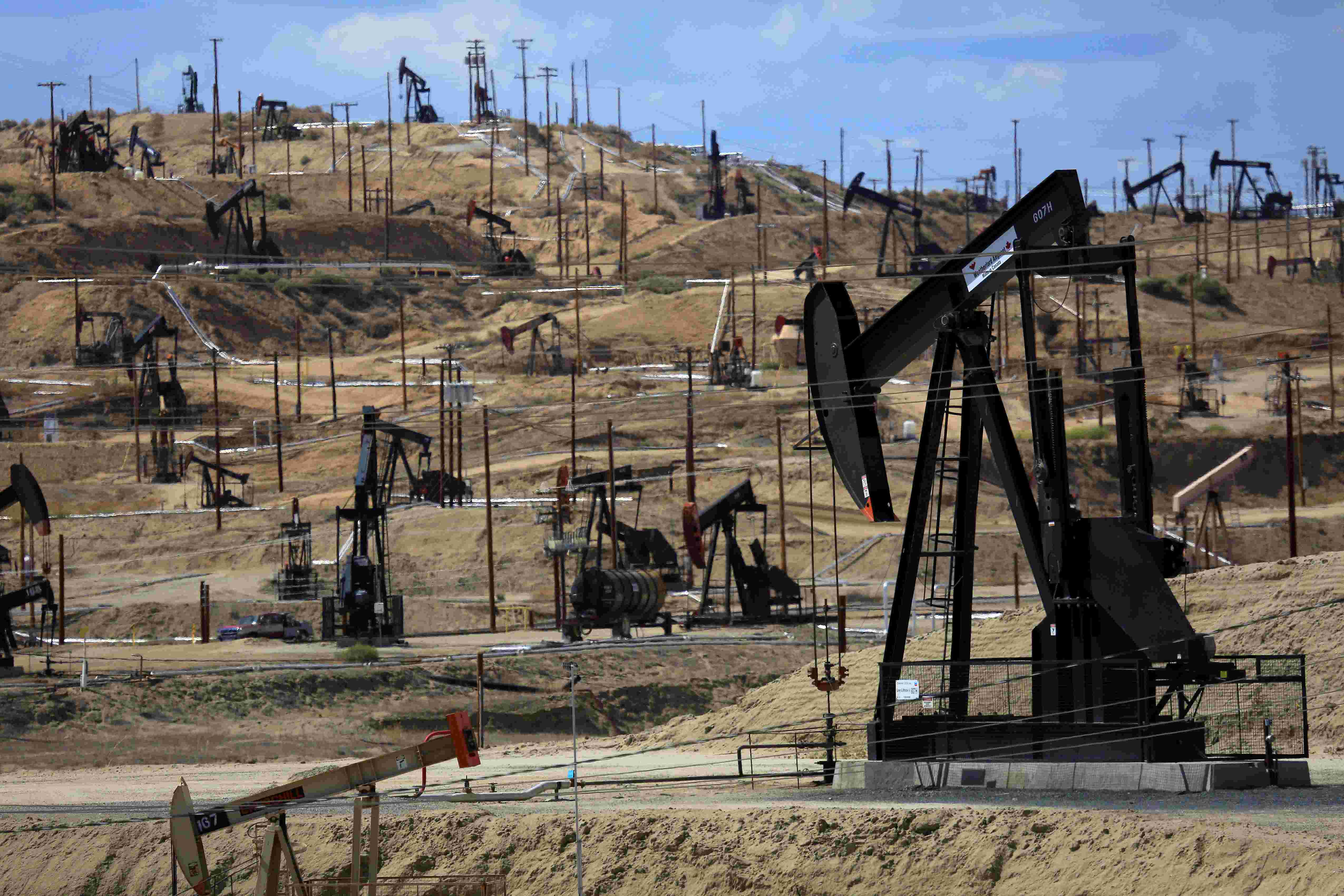
Merle Haggard, a son of Bakersfield, sang the blues for the river that once flowed through his hometown, but now mostly runs bone dry.
His "Kern River Blues" lyrics echo the core grievance of the plaintiffs' opening brief in a developing state Supreme Court showdown over the empty watercourse's future: That corporate agricultural needs have come to overbalance the public's interest in a healthy environment.
Haggard sang, "Well, they used to have Kern River/Runnin' deep and wide/Then somebody stole the water/Another politician lied."
It was Haggard's last song before his death in 2016. As far back as 2007, Bakersfield officials applied for the rights to newly available flows that a water district had forfeited. The officials pledged to run the new water down the arid riverbed. In 2022, as hearings over the issue were still ongoing, impatient environmental groups sued to restore the Kern to their city.
Heavy rains and flooding in 2023 recharged the river for the first time in years. It was an inadvertent Exhibit A showing what the plaintiffs sought to make permanent. Observers in Bakersfield reported seldom-seen badgers, bobcats, owls and eagles along the riverside. Then the Kern dried up again.
Now, after three years of litigation, the first water rights case to reach the high court in decades features as plaintiffs the nonprofits Bring Back the Kern, Water Audit California, the Sierra Club, the Audubon Society, and others confronting Bakersfield officials over how they divvy up the river.
The "Bring Back the Kern" movement is part of a statewide trend toward wild river restoration that has shown recent successes with the Klamath, the Eel and the San Joaquin rivers.
With the Kern, the odds seemed long. The lawyer the plaintiffs wanted turned them down at first. "I told 'em nope," said Adam F. Keats of San Francisco, a veteran environmental law practitioner who has often seen water rights litigation outcomes favor powerful farming interests. "This is as hard as it gets. But they came together, had amazing initial success, and got my attention." Keats signed on.
Also on the plaintiff side: Morrison & Foerster LLP and Shute Mihaly & Weinberger LLP.
Lined up for the defense of Bakersfield and the Kern's water rights holders are its city attorney's office; Duane Morris LLP; Young Wooldridge LLP; Somach Simmons & Dunn; Hanson Bridgett LLP; Horvitz & Levy LLP and numerous small Central Valley firms representing the water districts involved.
City Attorney Virginia A. Gennaro and Sean G. Herman of Hanson Bridgett did not return messages seeking comment. Nicholas A. Jacobs of Somach Simmons declined to comment.
Fed by Mount Whitney snowmelt, the Kern River's wild waters gush out of the Sierras southwest toward the Central Valley--where Bakersfield's six diversion dams allow thirsty almond growers and other agricultural users to drain the torrent to a trickle, or less, by the time it reaches town.
Except in flood years, the result is a completely dry municipal riverbed with zero fish habitat, poor support for trees or riverside vegetation, and increased dust and particulate pollution.
"Bakersfield is a toxic, dusty hellscape where a river could provide a verdant, moist, temperature-dropping respite from the sun and heat of the Valley," Keats said.
The city could get a fresh green makeover if Keats and his clients prevail. In 2023, they won a preliminary injunction from a trial judge to restore the Kern's flows through the city, based on a key environmental law and the public trust doctrine--only to be reversed months later by a state Court of Appeal panel.
The reversal came despite support for the plaintiffs by Attorney General Rob Bonta, the California Department of Fish and Wildlife and CalTrout Inc. Bring Back the Kern et al., v. City of Bakersfield (North Kern Water Storage District et al.), F087487 (5th DCA, op. filed Aril 2, 2025).
The panel ruled that the trial judge, Gregory A. Pulskamp, should have conducted an extensive inquiry into how best to balance the river's uses under a section of the state Constitution that prohibits the wasteful and unreasonable use of California's water.
"The court's failure to directly consider the reasonableness of the water use it was ordering in the injunction was constitutional error," wrote Justice Mark W. Snauffer for his colleagues.
The Supreme Court granted review in July. A decision is expected next year. Bring Back the Kern v. City of Bakersfield (North Kern Water Storage District), S290840 (Ca. S. Ct., rev. gtd. July 16, 2025).
Veteran appellate attorney Jeremy B. Rosen of Horvitz & Levy LLP, retained for the high court review by the water districts that depend on the Kern, said the justices should affirm because all that's required by the Court of Appeal is for the trial court to conduct a reasonableness analysis.
The plaintiffs were overly dramatic in their petition for review, Rosen added. "It's a bit hysterical, with a sky-is-falling quality," he said.
"All we're saying is, the court has to balance all factors to decide what is a reasonable use of the water available, and the trial court didn't do that."
The nut of the dispute is an asserted clash between Fish and Game Code Section 5937, which requires dam operators to allow sufficient water to pass to keep downstream fish in good condition, and Article X, Section 2 of the state Constitution, which contains the reasonableness requirement for water use cases.
Also in the mix is the public trust doctrine and a 140-year-old state Supreme Court water rights opinion establishing that appropriative rights are secondary to riparian rights. Lux v. Haggin, 69 Cal. 255 (1886).
Case law has established that Section 5937 is a valid exercise of the Legislature's power to determine reasonable and beneficial uses of water, said Keats, the plaintiffs' lead counsel for the appeal.
"As the trial court correctly found, Plaintiffs demonstrated a high likelihood of success on the merits of their argument that the City's diversion of all water in the Kern River, leaving nothing for fish, violates the plain terms of Section 5937," Keats contended in his petition for review.
"No additional 'balancing' was required for the trial court to reach this conclusion as a matter of law."
He added in an interview, "To have to analyze and balance and compare all uses of water in every instance could make it functionally impossible to enforce 5937."
Brian E. Moskal generally represents defendants in water rights matters as an environmental litigation partner at Greenberg Glusker Fields Claman & Machtinger LLP. He's followed the Kern River litigation, though he's not involved in the case.
"The water agencies here have the better argument," Moskal said. "If a California statute is found to have predetermined the outcome, that would box out a constitutional provision."
It's hard to predict how the Supreme Court will rule, he added. "But there's one tea leaf: They did not depublish the Court of Appeal opinion, which they sometimes do if they plan to reverse."
An attorney specializing in water resources law and policy, Kristin B. Peer of BKS Law Firm PC in Sacramento, said her firm may be retained by water agencies to write an amicus curiae brief in the case.
"Whatever the Supreme Court decides will have a significant impact for all water users in the state," she said.
A longtime scholar of California's water wars, emeritus law professor Richard M. Frank, now at UC Davis' Center for Watershed Sciences, said that there is momentum behind the push to renew the state's natural resources.
Frank likes the environmentalists' chances in the Kern River case, due to the overwhelming deference the Court of Appeal gave the defense's "reasonableness" argument. "That gives courts tremendous latitude to demote 5937," Frank said. "It suggests the Supreme Court has concerns about the sweep and rationale behind the Court of Appeal's ruling."
The last time the Supreme Court considered water rights was more than 40 years ago, when environmentalists successfully argued that the public trust doctrine must be a factor in the allocation of resources.
Then, the water in question was in Mono Lake, and the court required the Los Angeles Department of Water and Power to modify its diversions to maintain the lake's health. National Audubon Society v. Superior Court, 33 Cal.3d 419 (1983).
The trend ever since is toward the public's right to enjoy California's water. "The Mono Lake case involved hammer-and-tongs litigation, but there was consensus and cooperation in the Klamath River restoration," Frank said. Suggesting that the high court might side with environmentalists over the Kern River, he added, "The old adage is that the Supreme Court doesn't take cases to affirm them."
John Roemer
johnroemer4@gmail.com
For reprint rights or to order a copy of your photo:
Email
Jeremy_Ellis@dailyjournal.com
for prices.
Direct dial: 213-229-5424
Send a letter to the editor:
Email: letters@dailyjournal.com