


Ethics/Professional Responsibility
Jan. 2, 2026
In praise of civility and the social contract
California now requires lawyers to pledge civility, but rules alone can't fix a profession--or a society--that has forgotten the social contract.



Timothy D. Reuben
Reuben MediationEmail: treuben@rrbattorneys.com
Tim Reuben spent more than 40 years handling complex legal disputes in California's state and federal courts. As the founder and managing partner of Reuben Raucher & Blum in Los Angeles, he has worked on a wide range of matters through jury and bench trials, arbitration, mediation, judicial reference, and settlement conferences across multiple areas of civil law, including commercial, real estate, construction, employment, intellectual property, insurance, professional liability, and unfair competition.
All attorneys are now receiving from the State Bar the
following notice of a rule change: "The California Supreme Court has amended
rule 9.7 of the Rules of Court: All active licensees and special admissions
attorneys--which, for purposes of rule 9.7, includes foreign legal
consultants--are required to submit an annual declaration of adherence to the
attorney oath." Simply put, to maintain his or her license, every lawyer must
sign a declaration each year stating: "As an officer of the court, I will strive
to conduct myself at all times with dignity, courtesy and integrity."
The need for civility in legal practice has been much
touted recently, but it's not a new idea at all. Back in 2007, the California
Bar published Guidelines on Civility and Professionalism, which state:
"As officers of the court with responsibilities to the
administration of justice, attorneys have an obligation to be professional with
clients, other parties and counsel, the courts and the public. This obligation
includes civility, professional integrity, personal dignity, candor, diligence,
respect, courtesy, and cooperation, all of which are essential to the fair
administration of justice and conflict resolution." (California Attorney
Guidelines of Civility and Professionalism.)
Numerous bar associations and courts adopted these rules,
including the Los Angeles Superior Court.
In addition, the California Supreme Court recently
approved updates to provisions of the attorney ethics code, many of which are
directed toward more professional interactions between opposing lawyers. For
example, Rule 3.4 is actually entitled "Fairness to
Opposing Party and Counsel" and directly requires an attorney to refrain from
certain sharp or unfair litigation tactics. Rule 3.2, entitled "Delay of
Litigation," expressly prohibits a lawyer from using "means that have no
substantial purpose other than to delay or prolong the proceeding or to cause
needless expense."
Now all lawyers must actually sign
a declaration each year promising to be civil. But how have all these efforts
towards making the legal profession a kinder, gentler, and yes more civil
business fared? Many agree that there has been little positive change, and
arguably civil litigation has actually become even
less civil, which is possibly why the Supreme Court created this new mandatory
rule.
But isn't law school and the practice too late to try to
teach fully grown adults to act respectfully? Doesn't the raging antagonism
amongst people of different political viewpoints today suggest that not just
lawyers, but everyone should be educated in civil discourse and interaction, a
concept fundamental to the social contract?
What is the social contact? It's an idea, a theory about
how we live peacefully and safely together. It's not something that we sign or
negotiate, but we all are supposed to know it. Jean-Jaques Rousseau in his
famous book of the same name described it as what makes government necessary
and legitimate--we give up certain rights so that we can live in a society of
laws that protect us and are enforced by the government. The concept of the
social contract has evolved through multiple philosophers and thinkers, and it
has come to mean that we all implicitly agree to follow rules of common decency
and respect. Gee, that's not hard to say--kind of like a modified version of the
old golden rule.
Of course, it's more than giving up the right to steal or
plunder or kill or hit someone. Recognizing the rights and comfort of others
means you change your behavior and act with consideration, that you not be rude. So, you shouldn't continue your cell phone
conversation on an elevator with others--not that it's illegal, it's just not
considerate of the people in the elevator with you for 10- 20 seconds. Or when
you drive, you shouldn't tailgate someone or cut them off. And when somebody
expresses a point of view you disagree with, you don't react by slandering or
mistreating them. And in a courtroom, you treat your opposing counsel not as
some disdainful horrible enemy, but as another colleague doing his or her best
to represent a client.
The key to the social contract is that we all follow it. It
is not just strictly obeying the law (or civility or ethics rules), but it
involves recognizing and respecting others. John Locke and Rousseau posited
that "individuals acquire civil rights by accepting the obligation to respect
and protect the rights of others, thereby relinquishing certain personal
freedoms in the process." And giving up the "freedom of speech" right to shout
at and insult another human being is not much of a relinquishment. Lawyers
still can practice the art of persuasion by offering rational argument and even
doing so passionately; but intimidation or plain nastiness is unnecessary,
whether in law or in society.
Of course, the
tactic of intimidation in litigation can be effective--lawyers
sometimes obtain favorable settlements or other rights or advantages by
traumatizing and scaring the opposing party. But that tactic fails more often
than it succeeds and frequently boomerangs back resulting in a less favorable
outcome and a stauncher opposition. The intimidation tactic also makes the
practice of law more stressful and less satisfying. Simply put, if everyone
respects the social contract, everyone wins, even the lawyers.
These things can and should be taught long before
adulthood. Religious institutions once were the primary way we taught
youngsters morals, but today religion has lost much of its influence, and many
children grow up never being schooled in the basic principles of common
courtesy and respect. Frequently the young are encouraged to look up to and
praise those who violate the societal norms of conduct, who boldly act badly. A
renegade who defies rules is always more exciting and interesting to kids. It
is also typical for the media, instead of providing hard facts and intelligent
analysis, to engage in hyperbole for political purposes and to both rile up the
public or demonstrate profound disdain for our leaders or institutions. Sadly,
sometimes this confluence of negative forces can result in gun violence.
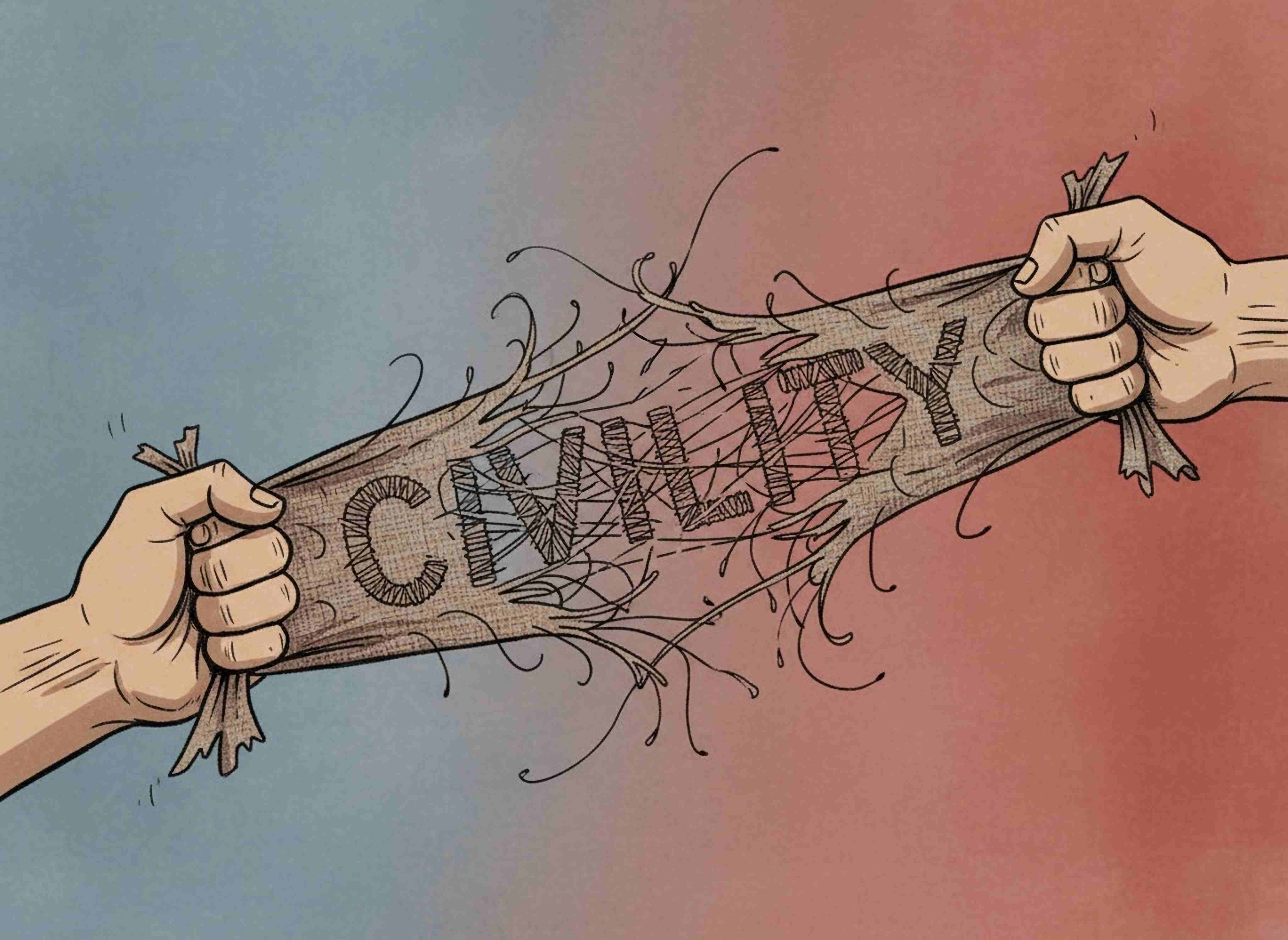
We live together in a civil society only by respecting the
social contract, and to the extent we ignore it, we tear at the fabric that
holds us together and makes us safe. Attorneys can and should set an example of
civil discourse, but too often fall woefully short. Will the Supreme Court's
new rule make a difference? While well-intentioned, it seems unlikely to change
the behavior of those who are habitually rude and disrespectful.
Submit your own column for publication to Diana Bosetti
For reprint rights or to order a copy of your photo:
Email
Jeremy_Ellis@dailyjournal.com
for prices.
Direct dial: 213-229-5424
Send a letter to the editor:
Email: letters@dailyjournal.com