


Torts/Personal Injury,
LA Fires,
Civil Procedure
Jan. 1, 2026
Challenges of proving standing and causation in California wildfire-related death and illness claims
In California, recovery for wildfire-related harm requires both proof of standing and a causal link to the defendant's conduct.



Michael B. Murphy
Neutral
JAMS
Email: mmurphy@jamsadr.com
Michael B. Murphy is a JAMS neutral based in California with more than 40 years of experience handling complex insurance and reinsurance matters across domestic and international markets. He draws on experience in litigation, claims management, coverage analysis, mass torts and alternative dispute resolution, including service as a mediator, arbitrator and court-appointed special master.
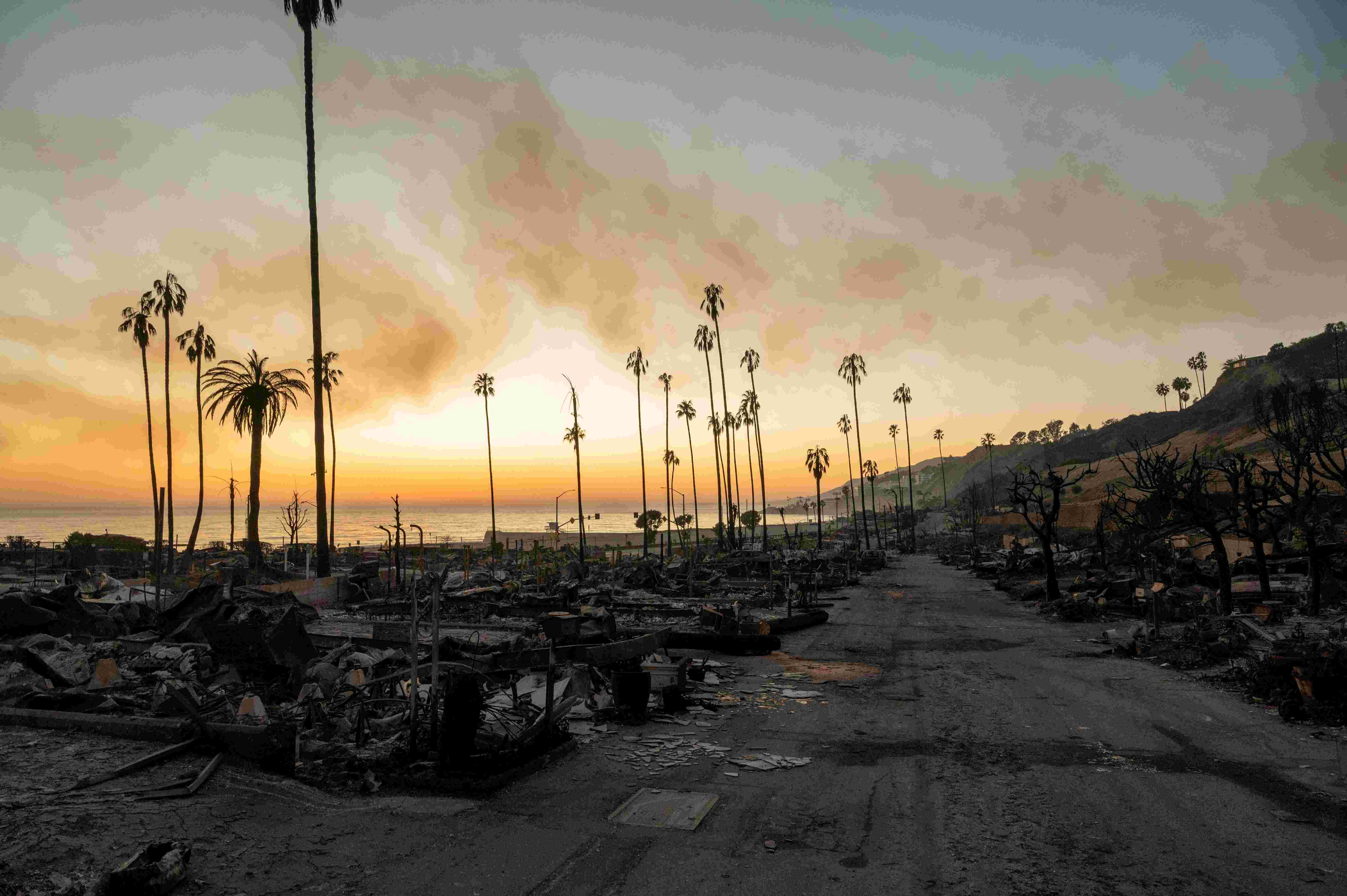
California's wildfires have produced devastating losses,
including fatalities, respiratory illness and long-term health impacts for those
exposed to them. Impacted victims and their families frequently seek
compensation from those believed to be responsible. California law provides
multiple legal remedies--including causes of action for negligence, wrongful
death, public nuisance, inverse condemnation and product liability--but the
right to pursue these claims, ab initio, depends upon two prerequisites:
proving standing to bring the claim in the first instance and establishing causation
between the wildfire and the claimed damage or injury.
Standing
Standing requires a plaintiff to evidence a specific injury
derivative of the defendant's conduct that can be remedied by the court. In
wildfire cases, this is a predicate the absence of which is summarily fatal to
the plaintiff's claim.
California's Code of Civil Procedure § 377.60, the
wrongful death statute, limits recovery to specific categories of survivors of
the decedent, such as spouses, domestic partners and children.
For wildfire personal injury plaintiffs, the claimed
injury must be sufficiently certain or concrete to give rise to an actionable
injury claim. Even with evidence seemingly consistent with a claimed
wildfire-related injury, plaintiffs must produce medical documentation linking
their condition to the wildfire and distinguish it from preexisting issues or
other exposures. The absence of medical support or other factors, such as
delayed or nonexistent treatment, can create enough doubt for a court to find
the absence of standing.
Plaintiffs who suffered purely economic losses--lost wages
due to evacuation, business interruption or a reduction in property value--might
also be determined to lack standing under California's economic loss doctrine,
which holds that negligence claims must be tied to personal injury or property
damage. Thus, absent a statutory exception or contractual right, individuals
who evacuated safely (without "run for your life" emotional trauma) and suffered
only financial harm may be determined to lack standing.
Causation
Even when standing to bring a wildfire-related bodily
injury claim is established, plaintiffs must still overcome the challenge of
proving causation. California law requires the plaintiff to establish that the
defendant's conduct was a substantial factor in causing (or the proximate cause
of) the claimed damage. This can be challenging, especially if the plaintiff
had a preexisting condition, the symptoms of which mirror those of wildfire
smoke inhalation.
Wildfires occur for many reasons, several of which are
natural, such as lightning strikes and climate change, and the ensuing damage
can be exacerbated by drought and unprecedented wind events. Developing
scientific and environmental theories regarding the relationship between
wildfires and their frequency create often-disputed alternative cause and
origin theories that can complicate a plaintiff's causation hurdle.
Determining the ignition source of a wildfire (and
correspondingly, the party responsible, if any, for such) can involve the
forensics of experts in engineering, utility-line construction and maintenance
workers, meteorologists and criminal arson investigators. Regarding utilities
specifically, the investigation will focus upon whether equipment
malfunctioned, the design and maintenance of such, the sufficiency of the
vegetation management program and whether a downed or damaged power line was
the initiating event. Complicating the matter, the true point of ignition might
be compromised or destroyed, creating obvious evidentiary complications for the
plaintiff's burden of meeting the "substantial factor" requirement. The cause
and origin analysis can also be delayed when governmental authorities take
immediate and exclusive custody of suspected ignition source evidence attendant
to their own investigation.
In wildfire wrongful-death claims, the plaintiff must
typically prove the decedent either died directly in the fire or suffered fatal
injuries during the attempted evacuation. If the death occurred at a later date, the plaintiff must provide medical expert
testimony demonstrating that wildfire smoke was a substantial factor in the
death.
With respect to certain plaintiffs, wildfire-related Illness
claims will have to be distinguished from other maladies, such as allergies,
respiratory conditions and viral infections.
Accordingly, plaintiffs will generally need to rely upon
credible expert testimony to establish that the smoke from this particular wildfire event was in fact the cause of the
claimed injury. Defense experts will explore whether the plaintiff's smoke-related
injury claim is supported by not only the medical evidence, but also whether
the plaintiff's proximity to the smoke, duration of exposure and the degree of
smoke at that location are consistent with the claimed injury, or whether these
parameters can be established at all.
Wildfire litigation typically involves numerous potential
defendants, including utility companies; vegetation management subcontractors;
public agencies and entities; those who design, manufacture, construct and/or
maintain equipment; and private landowners whose negligent vegetation
management may have contributed to the intensity or duration of the fire and,
in some cases, ensuing mudslides, erosion and debris flow during follow-on
storm events. Comparative fault principles allow liability to be apportioned
among the several defendants, but plaintiffs still carry the burden of
establishing the proportionate share to be allocated to each.
In summary, standing requirements for wildfire-related
injury claims establish who can sue. Establishing causation obligates plaintiffs
to invest in credible investigations and related forensics that, they will
argue, eliminate alternative or contradictory explanations for the cause and
origin of the wildfire and the claimed wrongful death, as well as smoke-related
and/or emotional distress injuries.
This content is intended for general informational
purposes only and should not be construed as legal advice. If you require legal
or professional advice, please contact an attorney.
Submit your own column for publication to Diana Bosetti
For reprint rights or to order a copy of your photo:
Email
Jeremy_Ellis@dailyjournal.com
for prices.
Direct dial: 213-229-5424
Send a letter to the editor:
Email: letters@dailyjournal.com