


Intellectual Property
Jan. 9, 2026
9th Circuit's 'Top Gun' copyright ruling crashes and burns, costing heirs millions
Copyright law's reliance on judges to parse art yields predictably flawed results--evident in Yonay v. Paramount, where the court dismissed the original "Top Guns" article behind the Top Gun films.


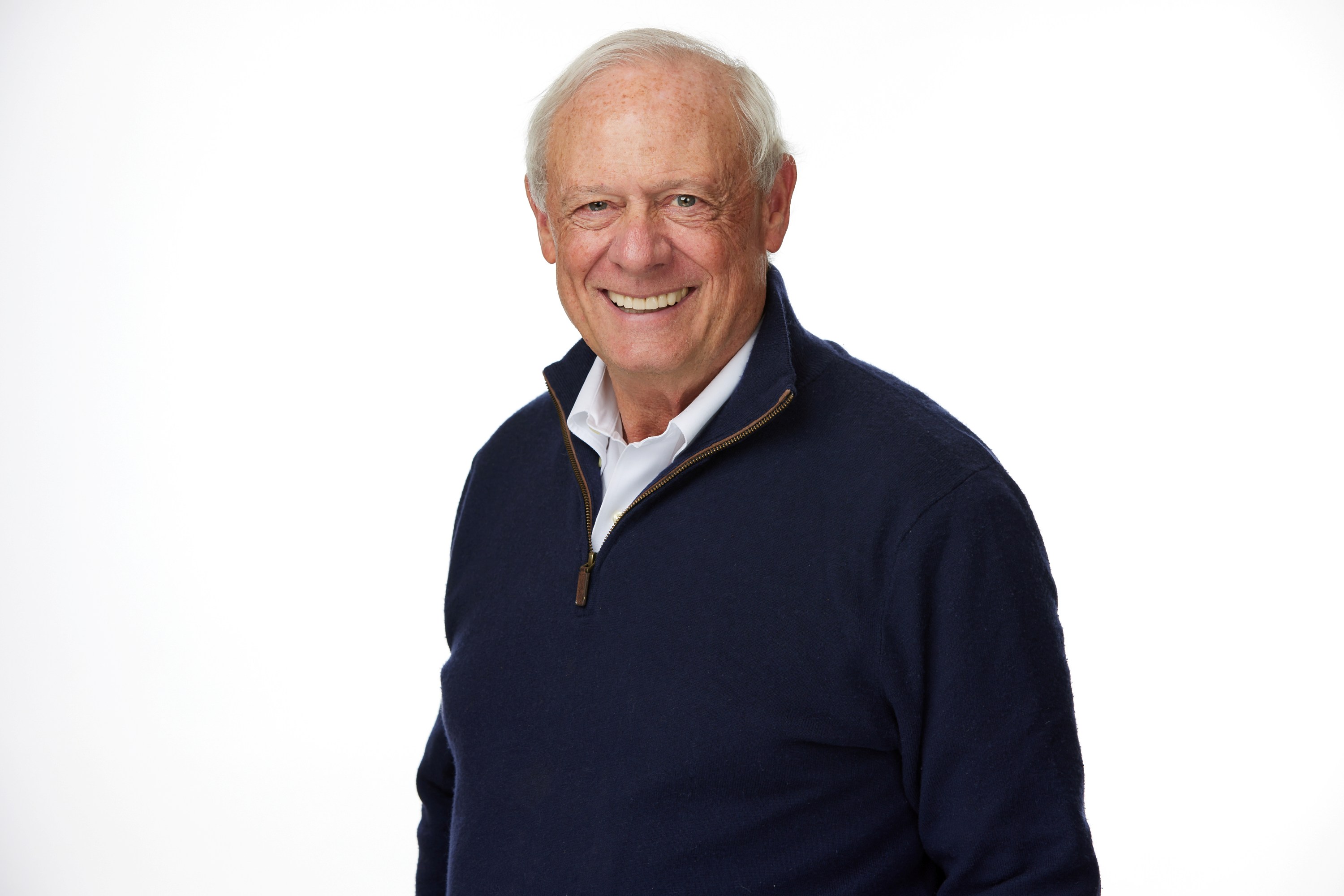
Timothy D. Reuben
Reuben MediationEmail: treuben@rrbattorneys.com
Tim Reuben spent more than 40 years handling complex legal disputes in California's state and federal courts. As the founder and managing partner of Reuben Raucher & Blum in Los Angeles, he has worked on a wide range of matters through jury and bench trials, arbitration, mediation, judicial reference, and settlement conferences across multiple areas of civil law, including commercial, real estate, construction, employment, intellectual property, insurance, professional liability, and unfair competition.
Copyright law has long been a confusing and complex legal
domain, which is continuously made more intricate by incomprehensible judicial
opinions. Trusting bench officers to dissect artistic works and opine regarding
what is protectable and what is not is simply folly--how can a legal career
prepare one to competently decide what is highly debatable artistically? And yet, our current questionable legal
construct for evaluating infringement relies heavily on the analysis of judges
to determine incredibly valuable rights.
So, in Shosh Yonay et al. v. Paramount Pictures
Corporation, 2026 DJDAR 163 (2026), Judge Eric D. Miller of the 9th
Circuit, joined by Judges Andrew D. Hurwitz and Jennifer Sung, penned another
opinion purporting to analyze what in art is protectable. The case involves
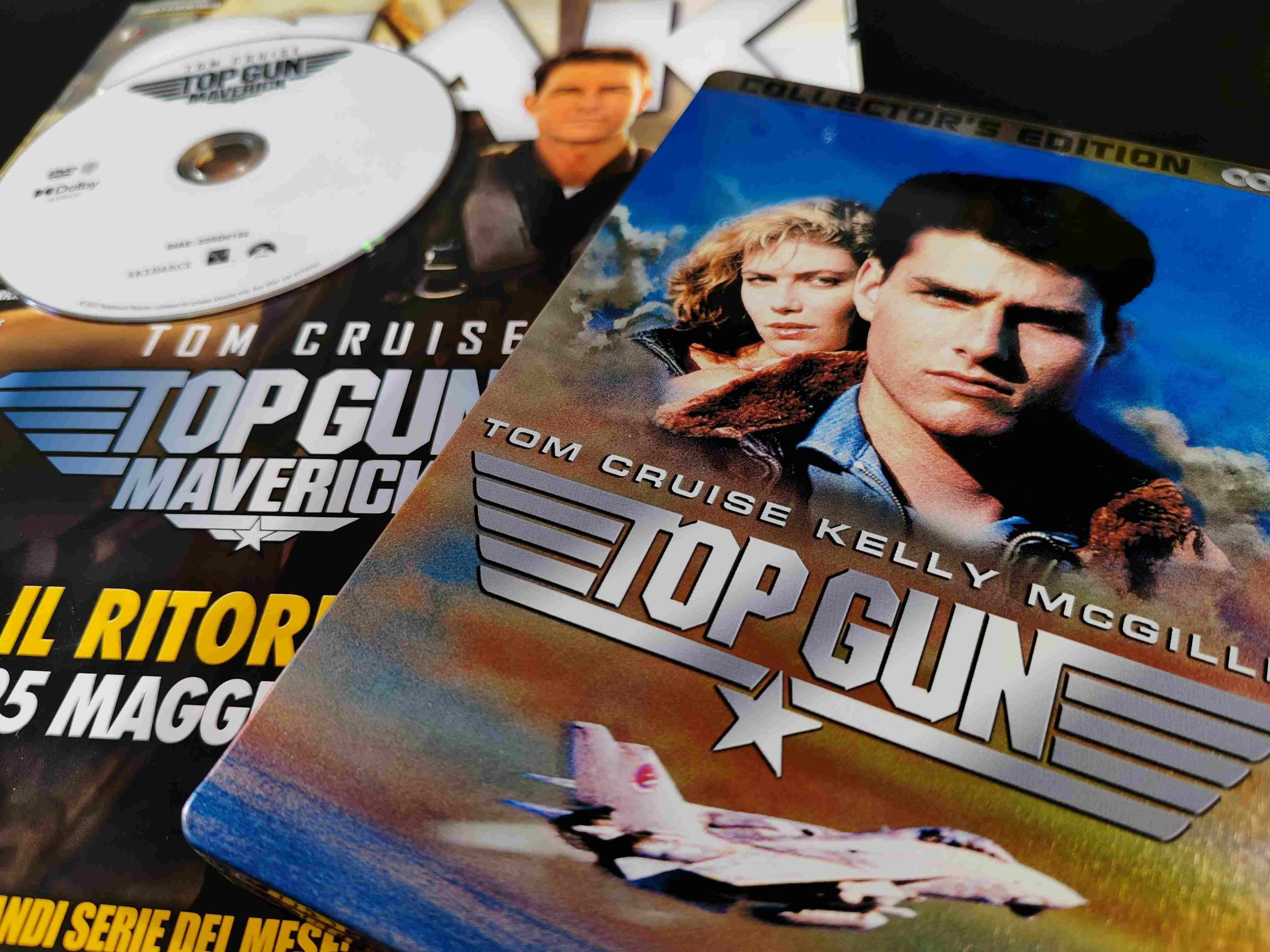
potentially a lot of money because it's about the Top Gun naval program and the
Tom Cruise films that were hugely successful and filled with exciting special
effects of naval aeronautics. But unlike the popular films, this case ends
sadly, with an unfair result for the heirs of the writer of the original
article "Top Guns." And the analysis of
the court, to the benefit of Paramount, arguably contains several flaws that
led to failure for the plaintiffs.
Ehud Yonay wrote an 11-page article entitled "Top Guns,"
published in 1983 in California Magazine, in which he used "extensive
images and subjective expression" to describe the famous Top Gun program. Yonay
even used apparently fictional names (Yogi and Possum) to describe the
experiences of two trainees, their experiences flying F-14 aircraft and the
dynamics between them, as well as within the program. Paramount promptly bought
"all rights to the article." The
Paramount deal provided that Yonay would receive a credit in any movies
"produced by [Paramount] hereunder and substantially based upon or adapted
from" his article. In 1986, Paramount released Top Gun, which was the
top-grossing film of the year. Importantly, Yonay was given a credit that the
film was "suggested by" his "Top Guns" article. Although the opinion does not
recognize this, the credit "suggested by" means "a very loose adaptation of an
original source material, departing massively from the original plot,
characters, or themes." Sometimes
characterized as a "springboard," an example of this credit is how The Sound
of Music was "suggested by" the Von Trapp family's real-life story--and of
course you couldn't have one without the other. Thus, Paramount essentially
acknowledged that the 1986 film was, to some degree, both inspired by and based
on much of the article, since the film relied on and detailed so much of the
factual as well as romantic nature of the Top Gun program described by Yonay.
Ehud passed in 2012, and pursuant to their statutory
rights as heirs, his widow and son terminated the copyright grant made by him
to Paramount in their agreement. The opinion is silent on the details, but
likely the Yonays received a very small financial
payment under the original agreement, while the Top Gun movie made vast
sums for Paramount and others. Expecting a sequel, this decision would appear
to have been sound thinking by the Yonays, and
ultimately in 2022, Paramount released the sequel: Top Gun: Maverick,
another Tom Cruise film filled with amazing aerodynamics. But Paramount did not
credit the Yonays or the article or pay them a penny,
so they sued for copyright infringement and breach of contract in the Central
District.
Initially, Judge Percy Anderson denied a motion to dismiss
but later granted summary judgment, finding that "Top Guns" and Maverick
are not "substantially similar" because, although the works have "some
similarities," those are "based on unprotected elements" like facts about the
Top Gun program or "general plot ideas [and] familiar stock scenes and themes."
Again, importantly, the trial court held that failure to credit Yonay pursuant
to the agreement was not a breach, finding (incredibly) that "Maverick was
not produced under the agreement." Judge Anderson also excluded the testimony
of the Yonays' literary expert, while allowing in the testimony of Paramount's
expert. The Yonays appealed and hired former 9th Circuit Judge Alex Kozinski,
an expert himself in copyright law, to argue their case. But they still lost,
and the judgment was affirmed.
After the "cut and paste" language citing the historical
case law and standards in copyright law--noting that plaintiff must pass both
the extrinsic and intrinsic tests--the opinion then attempts to evaluate whether
there was substantial similarity between the article and the 2022 sequel by
using those judicially created tests. Briefly and without exploring nuances,
the extrinsic test "assesses the objective similarities of the two works," and
expert testimony is admissible for this analysis; the intrinsic test is
supposed to examine "similarity of expression from the standpoint of the
ordinary reasonable observer, with no expert assistance." Case law supports a
trial court applying these two tests on a summary judgment motion, presumably
since there is no issue of fact about what the two works in question are.
Of course, there is a pretty big difference between an
11-page article and a two-hour feature film, yet the court just brushes aside
the Yonays' arguments because they "identify similarities between the article
and the film only by describing both works at such a high level of abstraction
that the similarities do not involve protected expression." But in fact, the opinion goes on to detail
numerous examples pointed out by the Yonays of similarities and then dismisses
them all as "too general to be protectable." That's the first flaw. There are
so many similarities detailed in the opinion that this article would itself be
far too long to describe them all--which illustrates that there had to be a
question of fact. The Yonays describe similarities in plot, sequence, dialogue,
characters, theme, mood, setting and pace, all of which was dismissed by the court.
It would be interesting to learn from the court what it thinks is actually protectable, but it does not say. In the end, each
one of the similarities is deemed factual or otherwise unprotectable ideas. What
this part of the opinion illustrates is that what is protectable expression is
clearly in the eye of the beholder--which means it should be tried and not
disposed of on summary judgment. And notably, there is no recognition that at
least Paramount credited the article with spawning the original blockbuster. If
a feature film can ever misappropriate from an article, it would appear just
from the court's analysis that this one did. There is also absolutely no
discussion of the sequel being a derivative work of the 1986 film under 17
U.S.C. Section 101 (as it obviously is), which is another flaw in the
opinion--obviously the sequel is a derivative work and there should at least be
some analysis of whether that created rights for the Yonays.
The court did at least acknowledge that there can be
copyright protection of non-protectable elements by the
"selection-and-arrangement argument" (e.g. as in Dickens' "A Tale of Two Cities":
"It was the best of time, it was the worst of times"--a unique phrase composed
of simple words). But the moneyed interests again won out over the artist
anyway, this time in an even more strained argument, a third flaw. The court
states that the Yonays "identify no
. . . shared pattern of expression" between the works, although they
"attempt[ed] to articulate patterns the works share." But the court concludes "the patterns they
describe are not the original expression in [Yonay's] article." The court bent
over backwards to try to avoid the multiplicity of artistic arguments--and
judicial officers are not really trained to analyze those. Simply put, that
these appellate judges opine in detail about so many arguable similarities
illustrates that there was a clear issue of fact that should not have been
decided on summary judgment.
The court also affirmed the decision to exclude the Yonays' literary expert, another flaw. Often this type of
testimony is helpful in the analysis and would create an issue of fact. But the
expert acknowledged his approach was not to exclude unprotectable elements in
his evaluation, and the court did not like that. But of course, what is
protectable is really quite hard to determine,
especially for a bench officer, since arguably very little in art is new or
original. As W. Jackson Bate wrote back in 1970 in his "Burden of the Past,"
since the 17th century, artists have been challenged by "the difficulty of
achieving anything new." Christopher Booker, in his 2004 work "The Seven Basic
Plots," pointed out there are not many new plots, new dynamics in love or
adventure or other stories. One can debate whether the stories of both
exceptional Top Gun films are unique, but here, there is no question
that the sequel and the original film were at least loosely adapted from the
article, which explores an exciting naval program that had not been depicted
before--i.e., that was fresh and new. And as admitted by Paramount itself in its
original credit, Top Gun was adapted from the article. Yet that fact was
lost in the court's struggle to be a literary analyst and follow the somewhat
confusing tests that the 9th Circuit laid out long ago.
The final flaw came under the contract claim and the
misinterpretation of its language. The court found that Paramount did not
breach because the film was not "produced by [Paramount] hereunder"
(emphasis added). Citing Black's Law Dictionary, Judge Miller defined the word
"hereunder" as "in accordance with the terms of this document." The court then
tautologically concluded that, because it found no copyright infringement, "it
follows that Paramount did not use that same copyright, which it received
through the agreement, to produce Maverick." What?? What about rights other than
copyrights? The court apparently forgot that, at least according to the
opinion, the contract conveyed "all rights," which are not just copyrights. For
example, under California law, implied-in-fact contracts support idea
submission claims, so especially in light of the
credit in the original film, since Top Gun was at least "suggested by" the
article, that is arguably a right that Paramount used and was bound to credit
in some way in the sequel. Even the name of the article was used for both films.
Some discussion of other rights was necessary, even if to dismiss them.
Judges are not
literary experts, nor are they artists by trade. Interpreting contracts or
statutes or evaluating admissibility of evidence is a different skill. Perhaps
the problem is the long-used extrinsic and intrinsic tests devised by the
courts, which have unfortunately put bench officers in a profoundly impossible
task of being artistic experts. These tests ask too much of the bench and
should be revisited. Here, there is little doubt that these wonderfully
creative financial blockbusters owe something to Ehud and his family. But not
according to the 9th Circuit, and that's just wrong. Many clearly contributed
talent to the success of Maverick, and many were well-compensated for it--but
not the Yonays.
Submit your own column for publication to Diana Bosetti
For reprint rights or to order a copy of your photo:
Email
Jeremy_Ellis@dailyjournal.com
for prices.
Direct dial: 213-229-5424
Send a letter to the editor:
Email: letters@dailyjournal.com