


Criminal
Jan. 13, 2026
California's hidden crisis: Mental illness, addiction and the justice system
California's jails are filled with people struggling with mental illness and addiction. At a recent Hoover Institution symposium, judges, law enforcement and policymakers discussed practical solutions to reform the system and help the state's most vulnerable residents.


Hall of Justice & Records
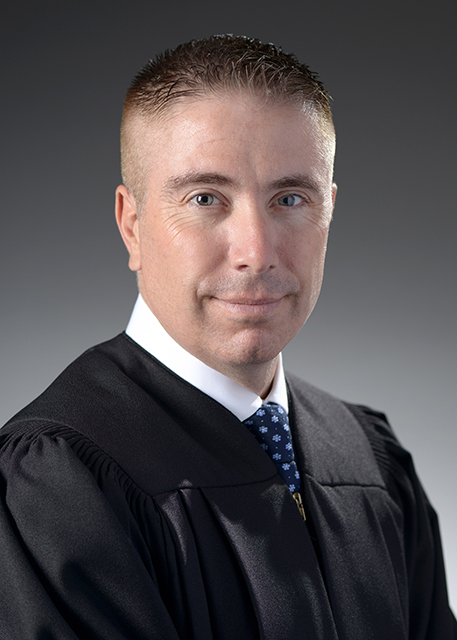
Michael K. Wendler
Judge
Veterans Court, Military Diversion/Collaborative Courts Supervising Judge
Loyola Law School
Michael K. Wendler is a Superior Court judge in San Mateo County, where he presides over the Veterans Treatment Court. He is also a colonel in the Marine Corps Reserve, currently serving as the deputy commanding general of the 4th Marine Logistics Group, based in New Orleans, and is a veteran of Afghanistan and Iraq. In addition, he is a veteran fellow at the Hoover Institution. He can be reached at mwendler@stanford.edu.

In
May 2025, as part of the Hoover Institution's Veteran Fellowship Program, we
gathered at Stanford University to confront a quiet crisis: how to truly fix
the way California's criminal justice system handles mental health and
substance abuse. This crisis is filling our jails, draining public resources
and affecting the very people our systems should be helping.
The
symposium we hosted brought together top minds from across disciplines to
tackle this mounting and costly challenge--California Attorney General Rob
Bonta, former Rep. Jackie Speier, retired National Security Adviser H.R.
McMaster and award-winning journalist Kevin Fagan. They helped guide open and
candid discussions with law enforcement officers, mental health professionals,
judges, economists, service providers and people with lived experience in the
system.
What
emerged was a consensus more powerful than any speech or statistic:
California's approach to mental illness and addiction in the justice system
needs improvement--and we know how to fix it.
Across
our courts, jails and streets, we see the same story unfold daily: people in
crisis--often veterans, trauma survivors and those battling addiction or
untreated mental illness--cycling through a justice system that was never
designed to be their doctor, therapist or social worker. We ask police to
respond to psychiatric emergencies, judges to prescribe stability and
correctional facilities to cure disease. It's no wonder we keep seeing the same
faces return.
Today,
jails and prisons have become the largest providers of mental health services
in the country--not by design, but by default. People with untreated mental
illness are arrested for behaviors that stem from their conditions. They sit in
cells receiving care from jail staff. They cycle through courtrooms and crisis
centers. And they are disproportionately poor and homeless.
This
is a public health crisis as much as it is a public safety problem. On the one
hand, the solutions are simple. On the other hand, the solutions are extremely
complex and require challenging our beliefs, honest conversations and
overcoming politics to help our most vulnerable.
But
hope isn't lost. Throughout our symposium, we heard from counties that are
piloting innovative solutions and using artificial intelligence to better serve
our vulnerable population. We learned about crisis response teams that pair
police with clinicians, reducing arrests and saving lives. We saw data showing
how mental health and drug treatment courts significantly lower recidivism. We
reviewed research indicating that community-based treatment costs a fraction of
incarceration--and yields better outcomes.
We
also examined economic models showing that every dollar spent on behavioral
health treatment can return up to $5 in reduced crime and incarceration costs.
In Santa Clara County, a housing-first model for people with serious mental
illness and substance use issues achieved an 86% success rate. In San Mateo
County, leaders are investing in wraparound services to meet people where they
are--before a crisis lands them in jail.
These
are not isolated success stories. They are roadmaps for reform.
Our
next step must be action. We need sustained funding for local and regional
treatment infrastructure. We must empower counties to scale diversion programs,
mental health courts and peer-led recovery services. We need to reform outdated
data-sharing laws that prevent coordination among courts, health providers and
law enforcement. And above all, we must stop confusing illness with
criminality.
This
is not just a moral imperative--it's smart policy. By investing in mental health
and substance use treatment across all levels of the justice system, California
can help its most vulnerable residents, reduce crime and save taxpayer dollars.
The experts have solutions based on their experience in shelters, clinics,
courtrooms, jails and on the streets. But local successes often struggle to
survive because they depend on unstable funding and shifting political winds.
What
we need now is for policymakers to listen to those men and women in the arena
who witness the human cost of inaction and the tangible results of compassion
paired with accountability. The path forward is complex, but it is not
mysterious. The experts in the room offer the roadmap; what's needed now is for
those in power to listen, fund and act boldly. The answers aren't hidden in
think tanks or partisan platforms--they're found in the daily experiences of
those who respond to crises, build trust and guide people toward recovery. It's
time their voices shaped policy.
We
know what works. The only question left is whether we have the will to act.
The
Hoover Institution will host its third symposium on mental health and the
criminal justice system next May, bringing together judges, law enforcement,
policymakers, treatment professionals and community leaders to continue this
vital conversation. Those who share this commitment--and who have ideas,
research or on-the-ground experience to contribute--are invited to join us. The
solutions we seek are within reach, but it will take collaboration, courage and
sustained attention to turn progress into policy. I welcome anyone who wishes
to be part of that effort to reach out and participate in the discussion.
Submit your own column for publication to Diana Bosetti
For reprint rights or to order a copy of your photo:
Email
Jeremy_Ellis@dailyjournal.com
for prices.
Direct dial: 213-229-5424
Send a letter to the editor:
Email: letters@dailyjournal.com