


State Bar & Bar Associations,
Ethics/Professional Responsibility
Jan. 15, 2026
Be proactive: State Bar recommendations for trust account compliance
With trust account compliance reviews expanding in 2026, now is the time for California attorneys to adopt stronger recordkeeping practices and foster a firm culture of transparency and accountability.


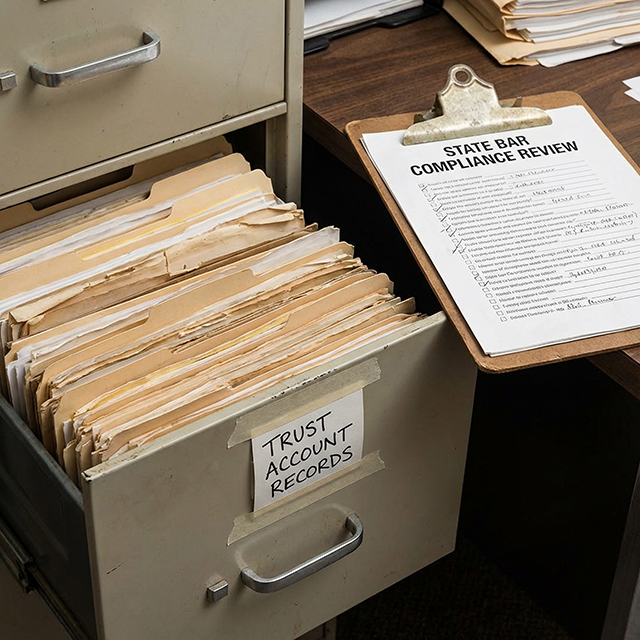
Preparing for a State Bar compliance review is not just
about meeting regulatory requirements--it's about building a culture of
accountability, transparency and trust within your law practice. Whether you're
a solo practitioner or part of a larger firm, the steps you take today can save
you time, money and unnecessary stress. In
September 2025, the State Bar's mandatory Client Trust Account Protection
Program (CTAPP) compliance reviews kicked off with 100 attorneys and firms
selected to participate. While the first group of mandatory compliance reviews
is nearly complete, the compliance review program is expanding in 2026. This State Bar article outlines
five practical recommendations for attorneys to proactively prepare for a
compliance review and improve trust account recordkeeping practices.
1. Collaborate with your bookkeeper or accounting
professional
Schedule a dedicated session with your bookkeeper--whether
that person is an outside CPA, in-house accountant, CFO or another financial
professional responsible for daily record maintenance. Many issues identified
during the compliance review process stem from a lack of communication between
the attorney and the trust account recordkeeper. This isn't surprising,
considering both the lawyer and the accountant may not understand what the
other does not know. As a licensee with a nondelegable duty to supervise, and
as the designated licensee under Rules of the State Bar, rules 2.4(F) and
2.5(E), you are responsible for reviewing the accountant's work, including
completed monthly three-way reconciliations, and ensuring compliance with
applicable Rules of Professional Conduct and Rules of the State Bar.
Recommendation:
Review together Rules of Professional Conduct, rule 1.15 in its
entirety--paragraph by paragraph. This document is pivotal in clarifying
responsibilities that will be essential during the compliance review process.
The first part of rule 1.15 focuses on compliance duties more easily understood
by the attorney, while the second part details the standards for
bookkeeping--what records must be kept, what information must be included, and
how transactions should be documented. These standards are unique to the legal
profession, and even a highly trained bookkeeper would not necessarily be aware
of them. This collaborative review helps clarify responsibilities, identify any
gaps or limitations in your current practices, and ensure both parties are
aligned before a compliance review begins.
2. Know what accounts you hold and who's responsible for
them
Do you know what trust accounts you or your firm hold and
who is responsible for them? Established firms may have older, seldom-used
trust accounts that are still open. If your firm holds multiple trust
accounts--whether IOLTA or non-IOLTA trust accounts--the accounting records may
not be held in a central location and therefore may not be readily available to
provide to the State Bar when selected for a compliance review. Rule 2.5 of the
Rules of the State Bar requires California licensees to register (or have their
firm register on their behalf) every trust account for which they have
safekeeping responsibilities under Rules of Professional Conduct, rule 1.15,
including accounts infrequently used, held in other states, with low activity,
or opened years ago. Keeping track of all trust accounts held by the law firm
and determining who is responsible for them is part of the compliance review
process, and a surprising number of law firms of all sizes struggled with this
during the first 100 compliance reviews.
Recommendation:
Inquire internally, and potentially with your banker, to determine and document
all trust accounts held by the law firm. Determine the designated licensee for
each trust account, as defined and required by Rules of the State Bar, rules
2.4(D) and 2.5(E), and document with the list of trust accounts. Providing an
incomplete or inaccurate list of trust accounts or not knowing who is
responsible for the account(s) delays the compliance review process and may
indicate lack of supervisory oversight by the law firm.
3. Know what records you must maintain and what
information must be recorded in each one
When selected for a compliance review, the State Bar will
request specific records. One of the most critical records is the account
journal for each trust account holding California client funds--whether you have
one trust account or many.
What is an account journal?
The account journal is like a checkbook (or general
ledger) for your trust account. It is a comprehensive view of your trust
account activity, recording every transaction that takes place in chronological
order--from the day the account is opened until it is closed. Importantly, each
transaction must identify the associated client. If your trust account journal
lacks this information, your recordkeeping is incomplete, and the State Bar may
request additional information to determine who is associated with each
transaction.
Recommendation:
Educate yourself about how to maintain complete, accurate trust account
journals that are compliant with rule 1.15. Don't wait until a review is
underway to try to create the record or populate missing data. You have 30 days
to respond to the initial records request, which includes providing the trust
account journals for all California trust accounts. Scrambling to gather
information can lead to errors or potential noncompliance. The best practice is
to establish a monthly routine in which you personally review trust account
journals and reconciliations. Even a brief review can help detect issues early
and demonstrate active supervision.
4. Utilize State Bar resources
The State Bar offers self-assessment tools--specifically an
attorney
self-assessment and a law
firm self-assessment--that can be invaluable during your preparation. The
law firm self-assessment is designed to help you prepare for the compliance
review process by walking you through the areas that will be evaluated.
Recommendation:
Complete the assessments proactively. Use these self-assessments as a checklist
to identify and correct any compliance issues. Review the resources listed in
the self-assessments, follow up on unclear items, and make necessary
adjustments to your procedures now--before you are selected for a compliance
review.
5. When selected, respond early to the initial records
request
Once selected for a compliance review, you'll receive both
an email and a phone call from the State Bar. A dedicated State Bar staff
member will be assigned to you to guide you through the process
and provide access to resources, such as the CTAPP Compliance Review
webpage and overview video.
The first step is to provide certain trust account
information within 30 days, as required by Rules of the State Bar, rule 2.6(A).
This request should not be burdensome. Some attorneys have submitted records
within a day. We suggest providing the records ahead of the deadline, which
allows State Bar staff to review them and provide feedback so that you may
update the initial production. This will allow the CPA firm to have the records
it needs prior to the compliance review engagement.
Recommendation:
During the first 100 compliance reviews, over 80% of law firms submitted
incomplete or incorrect initial records--often at the deadline. If your initial
records remain incomplete after the deadline, CPA firms must spend extra time
addressing these issues, which delays the compliance review and can increase
costs. To save time and money, respond to the initial records request early,
not on the last day. Early submission allows the State Bar staff to review and
provide feedback before records reach the CPA firm, ensuring completeness and a
prompt start to the compliance review process.
Final thoughts: Be proactive, not reactive
Don't wait until you're selected for a compliance review
to start preparing. Comprehensively preparing for a compliance review is a
proactive investment in your legal practice. By strengthening your
recordkeeping practices, understanding your obligations, and leveraging State
Bar resources, you not only protect your clients and firm but also enhance
client trust and satisfaction. This thorough preparation ultimately reduces the
likelihood of client complaints and fosters a culture of compliance within your
organization. Investing time and effort now will save you time and resources in
the long run.
Submit your own column for publication to Diana Bosetti
For reprint rights or to order a copy of your photo:
Email
Jeremy_Ellis@dailyjournal.com
for prices.
Direct dial: 213-229-5424
Send a letter to the editor:
Email: letters@dailyjournal.com