


Alternative Dispute Resolution
Jan. 16, 2026
Lawyers, don't miss the cultural clues in dispute resolution
Cultural awareness allows lawyers to do more than resolve disputes--it helps clients feel understood in the process.


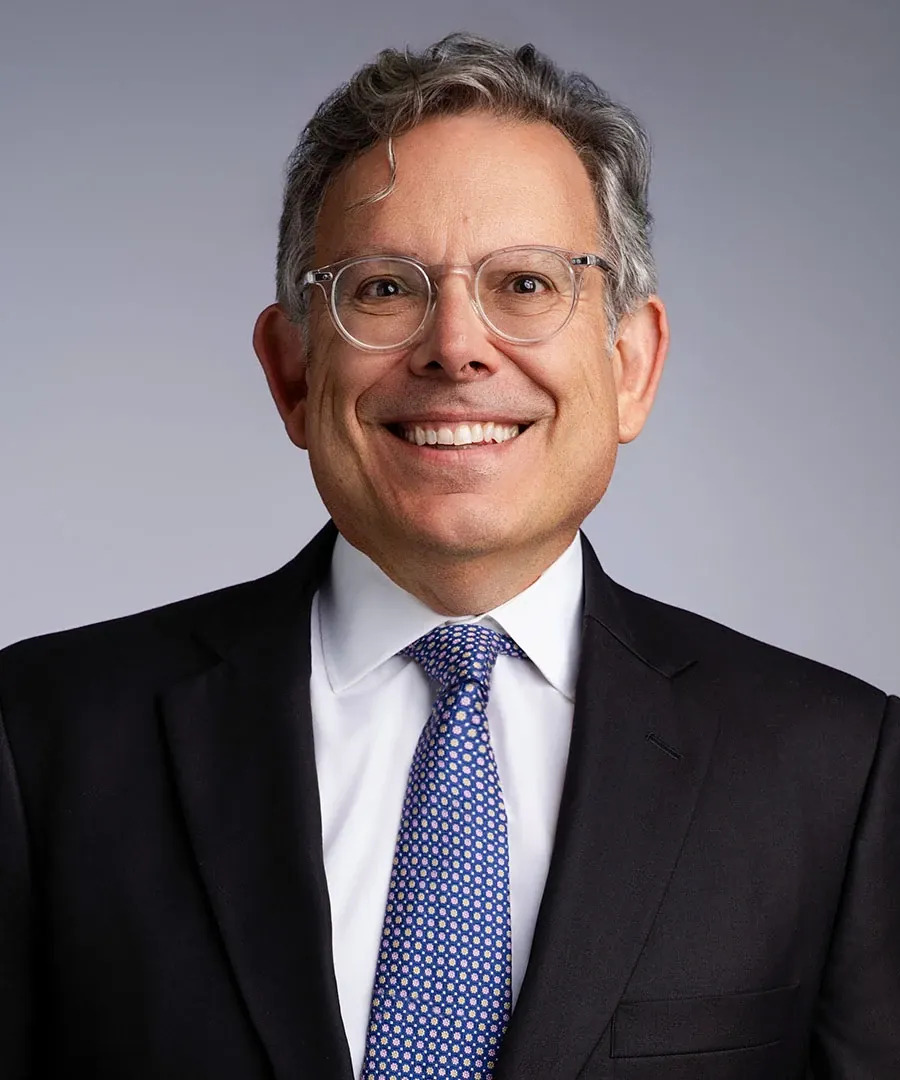
Angel M. Bermudez
Judge (ret.)
Hon. Angel M. Bermudez (Ret.) is a JAMS mediator, arbitrator and neutral evaluator with more than 18 years of judicial experience on the Riverside County Superior Court. He spent nine years presiding over complex civil matters, including business and commercial disputes, contract claims, and catastrophic personal injury, professional negligence and real property cases. Prior to his judicial service, Judge Bermudez worked for 16 years as a senior deputy district attorney in Riverside County, focusing on white-collar criminal matters. A native Spanish speaker with university-level Spanish education, he is dedicated to culturally informed and accessible dispute resolution. He can be reached at abermudez@jamsadr.com.
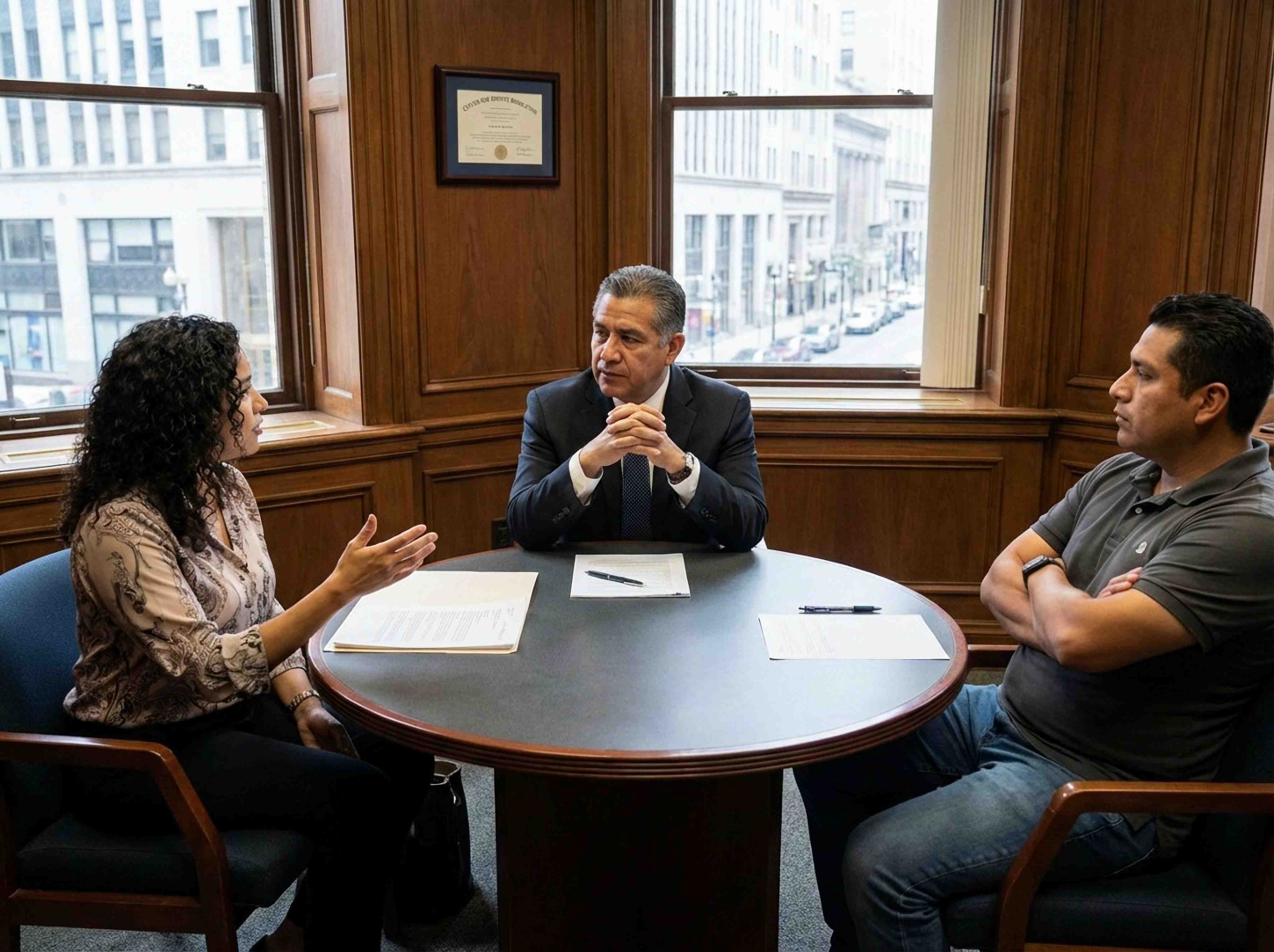
"Judge, would you please talk to my client?" is a request
often heard in the courtroom. But what are the reasons behind it? Many times, a
lawyer wants the judge's experience or "prestige of office" to help with client
control. But could other things be at work?
Early observations from the bench
When I was first appointed to the bench, I presided over a
criminal calendar in the Coachella Valley in Riverside County, California.
Here, day in and day out, stood people accused of crimes. However, there are
some interesting observations to share. Interestingly, after sentencing people
to prison, they wanted to speak to me. On their way to a horrible place devoid
of their family and friends, they thanked me. Andit
happened almost daily. The sentence was already rendered; there was no reason
to try to get in my good graces now. Why did this happen?
In addition, I also handled unlawful detainers on a daily basis. Again, I had to make very difficult
decisions. Yet I still received thank-yous after
hearings, regardless of the result. What was going on?
Cultural context and shared identity
For context, the Coachella Valley has a predominately
Latino population, much greater than Riverside County's. Citing another source,
the Coachella Valley Economic Partnership estimated that nearly one-half of the
population was Latino as of 2004 ("Coachella
Valley Economic Partnership - Racial Composition," Oct. 21, 2009). I
was appointed in 2007. The 2010 Census data showed the population to be about
350,000--the equivalent of the Tallahassee, Florida, metropolitan area. When I
arrived in 2007, I was the only Latino judge in the district.
Later in my career, I presided over an unlimited civil
litigation department for nearly 10 years. That's where I heard "Judge, can you
please talk to my client?" Sometimes, even before the attorney asked, their
client would start speaking to me directly in the courtroom. What was going on?
Insights from health care research
A 2024 article in Harvard Medicine magazine titled "Shared
Identity and the Doctor-Patient Relationship" opened with:
"Patients with demographically similar physicians tend to
report increased satisfaction. Do they also have better health outcomes?"
Third-year Harvard Medical School student Michael Liu
observed that patients often expressed their gratitude at having health care
providers who understood them. "Having
a provider who is not just educated in your health issues, but also has a
similar lived experience to you makes a lot of patients feel more comfortable,"
he wrote, "especially
in communities that may experience stigma or discrimination."
Could this be what I was experiencing on the bench? That
same article noted:
"Investigating concordance in clinical settings is a
relatively new idea ... Hispanic patients who saw Hispanic physicians were more
likely to say they were 'very satisfied' with their care overall than
those who saw non-Hispanic physicians."
Cultural nuance in legal proceedings
There could be a myriad of reasons as to the benefits. For
example, there are cultural differences in communication methods. Some cultures
are taught that direct eye contact is important, yet in others, this is rude. In
some cultures, a firm handshake is the mode of introduction, yet again, this is
not polite in many others. Cultural nuances are important.
Every day, litigants and lawyers walk away with unpleasant
results but without grievance. This happens when they feel they have had a fair
hearing or proceeding. Could it be that feeling like you had a fair hearing can
result from something as simple as having something in common with the judge?
Lawyers constantly look for common ground with the judge, whether that's
through being a fan of the same baseball team or having attended the same
university. They do this to build rapport.
Clients are not given the opportunity to have those
discussions with the judge. What clients do notice about the judge are their
name, ethnic origins and appearance. In the context of travel, although
language barriers have been lessened thanks to electronic devices, they still
exist. When traveling abroad, as soon as someone hears a familiar language,
they will sprint to engage that person in dialogue as if they have been on a
deserted island. And it's not because they were surrounded by people who didn't
speak their language; it's because they simply cannot communicate like a native
speaker. (I don't have an issue with the revision. However, this misses the
subtlety of the point: One can be fluent in a language but that one might be
equally culturally aware. It's not language fluency that is the barrier; it is
cultural awareness.))
A client may have been raised in the United States, but in
a home that does not follow Anglo-American traditions. That is the case for me.
Then, there are the clients who have immigrated to the United States and were
raised and immersed in a completely different culture. That describes my
parents. Those clients are craving commonality with the fact finder because,
like the aforementioned article noted:
"We tend to 'otherize'
people who don't
share our experiences, and clinicians are not impervious to that."
A mediation example: Culture at the center
I once handled a dispute regarding a business transaction
between two Latino parties. The amount of money at issue was significant. With
the encouragement of counsel, I mediated the parties in Spanish. One of the
attorneys did not speak Spanish, but he endorsed my integrity because his
client communicated to him their satisfaction with the proceedings. I
eventually learned the gravamen of the case. The business dispute had grown
into something much larger. A polarization of the family had occurred as sides had
been taken. That polarization affected the relationship of two sisters. These
women were in their late 60s to mid-70s. One sister had, in essence, raised the
other. There was no cause of action for the sisters' situation, obviously.
However, based on my own cultural understanding, their healing was the first
thing that had to be addressed, or this matter would not settle. The
matriarchal force in Latino culture is massive and understanding that is what
would make the difference.
Taking the role of counselor, social worker, psychologist
and mediator, I helped the sisters heal. They were able to reach peace after I
handled their fracture like the most important cause of action. They cried and
hugged. And in the hallway, in the presence of the litigants, they asked me to
hug them each individually and together. The financial aspect of this matter
was resolved later that day.
What the research tells us--and what it doesn't
Many scholarly articles have explored whether doctors and
patients sharing cultural commonality is beneficial. A 2022 study concluded
that "[t]hese results add to the body of evidence
supporting the hypothesis that racial concordance contributes to a more
effective therapeutic relationship and improved healthcare. These results
emphasize the need for medical education surrounding cultural humility and the
importance of diversifying the healthcare workforce." Jetty, A., Petterson, S.,
Wan, T., & Bazemore, A. (2022), "Patient-Physician Racial Concordance
Associated with Improved Healthcare Use and Lower Healthcare Expenditures in
Minority Populations," Journal of General Internal Medicine.
A 2023 medical publication found that in a video
presentation on prostate cancer, changing the race of the presenter affected
the amount of trust placed by the listener in certain races. Loeb,
S., Ravenell, J. E., Gomez, S. L., et al. (2023), "The Effect of Racial Concordance
on Patient Trust in Online Videos About Prostate Cancer: A Randomized Clinical
Trial," JAMA Network Open.
However, some studies have resulted in inconsistent
conclusions, making the premise not absolute. See Miller, A. N., Naga, V., et
al. (2024), "The Relationship of Race/Ethnicity Concordance to
Physician-Patient Communication: A Mixed-Methods Systematic Review," Journal
of Health Communication.
The answer may very well lie in the middle. There may be
situations where a patient, or in the case of the law, the client, may very
well not feel at ease. These sensitivities may not be easily extracted without
cultural awareness. Mastering another language is a good start. However,
language is not the same as cultural awareness. Give white flowers such as
lilies or chrysanthemums to a Latin American, and you will evoke the same
feelings as a funeral does.
Recognizing the value of cultural awareness
America has always been a melting pot of cultures. As each
wave of immigrants arrives, the nation enriches its cultural standard. We adapt
to eating endless cuisines and celebrating other nations' holidays, like Cinco
de Mayo. However, even with these laudable national traits, there are countless
people who are trapped between worlds. Finding the right mediator or arbitrator
for your client might just be what takes you, in the eyes of your client, from
being a good attorney to one who cares.
Submit your own column for publication to Diana Bosetti
For reprint rights or to order a copy of your photo:
Email
Jeremy_Ellis@dailyjournal.com
for prices.
Direct dial: 213-229-5424
Send a letter to the editor:
Email: letters@dailyjournal.com