


Civil Litigation
Jan. 16, 2026
When courts unmask pseudonymous litigants in sexual misconduct suits
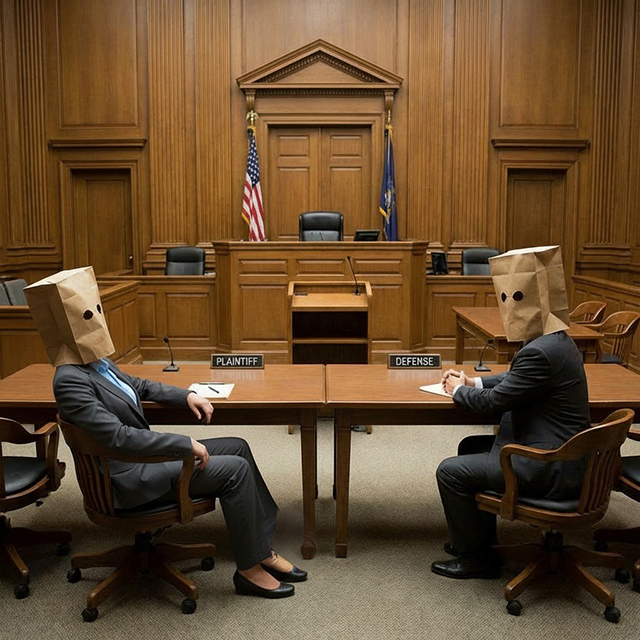
In California, plaintiffs alleging sexual misconduct must clear high procedural and substantive hurdles to litigate anonymously--and so, too, can defendants, who often share the same privacy stakes.


"The use of pseudonyms has grown significantly in the past
quarter century." 29 Loy. U. Chi. L. J. 141, 142 (1971). Plaintiffs in civil
lawsuits seek "anonymity ... where the issues involved are private, stigmatizing,
or so socially unpopular that the litigants fear retaliation were their true
identities to become known." Id. Sexual misconduct cases fit neatly in
this box since "allegations concerning sexual conduct... fall into the category
of highly sensitive and private matters." Roe v. Smith (Nov. 21, 2025)
116 Cal. App. 5th 227, 339 Cal. Rptr. 3d 152, 162). Cf.,
Department of Fair Emp. & Hous. v. Sup. Ct. of Santa Clara County. (DFEH)
(Aug. 5, 2022) 82 Cal. App. 5th 110, 112 (highlighting "the
common practice in California courts of using pseudonyms to protect privacy.")
But whether the issues involve highly sensitive and private matters is "merely
the first step" to determine whether pseudonymity should be allowed. Roe,
supra, 339 Cal. Rptr. 3d at 162. California courts must also "find that the
interest of privacy in highly personal and sensitive matters overcomes the
public's right of access." Id., at 162-163. In order
for a California court to make these findings, both procedural and
substantive elements must be satisfied.
The procedural prong
Under Cal. R. Ct.,
rule 2.550(c), unless confidentiality is required by law, court records are
presumed to be open. Subject to certain exceptions, a court record must not be
filed under seal without a court order. Overstock.com,
Inc. v. Goldman Sachs Grp., Inc., (Nov. 13, 2014) 231 Cal. App. 4th 471,
480. Accordingly, a party requesting that a record be filed under seal must
file a motion or an application for an order to seal the record. See
Cal. R. Ct., rule 2.551(b). The motion or application must be accompanied by
a memorandum and a declaration containing facts sufficient to justify the
sealing. Id.
Notwithstanding this rule, at least one California
appellate court has very recently ruled that it would "not go so far as to hold
evidence to justify proceeding anonymously ... is absolutely required." Instead, Roe
held that "there may be rare cases where the evidence to be sealed is of such
an obviously private or sensitive matter, and the risks in its disclosure so
broadly understood, that a trial court can make the necessary findings without
additional evidence beyond the matter to be sealed." Roe cited People
v. Jackson (2005) 128 Cal. App. 4th 1009, 1015-1017 as an
example of such a "rare case," noting "no testimony taken where argument was
over the risks of pretrial publicity, harm to minors, and threat to an ongoing
investigation of allowing public access to contents of grand jury transcript,
indictment, and search warrant affidavits concerning allegations of child abuse
by famous defendant." Roe, supra, at 162.
"The names of all parties to a civil action must
[ordinarily] be included in the complaint." DFEH, supra, 82 Cal. App. 5th
at 109, citing CCP §422.40. That is because "much like closing the courtroom or
sealing a court record, allowing a party to litigate anonymously impacts the
First Amendment public access right." DFEH, supra, at 111. As such,
absent statutory authority to the contrary, "the right to access court
proceedings necessarily includes the right to know the identity of the parties."
DFEH, at 110-111.[1]
Accordingly, in the absence of statutory authority to the
contrary, before court records can be sealed or a party is allowed to proceed
anonymously, a trial court must hold a hearing and expressly find that: (1)
there exists an overriding interest supporting closure and/or sealing; (2)
there is a substantial probability that the interest will be prejudiced absent
closure and/or sealing; (3) the proposed closure and/or sealing is narrowly
tailored to serve the overriding interest; and (4) there is no less restrictive
means of achieving the overriding interest. Cal. R. Ct., rule 2.550(d); see also Universal City Studios, Inc. v. Superior Ct. (July
29, 2003) 110 Cal. App. 4th 1273, 1279. ("Since court records are public
records, the burden rests on the party seeking to deny public access to those
records to establish compelling reasons why and to what extent these records
should be made private.")
Thus, without a statute permitting plaintiffs to sue
anonymously, it is "incumbent upon [them] to obtain court authorization." Santa
Ana Police Officers Assn. v. City of Santa Ana, (Feb. 28, 2025) 109 Cal.
App. 5th 296, 307. This means that "procedurally, because a hearing
is required, a party anonymously will file the initial complaint or petition conditionally
under a pseudonym and then move for an order granting permission to proceed
that way. If the request is granted, the initial pleading can remain. If
pseudonym use is denied, the pleading must be amended [or unsealed] to state
the party's true name." Id., at 307, emph. supp. Accord Roe, supra,
339. Cal. Rptr. 3d at 166 ("[T]o enable the court to
conduct a recusal check, the party seeking to use a pseudonym should [also]
provide the parties' real names under seal." Failure to proceed in this fashion
can not only result in anonymity being stripped but may also lead to a demurrer
to the pseudonymous party's complaint being sustained without leave to amend. Santa
Ana Police Officers, supra, 109 Cal. App. 5th at 301, 308.
The substantive prong
The First Amendment interest in public access is critically important
"The right of public access to court proceedings is
implicated when a party is allowed to proceed anonymously." Roe, supra,
at 339; Cal. Rptr. 3d at 157. It is essential to a functioning democracy." Id.
That is because "public access to courtrooms in civil matters serves to:
(i) demonstrate that justice is meted out fairly, thereby promoting public
confidence in such governmental proceedings, (ii) provide a means by which
citizens scrutinize and check the use and possible abuse of judicial power, and
(iii) enhance the truth finding function of the proceeding." Id. at
157-158. Thus, "outside of cases where an anonymity is expressly permitted by
statute, litigating by pseudonym should occur only in the rarest of
circumstances," given "the critical importance of the public's right to access
judicial proceedings." Id. at 158-159.
California courts have recognized at least two interests as potentially sufficient to allow for redaction of names absent express statutory authority, but only where strong admissible supporting evidence exists
It is well settled that "trial courts faced with a motion
to proceed pseudonymously should apply 'the overriding interest test.'" Id.
at 159. The moving party is required to demonstrate that "an overriding
interest ... overcomes the right of public access guaranteed by the First
Amendment." Id. at 159. In making this determination, "courts may
consider both state and federal authorities, depending on the facts presented."
Id.
Although "allegations concerning sexual conduct"
constitute "highly sensitive and private matters," that is just "the first step
in the overriding interest test." Id. at 162. Courts must still "find
that the interest of privacy in highly personal and sensitive matters overcomes
the public's right of access." Id. at 162-163. Thus, "in most cases, a
party seeking to proceed pseudonymously should provide evidence supporting his
or her motion to allow the trial court to make '[e]xpress factual findings on
the matter.'" Id. at 166.
California courts "have recognized at least two interests
... as potentially sufficient to allow for redaction of names." Id. at
159. The first is maintaining "the privacy of highly sensitive and potentially
embarrassing personal information." Id. For example, "records revealing
gender identity change and/or medical and psychological records," citing In re M.T. (2024) 106 Cal. App. 5th
322, 336-341 for the former, and Oiye v. Fox (2012) 211 Cal. App. 4th
1036, 1038 as to the latter. Id. However, "a recurring theme in the case
law is that a party's possible personal embarrassment, standing alone, does not
justify concealing their identity from the public." Id. at 160. Neither
will "a reasonable fear of one's employer or a future employer learning about
the lawsuit through an Internet search," by itself, suffice. Id. at 163.[2] Nor are
unsupported stipulations enough. Roe, supra, 339 Cal. Rptr. 3d at 165,
citing Cal. R. Ct., rule 2.551(a). Instead, there must also be "evidence of
serious mental or physical harm that would occur to plaintiffs should their
identities be revealed." Id. at 163.[3]
That is because "parties generally lose their reasonable expectations of
privacy when they file a civil lawsuit." Id. at 164.[4]
The second interest that California courts have recognized
"as potentially sufficient to allow for redaction of names" is "protecting
against the risk of retaliatory harm." Id. at 159. But this interest may
not be sufficient where the opposing party already knows "the plaintiff's
identity" through a demand letter or some other means. Id. at 163,
n. 8. That is because where "defendants already knew who plaintiffs are,
allowing plaintiffs to proceed pseudonymously would not protect against an
alleged danger from defendants learning their identity." Id.
Nevertheless, when this second interest is advanced to support pseudonymity,
the 9th Circuit has held that the trial court should also consider ...
"(1) the severity of the threatened harm; (2) the reasonableness of
the movant's fears; and (3) the movant's particular vulnerability to such
retaliation (e.g., child or inmate plaintiffs). Id. at 159-160,
citing Does I through XXIII v. Advanced Textile Corp., (9th
Cir. 2000) 214 F.3d 1058, 1067, 1068.[5]
Finally, "no matter what the interest identified is,"[6] "the trial
court should consider precise prejudice at each stage of the proceedings to the
opposing party, and whether the public's interest in the case would be best
served by requiring litigants to reveal their identities." Id. at
159-160, citing Advanced Textile, supra, 214 F.3d at 1068.[7]
The prejudice to a defendant sued by a pseudonymous
plaintiff for sexual misconduct can be severe and may provide fertile grounds
for unmasking the plaintiff
The prejudice to defendants
The prejudice that a defendant can suffer is real if a
plaintiff is allowed to proceed pseudonymously in a civil sexual misconduct
case. This prejudice can extend to all stages of the litigation since
"plaintiff's anonymity would make it more difficult to obtain witnesses and
witness testimony," let alone impede any "leverage" defendants may otherwise
have "in settlement negotiations," while at the same time interfering with
their ability "to fully and adequately cross-examine the plaintiff." Doe v.
Skyline Automobiles, Inc., supra, 374 F. Supp. 3d at 407 (denying
plaintiff's motion to proceed anonymously in lawsuit alleging rape and sexually
abusive comments); Doe v. Townes, 2022 WL 2395159 *6 (S.D.N.Y.) (same,
where defendant planned "to file counterclaims or a countersuit against
Plaintiff for defamation and libel, and allowing Plaintiff [who had alleged
sexual assault, blackmail and extortion threats by defendant] to proceed
anonymously would hamper Defendant's ability to litigate that action."). The
existence of such prejudice may provide defendants with additional potent
arguments to unmask the pseudonymous plaintiff in a civil sexual misconduct
case.[8]
Defendants in civil sexual
misconduct cases frequently have the same privacy interest as plaintiffs in
pseudonymity
Defendants in civil cases often have the same interest as
plaintiffs to maintain "the privacy of highly sensitive and potentially
embarrassing personal information." Roe, supra, 339 Cal. Rptr. 3d at 162
("[S]exual conduct ... falls into the category of highly sensitive and
potentially embarrassing personal information." See also, Doe v. Doe,
2020 WL 6900002 *3 (E.D.N.Y.) (granting defendant's cross-motion to proceed
anonymously in civil sexual assault and battery case "for many, if not more of
the same reasons that plaintiff may proceed anonymously."); Doe v. Townes,
supra, 2020 WL 2395159 *6 (S.D.N.Y.) ("Due to the nature of the
allegations, which are graphic and serious, the reputational damage risk to
Defendants is high ...."); Doe v. Skyline, supra, 375 F. Supp. 3d at
406-407 ("Defendants have a substantial interest in maintaining their good name
and reputation, particularly in light of the allegations [of rape and sexually
abusive comments] in Plaintiff's Complaint.")
Conclusion
Defendants in civil sexual misconduct cases should not
just seek to unmask the plaintiff or oppose any effort the latter may make to
proceed anonymously, but in the alternative, should also seek pseudonymous
protection for himself or herself to level the playing field. "The ultimate
question is one of balance, and courts only allow such an imbalance in unique
circumstances." Doe v. Skyline, supra, 375 F. Supp. 3d at 407. But
just like the plaintiff, for the defendant to succeed, he or she "should
provide evidence supporting his or her [cross] motion to allow the trial court
to make "[e]xpress factual findings" that: (i) "an overriding interest
overcomes the right of public access [and] a substantial probability [exists]
that interest will be prejudiced if a pseudonym is not used; and that
(ii) use of the pseudonym is narrowly tailored to serve the overriding
interest [with] no less restrictive means of achieving the overriding
interest." Roe, supra, 339 Cal. Rptr. 3d at 166.[9]
Submit your own column for publication to Diana Bosetti
For reprint rights or to order a copy of your photo:
Email
Jeremy_Ellis@dailyjournal.com
for prices.
Direct dial: 213-229-5424
Send a letter to the editor:
Email: letters@dailyjournal.com