


Jan. 26, 2026
Jury backs deputy in high-stakes civil rights showdown, ending a 12-year legal battle
The case drew national attention after the Supreme Court ruled in 2022 that police officers cannot be sued for civil damages based solely on a failure to administer Miranda warnings, absent proof of a coerced confession.


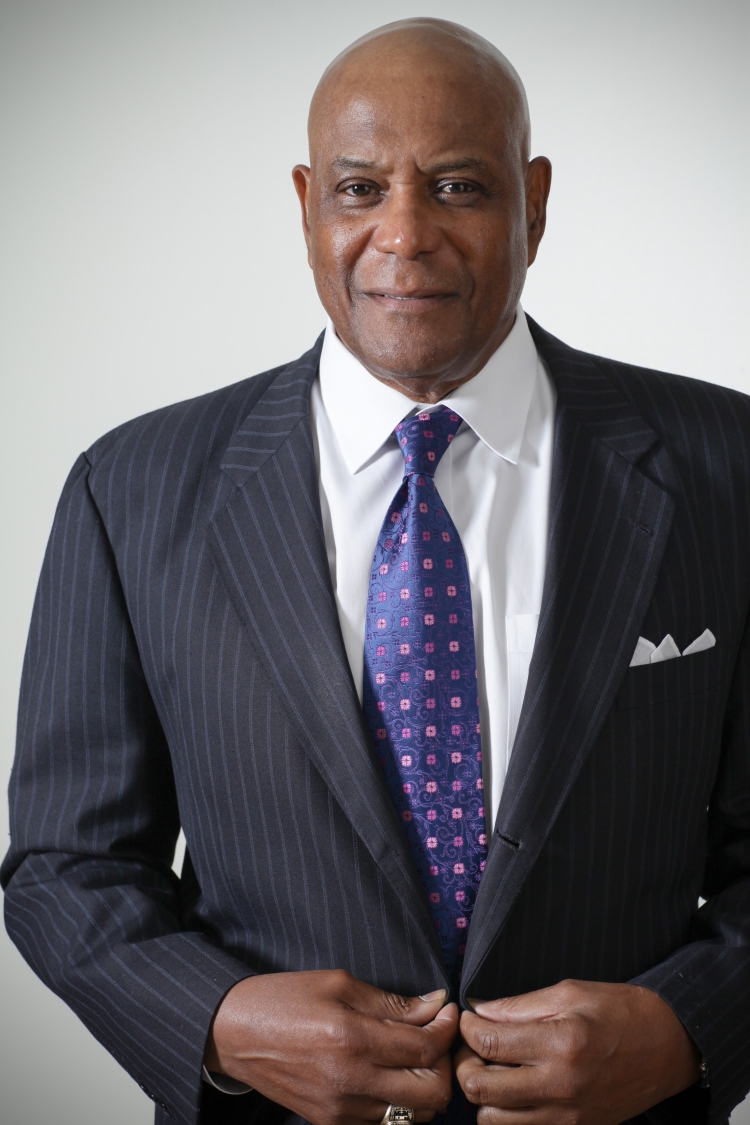
A federal jury in Los Angeles returned a defense verdict for Los Angeles County Sheriff's Deputy Carlos Vega, closing a 12-year civil rights case that culminated in a U.S. Supreme Court decision sharply limiting when Miranda violations can support damages claims under federal law.
The case drew national attention after the Supreme Court ruled in 2022 that police officers cannot be sued for civil damages based solely on a failure to administer Miranda warnings, absent proof of a coerced confession. After remand for a third trial on that narrow issue, jurors found that plaintiff Terence Tekoh failed to establish a Fifth Amendment violation, ending litigation that reshaped Miranda doctrine and clarified the scope of constitutional remedies against law enforcement. Tekoh v. Vega, 2:16-cv-07297-GW-SK (C.D. Cal., filed Sept. 28, 2016).
Tekoh waived all posttrial motions and his right to appeal. Rickey Ivie of Ivie McNeill Wyatt Purcell & Diggs represented Vega throughout the entire litigation.
"After all these years, it finally has come to a conclusion," Ivie said. "It's amazing that it's traversed all this time."
The verdict concluded litigation that spanned three federal trials, multiple trips to the 9th U.S. Circuit Court of Appeals, and a 6-3 Supreme Court decision resolving a circuit split over whether Miranda violations alone can support civil damages claims.
The case arose from events at Los Angeles County-USC Medical Center on March 19, 2014, when a patient reported a sexual assault by Tekoh, then a certified nursing assistant. Vega obtained a written statement from Tekoh without administering Miranda warnings. Tekoh later alleged the confession was false and coerced.
"If we start at the beginning, it went to criminal court," Ivie said. "It had two trials in criminal court because the first trial ended in a mistrial. Back in those days, it took a long time to get DNA tests done. They were already in trial when the DNA test came back, and it was learned for the first time that the DNA recovered from the victim was not Mr. Tekoh's. That changed the dynamic of the trial."
Tekoh was acquitted in March 2016.
"And so then he sued Deputy Vega, alleging among other causes of action a violation of his Miranda rights, because Vega had obtained a written confession," Ivie said. "Although his confession did not admit penetration of the victim's vagina with his fingers--he denied doing that--he did admit that he had lifted her sheet, touched her vagina, and opened her labia so he could get a view inside. But he maintained he did not penetrate her vagina with his fingers."
Tekoh then sued in federal court, seeking millions of dollars in damages for alleged Fifth Amendment violations. The case was tried three times before U.S. District Judge George H. Wu.
"The first lawsuit, he did not prevail. Defense verdict," Ivie said. "But Judge Wu found that the court had erred in instructing the jury on the Fifth Amendment violation. He granted a motion for new trial."
After a second jury returned a defense verdict, the Ninth Circuit reversed, holding that the district court erred by instructing jurors that Miranda violations alone cannot support liability and thereby excluding Tekoh's false-confession expert.
"We had filed a motion to dismiss the Miranda claim because Miranda--which the courts have now found--is not a constitutional right," Ivie said. "It's a prophylactic measure enacted by the courts to protect the Fifth Amendment right, but it is not itself a right in the Constitution."
Relying on a similar case, the panel concluded that use of an un-Mirandized statement in a criminal case violates the Fifth Amendment and may support a civil claim. The full court denied rehearing en banc over a seven-judge dissent. Dickerson v. United States, 530 U.S. 428 (2000).
"Section 1983 allows for causes of action for violation of constitutional rights. Miranda is not one of those. That was our position," Ivie said. "The Ninth Circuit found there was a constitutional basis to Miranda, so we filed a petition for a hearing en banc. The court was heavily divided on that and essentially asked the Supreme Court to decide it because many jurisdictions were split on this issue."
U.S. Circuit Judge Patrick Bumatay wrote that Supreme Court precedent cuts the other way: "The Court has described Miranda warnings as 'prophylactic' at least 21 times and called them a 'constitutional right' zero times", Ivie explained.
The Supreme Court granted review and reversed. Writing for the majority, Justice Samuel Alito held that Miranda violations do not themselves give rise to damages liability under Section 1983. Vega v. Tekoh, 597 U.S. 134 (2022).
"Miranda did not hold that a violation of the rules it established necessarily constitutes a Fifth Amendment violation," Alito wrote. "That makes sense, as an un-Mirandized suspect in custody may make self-incriminating statements without any hint of compulsion."
The court acknowledged Miranda as a "constitutional rule" that Congress cannot abrogate but characterized its warnings as "constitutionally based" prophylactic measures rather than a direct articulation of the Fifth Amendment's meaning.
"The Supreme Court found for our position--that Miranda is not a right for which you can recover civil damages under Section 1983," Ivie said. "However, they sent it back to the Ninth Circuit for orders consistent with that opinion."
Justice Elena Kagan dissented, joined by Justices Stephen Breyer and Sonia Sotomayor, warning that "the Court strips individuals of the ability to seek a remedy for violations of the right recognized in Miranda."
On remand, the 9th Circuit ordered a third trial limited to whether Tekoh's confession was actually coerced. The plaintiff claimed Vega dictated the confession and forced him to write and sign it.
"In this case, the plaintiff claimed he was just a scribe--that the confession written in his hand was not voluntary, but had been dictated by Deputy Vega," Ivie said. "He claimed not one word was authored by him, and that Deputy Vega forced him to write it and sign it."
Tekoh also alleged physical intimidation. "He claimed that he was beaten, that Deputy Vega put his hand on his gun, called him racial epithets, and threatened to deport him and his whole family--and just dictated what he had to say," Ivie said.
Ivie argued the science of coerced confessions did not apply because Tekoh's theory differed from typical false-confession cases. "The doctrine of false confessions typically involves circumstances where there are inordinate hours of interrogation--fourteen, fifteen, sixteen hours--depriving people of medication, food, various circumstances where a person may be at risk for a forced false confession," Ivie said. "There were none of those factors in this case."
The trial began Jan. 6, 2026, with competing expert testimony on false confessions. Tekoh sought $7 million to $11 million in damages.
The defense faced significant obstacles. "This last trial--three of our main witnesses were not available," Ivie said. "The victim, who was very credible, was sick and in the hospital, so she was not available. The sergeant who was a witness to at least part of the interaction was sick and not available. And one detective--a police officer who had arrested and transported the suspect and had relevant information--had died."
Even without those witnesses, jurors again found for the defense.
Ivie, who has practiced law since 1977 and represented the Sheriff's Department since the mid-1980s, said the ruling provides important clarity for law enforcement. "It clarifies one thing: law enforcement can ask questions, and they don't have to worry about Miranda for being sued for doing so," he said.
Tekoh was represented by John Burton of the Law Offices of John Burton and Paul Hoffman of Schonbrun, Seplow, Harris, Hoffman & Zeldes LLP.
Douglas Saunders Sr.
douglas_saunders@dailyjournal.com
For reprint rights or to order a copy of your photo:
Email
Jeremy_Ellis@dailyjournal.com
for prices.
Direct dial: 213-229-5424
Send a letter to the editor:
Email: letters@dailyjournal.com