


Family
Feb. 3, 2026
California's new $435 divorce won't solve the underlying problems
California's new $435 divorce option will help some couples, but won't address the real cost drivers: too few family court judges, court reporter shortages and a lack of publicly funded mediation programs.


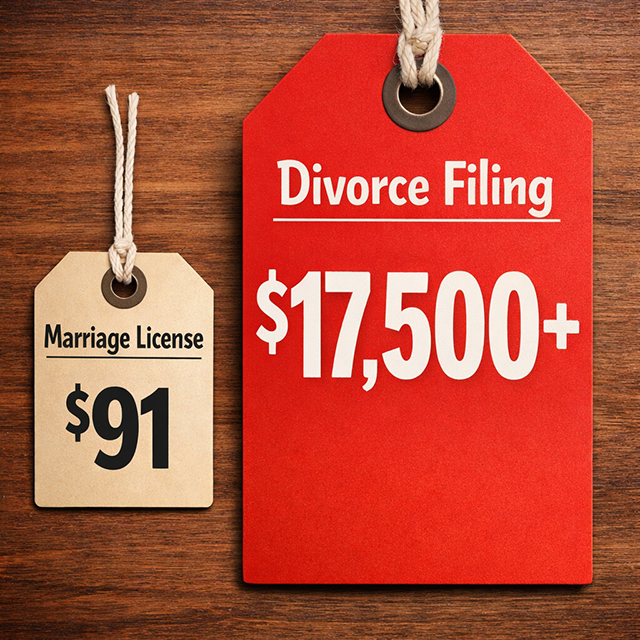
Want to get married? In Los Angeles, a marriage license
costs $91. Want to get divorced? That's going to cost you.
The statewide average cost of a divorce is $17,500,
increasing to $26,000 if children are involved, according to Martindale-Nolo
Research.
A new state law, which went into effect this month, aims
to cut that cost dramatically, expanding an alternative option for filing for
divorce that costs just $435 to any couple who wants to use it.
That sounds great, and for some couples, it will be. But
it won't fix the underlying issues that have made California the most expensive
state in the union to get divorced.
I give credit to state Sen. Ben Allen (D-Santa Monica) and
Gov. Gavin Newsom for broadening the joint petition for summary dissolution to
any couple interested. They clearly understand that the state needs to do more
to make divorce affordable.
Under the summary dissolution option, couples can get
divorced by jointly filing, rather than the traditional route of one partner
suing the other for divorce. This is one of the biggest cost-savers in the
bill, as it eliminates the need for process servers to serve papers on the
other spouse.
The couple must submit to the court a list of their assets
as well as the issues they intend to resolve on their own, including the legal
grounds for separation, child custody and support, spousal support, division of
assets, restoration of former names, and attorneys' fees.
That's a lot to work through.
As a veteran divorce attorney, trust me when I say that if
a couple could work out all those thorny issues on their own, they probably
wouldn't be getting divorced in the first place.
But summary dissolution also isn't going to work in cases
where there's been infidelity, where a spouse is physically or psychologically
abusive, or where there is a power imbalance in the family finances.
Before the recent change, analyses of the annual Court
Statistics Report estimated that 5 to 10% of divorcing couples in
California took advantage of the summary dissolution option. That was largely
because it had strict requirements that barred couples who owned a home, had
children, or owned even modest assets.
The new law removed those requirements, which the bill
backers say will increase the number of couples who use that cheaper option.
But that would still be limited to couples who are amicably divorcing and don't
have any complex legal issues to work through.
Some who start with a summary dissolution may end up going
through a traditional divorce process anyway, as it remains an "escape hatch"
backup option under the law if they end up having a disagreement they can't
resolve.
In other countries, you are required to go through
mediation first before proceeding to a divorce. In Japan, for example, all
couples must try mediation to resolve their cases and disputes, which helps
reduce the backlog. Colloquially, it's believed that 90% of the cases settle
outside of court before filing in Japan.
Still, while a lot of couples who are amicably divorcing
will be able to take advantage of the new California rules, there will be two
big hangups for most of those who don't: the house and the kids.
As typically the single biggest asset--and one that can't
be easily divided--the family home is going to be a hard one for couples to
resolve on their own, while decisions about how to take care of the kids
usually end up as one of the biggest areas of contention.
In the end, most California couples are still going to
have to go through the traditional divorce process, although hopefully they
will take advantage of options such as mediation and collaborative divorce that
minimize the time spent fighting in court.
That means the high costs of a traditional divorce are
still going to need to be addressed, which won't be simple.
The biggest issue is that we don't have enough judges in
family court, which means it can take six months just to finish the initial
hearings. This can be addressed with more funding for courts. In Los Angeles
County, courts managed to cut down the time for initial hearings to conclude to
just 60 days. We should work at making that the statewide average.
Another driver of cost is court reporting. Due to a
shortage of publicly funded court reporters, many couples are having to pay out
of pocket just to have a transcript of their own hearings. These transcripts
are important because they help establish what everyone agreed on in court,
saving lawyers from having to rehash old arguments.
The State Legislature could help cut those costs by
allowing family courts to use recordings, making permanent a practice some
judges are now allowing.
In the end, it's the unyielding, unending conflict between
some couples that drives their divorce, prolongs the legal fight and clogs the
courts.
If the state truly wants to reduce costs for
everyone else, it would create a publicly funded
mediation program through which courts could divert such cases. The Los Angeles
County Bar Association has a volunteer program, but it depends heavily on the
availability of private attorneys.
In Los Angeles County, we currently have a publicly
funded mediation program for child custody disputes, which gets high marks from
everyone involved.
In many cases, the mediators are able to
either get the parents to come to a resolution or make a detailed
recommendation to the judge--both of which help reduce time spent arguing in
court, helping reduce the backlog for everyone else.
I'm glad the Legislature realizes that divorce costs are
too high for Californians. But if they want to get serious about the problem,
they're going to have to commit to resolving some of these bigger issues.
Submit your own column for publication to Diana Bosetti
For reprint rights or to order a copy of your photo:
Email
Jeremy_Ellis@dailyjournal.com
for prices.
Direct dial: 213-229-5424
Send a letter to the editor:
Email: letters@dailyjournal.com