


Real Estate/Development
Feb. 4, 2026
From receivership to mass eviction: Foreclosure limbo and California tenants' rights
A court-appointed receiver was supposed to stabilize a troubled Tenderloin building--now, 24 tenants, many elderly or non-English speaking, face eviction in a move that deepens the housing crisis.


After a major real estate default in San Francisco's
Tenderloin neighborhood, a court-appointed receiver took over the building's
operations, an arrangement intended to preserve the asset, maintain
habitability and stabilize management while the foreclosure proceeds. But in
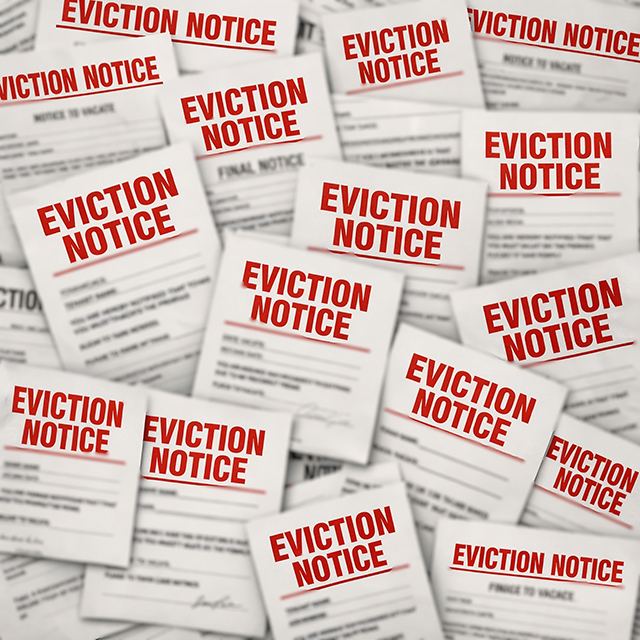
what tenants describe as a startling escalation, the receiver filed unlawful
detainer lawsuits against 24 households for "nonpayment of rent." Many of the
tenants targeted are elderly or non‑English speaking. For residents
already living on the edge of displacement, the building's financial crisis
became their own personal housing crisis.
This fact pattern is not new. Foreclosure and receivership
create a predictable period of limbo in which banks, receivers and successor
managers focus on recovering value, often with little understanding of the
tenant protections that continue to govern the property. In that limbo, tenants
who are otherwise in good standing can be swept into a mass enforcement
posture: served with notices and sued first, with meaningful investigation
coming later, if at all.
Foreclosure does not erase rent-ordinance protections
California law has long rejected the idea that a
foreclosure is a reset button on tenant protections. In rent-controlled
jurisdictions like San Francisco, it is well settled that local rent ordinance
protections survive foreclosure. Gross v. Superior Court, 171 Cal. App.
3d 265, 272-276 (1985).
The practical consequence is that receivers, banks,
servicers and successor owners must comply with the same tenant protections
that applied the day before the default. A new administrator may inherit a
distressed balance sheet, but it also inherits the rent-controlled tenants.
Eviction notices, unlawful detainers and the
litigation-privilege incentive
What makes foreclosure and receivership so dangerous for
tenants is the speed of the unlawful detainer. A bank or receiver can choose
from a menu of notices and file right away, forcing tenants into emergency
litigation where they face the immediate loss of their housing.
In practice, banks and receivers often skip basic checks
because the legal system rewards speed over accuracy. Instead of confirming the
status of tenants, banks and receivers move quickly to issue notices for
abandonment, nonpayment or nuisance.
That lack of investigation is not accidental. It is
incentivized. When tenants attempt to seek damages after the fact for reckless
or abusive eviction tactics, they routinely run into California's broad
litigation privilege. Under Rusheen v. Cohen, where the gravamen of a
claim is communicative litigation conduct such as service of notices, filing
pleadings or submitting declarations in support, courts have extended the
privilege not only to the communications themselves but also to conduct "necessarily
related" to achieving the litigation objective. Rusheen v. Cohen, 37
Cal. 4th 1048, 1052 (2006). In practical terms, once the machinery is set in
motion through privileged communications, many later civil claims aimed at the
harm may be barred on privilege grounds.
The predictable result is a "serve-and-sue-first" model. Tenants
are forced to litigate under extreme time pressure to prove basic facts: what
they paid, what happened in the unit, whether they ever left and whether local
protections apply. Meanwhile, banks and receivers are insulated from
accountability. Foreclosure limbo is especially fertile ground for abusive
eviction practices because the costs of getting it wrong fall onto tenants. Outside
the unlawful detainer itself, meaningful consequences for mass or careless
filings are rare.
The litigation privilege is not boundless. Courts have
recognized that where the injury-producing conduct is truly noncommunicative,
and the harm flows from the taking itself rather than the litigation speech
about it, the privilege may not apply. Chen v. Berenjian
is a useful reminder of that boundary. There, the alleged injury was tied to
the act of executing and taking property, not merely to litigation
communications about it. Chen v. Berenjian, 33
Cal. App. 5th 811 (2019). The lesson for tenant cases is that the "real wrong"
is not always the words in a notice. Sometimes it is the underlying operational
taking: refusing tender, manipulating accounting or
deploying a mass-filing strategy that predictably targets the most vulnerable
tenants.
But drawing that line between what is shielded as
litigation conduct and what remains actionable as noncommunicative wrongdoing
is often legally technical, fact-intensive and expensive. It also takes time,
and unlawful detainers move at breakneck speed.
If receiverships are meant to stabilize troubled housing,
that stability must include the people living there. Safeguards that should be
routine in any receivership, especially where large numbers of long-term
tenants reside, are often missing at the moments they matter most.
First, there should be a mandatory tenant-status review
before any filing. Receivers and their agents should determine whether the
household is protected by local just-cause rules and whether any heightened
protections apply before serving a nonpayment notice or filing suit.
Second, there should be a required investigation of tender
and crediting. "Nonpayment" should not be alleged unless the receiver has
confirmed the tenant did not tender rent (or that tender was lawfully rejected)
and that internal accounting accurately reflects payments received.
Third, language access and accommodation cannot be
optional. In buildings with seniors and limited-English households, any change
in administration must include meaningful, accessible communication and
assistance. Without those safeguards, tenants are set up to fail.
Fourth, court supervision must have teeth. Because
receivers act under court authority, supervising courts can and should require
compliance plans, reconciliation periods and reporting. This is especially
important when there are mass notices or mass filings.
Finally, there must be consequences for bulk filings
without reasonable investigation. When the system allows eviction papers to be
issued without individualized review, it invites that misuse.
Foreclosure is a financial event. Receivership is a legal
remedy. Neither should operate as a license to disregard tenant rights. The
core principle remains: tenants in good standing do
not lose their homes because a property defaulted. Tenants should not be forced
to bear the burden of proving that principle in emergency litigation triggered
by institutional indifference.
Submit your own column for publication to Diana Bosetti
For reprint rights or to order a copy of your photo:
Email
Jeremy_Ellis@dailyjournal.com
for prices.
Direct dial: 213-229-5424
Send a letter to the editor:
Email: letters@dailyjournal.com