


Feb. 18, 2026
Zuckerberg defends Instagram policies in first bellwether social media addiction trial
Mark Zuckerberg defended Instagram's age limits and design choices, disputing claims the platform intentionally addicted minors for profit.


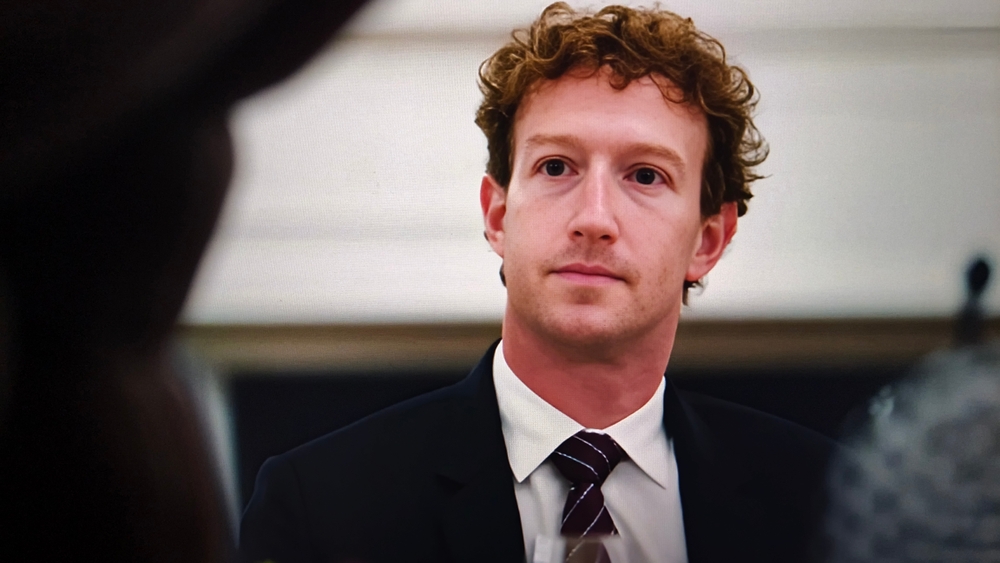
Meta CEO Mark Zuckerberg defended Instagram's policy barring children under 13 from the platform as he testified in court Wednesday, but acknowledged that the company's enforcement tools have "evolved" over time and that "a meaningful number" of young users can still gain access by lying about their age.
Testifying as an adverse witness in the first bellwether social media addiction trial in Los Angeles County Superior Court, Zuckerberg was confronted with internal Meta documents estimating that over 4 million underage users were on Instagram even as the company publicly maintained that children under 13 were not permitted on the service.
Plaintiff's lawyer Mark Lanier, founder of the Lanier Law Firm, tied those figures to Zuckerberg's prior congressional testimony, where he said children under 13 are "not allowed" on Instagram and that Meta does not permit them on the platform.
This is the first of three bellwether trials in the coordinated social media addiction litigation before Kuhl, which centers on claims that Instagram and YouTube were deliberately designed to addict and harm minors. The plaintiff, an adult identified as Kaley, filed her lawsuit when she was a minor.
Lanier also pressed Zuckerberg on Meta's historic focus on engagement metrics such as "time spent," showing jurors internal goal-setting documents and later "milestones" projecting daily Instagram use rising from 40 minutes per user in 2023 to 46 minutes by 2026.
Zuckerberg disputed claims that such benchmarks reflected an effort to maximize scrolling, especially among young users, describing time spent instead as a "proxy" for whether users find the platform valuable.
Lanier pointed jurors to Zuckerberg's past statements to Congress: "I don't give our Instagram team goals around increasing the amount of time that people spend," contrasting that with internal company materials discussing time-based targets.
"I think earlier on in the company we had goals around this, and then at some point I decided that I didn't want our teams to have specific goals around time and we focused on utility and value instead," Zuckerberg said.

"There's a basic assumption that I have, that if something is valuable, then people will do it more because it's useful for them. But that's different from having a goal for a team, asking them to try and encourage people to spend some amount of time."
Lanier immediately challenged Zuckerberg's framing, asking whether a person's inclination to "do things more" can also reflect addiction rather than value.
"I'm not sure what to say to that," Zuckerberg said. "I think that that can be true, but I don't think that applies here."
Zuckerberg also disputed characterizations of Meta's algorithm as being designed simply to maximize engagement, saying he "disagree[s] with that characterization," and defended past decisions around teen safety and content policies.
He testified that Meta temporarily paused certain beauty filters - described to jurors as "cosmetic" Instagram photo and video filters that could mimic plastic surgery effects - after receiving outside feedback about potential harms to young girls. He said the company ultimately allowed users to create them while declining to recommend them, characterizing the approach as a balance between wellbeing and free expression, and calling it "quite a reasonable" one.
He also reiterated his view that the "existing body of scientific work has not shown" a causal link between social media use and worse mental health outcomes among young people.
After a lunch break, Lanier returned to the theme of harm, confronting Zuckerberg with an internal "youth empathy" document that referred to "known negative effects" of increased screen time, including disrupted sleep and long-term cognitive impacts.
Lanier, along with about six other members of the plaintiff's legal team, unrolled a large banner in front of Zuckerberg that compiled the plaintiff's Instagram posts from age 9 into adulthood. The Meta CEO acknowledged he had reviewed "some of the photos" while preparing for trial but had not analyzed her full account history.
During a mid-morning break, Superior Court Judge Carolyn B. Kuhl addressed members of the public in the gallery, instructing anyone wearing recording-enabled glasses to remove them and delete any footage.
"This is very serious," Kuhl said. "It is the order of this court that there should be no facial recognition with regard to the jury. If you have done that, you must delete it or you will be held in contempt of court."
Under examination by Covington & Burling LLP partner Paul W. Schmidt, Meta's lead attorney, the focus shifted to how Zuckerberg viewed his social media platforms, with Zuckerberg telling jurors it was "very important" to him to build apps that create "value in people's lives."
Additionally, he said, "There's so much mischaracterization from a business perspective" around the notion that the company is more profitable the more it encourages people to "maximize" their time on the apps.
"I don't care about what happens in terms of the next quarter or so ... I want to make sure we build this platform .... and the way we do that is people need to have a good experience," Zuckerberg said. "To me, the North Star is making sure we're delivering value and people are having a positive experience."
This idea began as a college experiment with Facebook in the early 2000s, Zuckerberg said, which was originally meant to be a way for college students to stay connected with each other. It then evolved into a worldwide phenomenon and set the stage for Instagram in 2010, a way for people to not only connect with each other but see and learn about the world, he said.
"Those are the things I care about ... helping people," Zuckerberg said.
He also addressed Meta's early "move fast and break things" motto, testifying that it was always a technical approach to software development and "never applied" to the well-being of users. He said the company later adopted "move fast with stable infrastructure."
The slogan was first heard last week when Instagram chief Adam Mosseri testified.
Zuckerberg revealed that teens represent less than 1% of Meta's advertising revenue, though he added the company still wants "everyone" to be able to get value from its services.
Schmidt also revisited Zuckerberg's congressional testimony from March 2021, in which he acknowledged the difficulty of verifying users' ages and conceded that Meta "doesn't find everyone" who violates the under-13 policy but evolved its safety measures over time to better enforce it.
The plaintiff, Kaley, was present in the courtroom on Wednesday, her first appearance before the jury since opening statements last Monday.
Companies that own TikTok and Snapchat settled Kaley's claims on undisclosed terms days before trial, though they remain as defendants in thousands of other pending cases. *Social Media Cases*, JCCP5255 (L.A. Super. Ct., filed Oct. 24, 2022).
In Kaley's case, Meta and Google denied there was any scientific link between the design of their social media apps and the plaintiff's alleged mental health harms. The companies contend Kaley's struggles stem largely from circumstances that predated her use of Instagram and YouTube, including a detrimental home environment since age 3.
Kaley claims she began using YouTube at 6 and Instagram at 9. During opening statements, Lanier said Kaley's highest recorded daily Instagram usage reached 16 hours.
Attorneys for Meta and Google spoke about her current minimal use, saying she is not addicted to social media. During opening statements, the defense attorneys argued this would be proven through years-worth of medical records that never mention social media outside of one reference.
Devon Belcher
devon_belcher@dailyjournal.com
For reprint rights or to order a copy of your photo:
Email
Jeremy_Ellis@dailyjournal.com
for prices.
Direct dial: 213-229-5424
Send a letter to the editor:
Email: letters@dailyjournal.com