


U.S. Supreme Court,
Constitutional Law,
Antitrust & Trade Reg.
Feb. 23, 2026
Ideologically diverse coalition of justices joins textualist decision setting aside tariffs
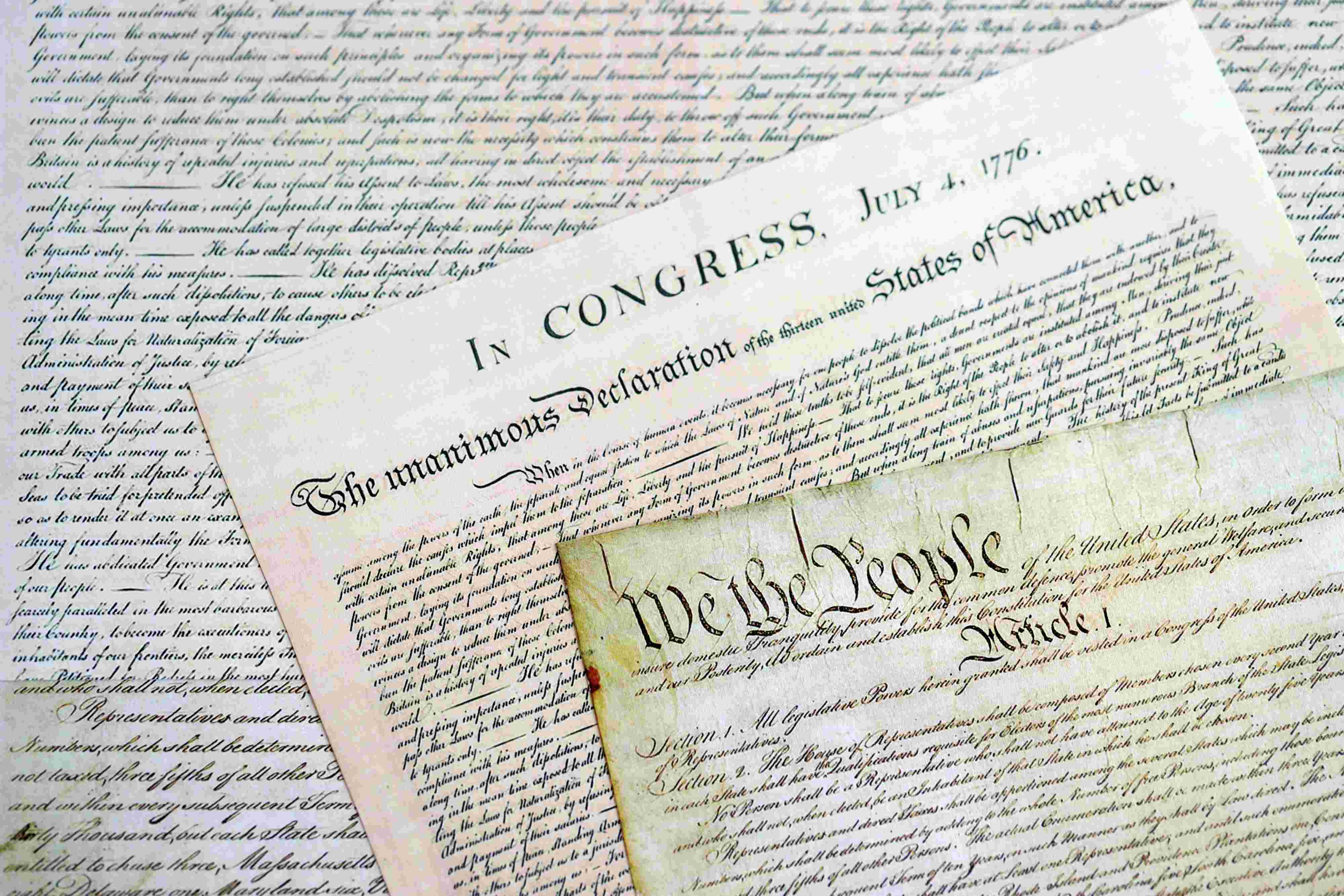
The Supreme Court's Learning Resources tariffs ruling proved Justice Kagan right -- a bipartisan majority used a strict textualist reading of IEEPA to reaffirm that tariff power belongs to Congress, not the president.



In a 2015 lecture at Harvard, Justice Elena Kagan
memorably exclaimed, "We are all textualists now." Paying a deep compliment to
her then-colleague Justice Antonin Scalia, she meant that justices of various
stripes all accept the idea that textualism--that is, determining the plain,
ordinary and objective meaning of words at the time of enactment--is a
legitimate method of statutory interpretation. The Supreme Court's Learning
Resources tariffs decision just proved her point.
In a masterful textualist reading of the International
Emergency Economic Powers Act (IEEPA), Chief Justice Roberts wields his full
textualist toolkit in cobbling together a 'bipartisan' majority. It includes
Democrat appointees Justices Kagan, Sotomayor, and Jackson as well as Trump
appointees Justices Gorsuch and Barrett. The decision illustrates textualism's
power to bridge the ideological divide and unite justices coming from different
perspectives behind a single authoritative reading of a law. Its ability to do
so in a prominent case with extraordinarily high stakes is a remarkable
achievement.
Notably, other interpretive approaches did not garner a
majority. The Chief Justice only wrote for himself and JJ. Gorsuch and Barrett
in saying--correctly--that the Major Questions Doctrine would also support the
result. Justice Jackson wrote for herself only in also relying on legislative
history as a buttress for the textualist reading. Justice Thomas dissented,
writing for himself alone, in reaching a contrary result via an ostensibly
originalist constitutional interpretation.
One hallmark of textualism is that it leads to predictable
results. And, indeed, the New Civil Liberties Alliance's textualist arguments
presaged this outcome when we filed the first lawsuit in the country against
the IEEPA tariffs last April. Many of the textualist arguments that NCLA
initially made in federal district court there on behalf of Emily Ley's
Simplified planners company, or featured in our appellate amicus brief in Learning
Resources, are the same ones that prevailed at the U.S. Supreme Court.
The Court leads off noting that Article I, Section 8 of
the Constitution gives tariff power to Congress and that this case involves the
"core" congressional power of the purse. It points out that IEEPA does not
mention "tariffs" among the lengthy list of specific powers that it delegates.
It explains that the definition of 'regulate' does not usually encompass
taxation (and says that the government fails to identify another statute where
the power to regulate includes the ability to tax). The Court further observes
that IEEPA would be partly unconstitutional if the term 'regulate' in IEEPA did
authorize taxation because the statute refers to 'importation or exportation'
and yet the Constitution explicitly forbids taxing exports.
The Court then discusses the words that surround
'regulate' in the statute, detailing the nine verbs that confer authority, and
remarking that none of them entails raising revenue. The Court also shows that
Congress's pattern of usage typically features clear language with careful
constraints when conferring tariff power, but IEEPA has neither, as NCLA's
amicus brief illustrated in painstaking detail.
The majority opinion dispenses with other, less textualist
arguments, including the relevance of a single 1970s-era precedent from the
Federal Circuit's predecessor court, an argument based on the Supreme Court's
(inapplicable) wartime precedents, and arguments based on two other Supreme
Court decisions--one because it contained sweeping language IEEPA does not and
another because it did not involve tariffs.
The Supreme Court issued a fascinating collection of
opinions in the tariffs case that repay careful study. Even Justice Kavanaugh's
dissent, joined by JJ. Thomas and Alito, makes an unconvincing (but textualist)
pitch that the word 'regulate' encompasses tariff power. When even the main
dissent joins the debate on primarily textualist grounds, one thing can be said
for certain: it was a good day for textualism.
Submit your own column for publication to Diana Bosetti
For reprint rights or to order a copy of your photo:
Email
Jeremy_Ellis@dailyjournal.com
for prices.
Direct dial: 213-229-5424
Send a letter to the editor:
Email: letters@dailyjournal.com