


Constitutional Law
Feb. 24, 2026
Wolff v. Trump and the preemptive anti-SLAPP gambit: A tale of two statutes
When a demand letter becomes a "claim": examining a novel offensive use of New York's anti-SLAPP law--and why the same strategy would fail in California.


Krista L. Baughman
Partner
Baughman Law
1255 Treat Blvd., Suite 300
Walnut Creek , CA
Phone: (925) 310-6033
Email: krista@baughmanlaw.com
Brooklyn Law School; Brooklyn NY
Krista's practice focuses on First Amendment and anti-SLAPP law and litigation.
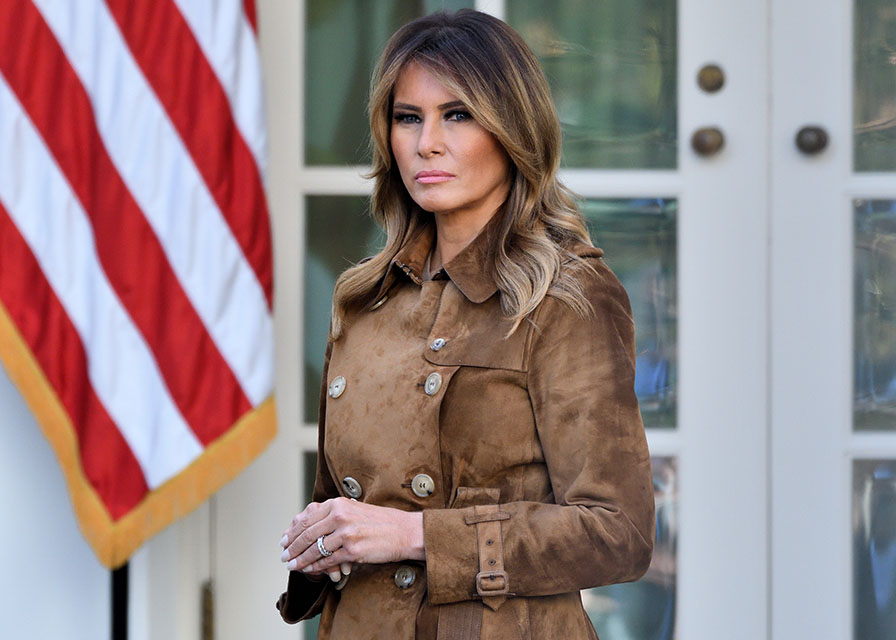
In October 2025, First Lady
Melania Trump's counsel sent journalist and author Michael Wolff a demand
letter invoking Florida Statute § 770.01, the mandatory pre-suit notice
required before commencing a libel action in Florida. The letter demanded that
Wolff retract statements he had made about Melania Trump's alleged ties to
Jeffrey Epstein and threatened a lawsuit exceeding $1 billion in damages if he
failed to comply within six days.
Wolff did not retract.
Instead, he sued first.
On Oct. 21, 2025, Wolff filed
a verified complaint in New York Supreme Court, seeking a declaratory judgment
that his statements were not actionable as defamation and asserting an
affirmative claim for damages under New York's anti-SLAPP law, N.Y. Civil
Rights Law §§ 70-a and 76-a. Wolff argues that Melania Trump's pre-litigation
threat letter itself constitutes a "claim" within the meaning of the anti-SLAPP
statute, entitling him to a declaration of rights, attorneys' fees and damages.
The complaint also indicates Wolff's intent to engage in discovery and exercise
the subpoena power "fully and expeditiously" by issuing subpoenas "to those who
frequented or who were part of Epstein's circle, including Mr. Trump."
Wolff's legal theory: The § 770.01 Letter as a SLAPP "Claim"
The linchpin of Wolff's theory
is a textual argument about what constitutes a "claim" under New York's
anti-SLAPP law.
N.Y. Civil Rights Law §70-a
entitles "[a] defendant in an action involving public petition and
participation" to seek early dismissal of a case against him and recover costs,
fees, and damages upon a sufficient showing. Section 76-a(1)(a) defines an
"action involving public petition and participation" as a claim based upon, inter
alia, "any communication in a place open to the public or in a public forum
in connection with an issue of public interest." Section 76-a(1)(b), in turn,
states that the term "'[c]laim' includes any lawsuit, cause of action, cross-claim, counterclaim, or other judicial pleading or
filing requesting relief."
Wolff argues that Melania
Trump's Florida § 770.01 demand letter was not merely an informal threat but
rather the statutory initiation of a SLAPP "claim." Since a defamation lawsuit
must be preceded by a § 770.01 notice, Wolff's theory goes, Melania Trump's
letter was a legally required commencement of process, one that effectively
placed Wolff in the position of a "libel defendant" the moment the letter was
served. As such, and because Melania Trump's threats against Wolff stemmed from
his public speech on a matter of public interest (e.g., her alleged ties to
Epstein), her letter was sufficient to trigger § 70-a protections.
The argument is creative and,
if accepted by a court, the result would be unprecedented, as no prior New York
case has addressed an affirmative cause of action being filed under New York's
anti-SLAPP statute by a party initiating the action. Arguably, Wolff's theory
is at odds with the text of § 70-a (1), which states that the anti-SLAPP
procedure is available to "a defendant" as a remedy for the improper use of litigation
by a "person who commenced" an "action." The theory also seems inconsistent
with the statute's definition of "claim" as a "judicial pleading or filing."
On the other hand, a court
could be persuaded by Wolff's textual argument that the definition of "claim"
is left permissively open-ended, since §76-a(1)(b) states that a claim
"includes" --but perhaps is not limited to--a formal legal proceeding. Wolff
could also argue that by enabling a SLAPP victim to "maintain an action" (§
70-a (1)), affirmative relief is contemplated. On a policy level, a court could
find that a pre-litigation demand letter has a similar "chilling effect" as
litigation and thus requires the same protection. How a New York court will
rule remains an open question to be watched closely.
Could the same gambit work in California?
The short answer is no--though
the analysis requires unpacking an important distinction.
California courts have, in
limited circumstances, permitted non-defendant litigants to invoke the
protections of the state's anti-SLAPP statute, Code of Civil Procedure §
425.16. In Iloh v. Regents of the University of
California, 94 Cal. App. 5th 947, a mandamus proceeding
filed against UC Irvine to prevent disclosure of records pursuant to a Public
Records Act request, the Center for Scientific Integrity (CSI) was added as a
real party in interest because it had sought the records. The Court of Appeal
held that although there was no "cause of action" asserted against CSI, it was
a "person" qualified to file an anti-SLAPP motion because its rights would be
impacted by the litigation's outcome.
That holding, however,
operates within an important reality: § 425.16 is designed exclusively as a
defensive mechanism. The statute permits a "special motion to strike" a
complaint; it does not contemplate the filing of a separate "action, claim,
cross claim or counterclaim," as New York's statute does. Section 425.16 refers
consistently to "plaintiff" and "defendant" occupying unique and distinct roles
within the procedural mechanism. The statute is thus unavailable for use as a
preemptive strike before any lawsuit has been filed.
California cases illustrate
this point. In Morris Cerullo World
Evangelism v. Newport Harbor Offices & Marina, LLC, 67
Cal. App. 5th 1149, the court held that an anti-SLAPP motion cannot be directed
at affirmative defenses, which do not seek affirmative relief and thus are not
"causes of action" brought by plaintiffs, cross-complainants, or petitioners.
Similarly, in Medical Marijuana, Inc. v.
ProjectCBD.com, 6 Cal. App. 5th 602, the court emphasized that
the statute is intended to strike claims filed against defendants, an interpretation that aligns with the text
discussing "a cause of action against a person."
The critical distinction
between Iloh and
the Wolff scenario is therefore structural. Iloh expanded the class of who may invoke the anti-SLAPP statute defensively; it did not
expand the posture in
which the statute may be invoked. A California speaker facing a § 770.01-style
demand letter--threatening but not yet constituting a filed lawsuit--would have
no available anti-SLAPP vehicle, however credible the SLAPP threat might be.
Conclusion
Wolff v. Trump presents a novel question: whether a statutory
pre-litigation demand letter can itself constitute a "claim" sufficient to
trigger anti-SLAPP protections under New York law. Wolff's textual argument is colorable,
and the breadth of New York's 2020 anti-SLAPP amendments suggests the
legislature intended expansive protections for speakers on matters of public
concern. Whether that expansiveness reaches pre-suit demand letters is a
question the courts have not yet answered.
California practitioners
should note, however, that whatever the New York courts ultimately decide, the
same theory would not translate westward. California's anti-SLAPP mechanism
remains exclusively in a defendant's toolbox. A speaker in Wolff's position
under California law would need to wait to be sued--and respond
defensively--before the statute's protections could be invoked.
Submit your own column for publication to Diana Bosetti
For reprint rights or to order a copy of your photo:
Email
Jeremy_Ellis@dailyjournal.com
for prices.
Direct dial: 213-229-5424
Send a letter to the editor:
Email: letters@dailyjournal.com