


Constitutional Law,
Administrative/Regulatory
Mar. 11, 2026
Agencies taking power Congress never gave them
A look at two cases (in Part 1) showing how courts abdicate judicial duty and allow agencies to be laws unto themselves.


Margaret A. Little
Senior Litigation Counsel
New Civil Liberties Alliance
Email: peggy.little@ncla.legal
There is no better time in recent history to be practicing
constitutional law than now. And the best soil for that rewarding work is
administrative law. For over eight decades, perhaps longer, we have witnessed
the rise and rise of the Administrative State, as scholar Gary Lawson describes
it, a fourth branch of government that has increasingly expanded beyond its
constitutional guardrails to exert insidious, expansive, and largely
unacknowledged power over the lives, livelihoods, prospects, economic freedom
and civil liberties of Americans and their enterprises.
Administrative adjudication
By the early 21st century, Americans were ten times more
likely to be charged before an administrative law judge (ALJ) than a real court
of law where the Constitution has alone assigned the judicial power.
Administrative adjudication trapped and convicted thousands of Americans in its
agency-favoring, due-process-less clutches for years, sometimes decades, in
expensive, endless proceedings where the in-house "judicial" scheme is
structurally designed to convict them.
But starting in 2018, the Supreme Court issued a series of
landmark rulings that have allowed litigants to successfully challenge the
constitutionality of these ALJ schemes. In 2018, Lucia v. SEC set aside
dozens of SEC administrative proceedings for their ALJs' shocking lack of
proper appointments. Later decisions further held that the Constitution forbade
the multiple layers of removal protections that insulated ALJs or other agency
officials from presidential control (Free Enterprise Fund v. PCAOB, Seila
Law v. CFPB, Collins v. Yellen). And in 2023, the Court unanimously
recognized district court jurisdiction to challenge the constitutionality of
in-house adjudication (Axon Enterprise, Inc. v. FTC, SEC v. Cochran).
The effects of that last decision are best measured by
what happened next. FTC dropped its wholly flawed case against Axon rather than
have its ALJ scheme where the agency won 100% of its cases scrutinized in a
real court of law. SEC outdid FTC and dismissed all 42 of its open in-house
adjudications instead of risking even one adverse court decision that SEC's
punishing scheme with an over 90% conviction rate was unconstitutional. To make
matters worse, that shocking mass-dismissal incidentally allowed SEC to dodge
discovery on its admitted practice that for years, enforcement staff had been
unlawfully accessing the ALJ's files while the proceedings were ongoing in
those kangaroo courts. So far, SEC has shockingly also stubbornly refused to
comply with FOIA on this "control deficiency" for four years, fighting federal
lawsuits and ongoing appeals.
The Supreme Court's 2024 SEC v. Jarkesy
decision further drove a stake into the heart of this merciless administrative
adjudication scheme by mandating federal district court jurisdiction before an
impartial adjudicator--i.e. a real federal judge not employed by the prosecuting
SEC--in government prosecutions that seek civil penalties, and that those
trials be before juries where that right applies under the Seventh Amendment. Decades
of biased, punitive prosecutions where SEC was prosecutor, judge, jury, sentencer
and first court of appeal were now declared unconstitutional--as they had
always been.
Deference to agencies
Not only had agencies combined the roles of prosecutor,
judge, and final court of appeal, but far too often the role of legislator. The
very "law" or regulation agencies charged Americans with violating was written
or sometimes merely conjured up by them! Yes, through devices such as
regulation by enforcement, settlement, guidance, and other depredations of
administrative power, the agencies were manufacturing the rules and laws they
were enforcing out of whole cloth. And courts, to their grave discredit, were
conjuring up endless deference doctrines so complex, multi-faceted, fabricated,
and even ridiculous (see Brand X), that agencies could regulate
Americans in new fields, with new or self-assumed powers, under new theories,
without any effective check on the long-recognized tendency of all power to
expand beyond its lawful bounds.
In 2024, the New Civil Liberties Alliance persuaded the
Supreme Court to end much of that injustice by overturning Chevron
deference in Loper Bright Enterprises v. Raimondo and Relentless v.
Department of Commerce. No longer could agencies prosecute regulated
parties or industries for violations of rules or laws that had never been
passed by Congress but that the agencies claimed bound them under vague and
general grants of authority. As a result, agencies will probably pull back on
the worst of their abuses, and at least some courts will do their duty to say
what the law is, without deferring to the self-interested judgment of the most
powerful litigant before it.
Presidential control over agency leadership and policies
President Trump's constitutional exercise of his removal
power was affirmed by the Supreme Court's critical ruling in Trump v. Wilcox
(NLRB) in 2025. Trump v. Cook (Federal Reserve) and Trump v.
Slaughter (FTC) appear to be on the verge of overruling the reign of
misrule set in place by Humphrey's Executor, bringing Executive Branch
control back to ... the Executive. The promise offered by that restoration is
only as good as the new appointees' willingness to ferret out the worst abuses
of the agency to which they have been appointed, always a daunting task when
layers of entrenched career employees are invested in the status quo. That's
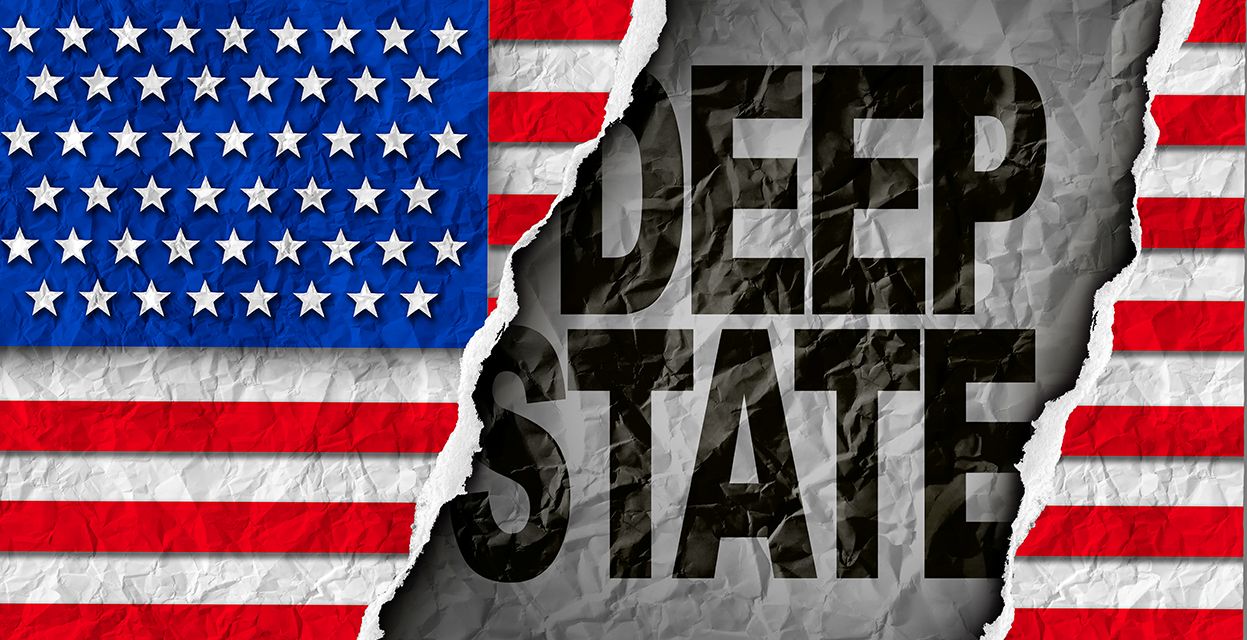
why they call it the Deep State.
Agency power may always be challenged
2024's Corner Post v. Federal Reserve Supreme Court
ruling reinvigorated Americans' ability to challenge agency power, because one
of the many administrative roadblocks to correcting agency abuse of power was
that after a certain time--sometimes as little as 60 days(!) or up to six years--if
agency power had not been successfully challenged, it was considered
bulletproof. This silly, illogical, and self-favoring doctrine was shockingly
successful for decades and agencies still stubbornly asserted it. No more. Corner
Post sensibly held that a regulation initially unauthorized by statute
cannot become authorized by the mere passage of time, or as the Supreme Court
put it, a "federal regulation that makes it six years without being contested
does not enter a promised land free from legal challenge." This renewed
Americans' ability to maintain constitutional separations of powers, fight
against agencies' seizing authority Congress never gave them, and stop their
bureaucrats from violating the Bill of Rights with impunity. What a
concept--your rights are remediable whenever they are violated! As the
Constitution promised.
Major Questions Doctrine
In
2022, the Supreme Court reiterated the fundamental constitutional requirement
that only Congress can decide major legislative questions--such as whether EPA
has the power under the 1970 Clean Air Act to regulate where and whether whole
sectors of the energy industry can operate. Agencies only have the powers
expressly given to them by Congress, and their organic statutes are not an
"open book to which the agency [may] add pages and change the plot line." See,
Ernest Gellhorn and Paul Verkuil, Controlling
Chevron-Based Delegations.
It is no exaggeration to say that these cases over the
past six years breathe new life into the most vital aspects of the
Constitution: its structural assignment of powers to separate branches of
government and the fact that the Bill of Rights means what it says--not even
Congress can deprive citizens of their rights to a jury trial, First, Fourth
and Fifth Amendments rights, including rights to due process and access to the
courts to redress constitutional injuries from unlawful search and seizure. Congress
must enact the laws that govern us, and it is the duty of the courts to say
what those laws mean. For some 80 years, unelected and unaccountable agencies
have been laws unto themselves, asserting legislative, prosecutorial,
adjudicatory, appellate, and final, unchallengeable authority over millions of
Americans' lives.
Two cases in point
It is foolish to think that this sea change in Supreme
Court administrative law will be implemented seamlessly or with full respect
for the hierarchical nature of our court system. Courts are as human and
politically influenced as any other unavoidably political institution and are
far too invested in the old ways. Much ink has been and must still be spilled
about entrenched judicial habits of deferring to agencies and decisions that
range from recalcitrance, deafness, resentment and outright defiance of applying
these precedents.
To illustrate, I offer up two cases, one of which
challenges a shocking, illegal, and self-legislated power to strip Americans of
their First Amendment rights that has been unchallenged for over five decades. The
other fights a much more recent, just as shocking, massive power grab by the
same agency that systematically violates the Fourth and Fifth Amendment rights
of all investing Americans. Will these unconstitutional schemes continue under
the newly restored vision of agency power, or, as in Jarkesy,
be called out of bounds, as they have always been?
Powell v. SEC - SEC's 1973 Gag Rule
In 1973, in flagrant violation of law requiring that all
rules that bind people outside an agency first be published for notice and
comment before they can be lawfully promulgated, SEC deceitfully enacted a rule
that all persons who settle with the agency must agree to be gagged for life
and may never publicly question, or create even the impression that they
question, any aspect of the agency's settled charges against them. Think about
that for a moment. If you heard that any government anywhere could impose such
a rule, would you believe you were in the United States of America?
On March 16, 2026, NCLA will be petitioning the Supreme
Court to hear Powell v. SEC and overturn the Ninth Circuit Court of
Appeals' three-judge ruling in the case, which found that this lifetime Gag
Rule does not violate the First Amendment. The flaws of that decision are so
myriad--including the court's erasure of the presence of two media organizations
who want to report on both sides of SEC settlements but cannot because of the
Rule--and judicial resistance to setting aside such a long-entrenched rule, that
it illustrates the grave danger of court doctrines that refuse to address
long-standing rules that abused SEC defendants who settle have failed to
challenge for decades.
The Gag Rule violates the whole hornbook of First
Amendment law; it is a forbidden prior restraint that engages in government-favoring
content- and viewpoint-based discrimination. It violates the Unconstitutional
Conditions Doctrine. Indeed, the Supreme Court has long held that even
convicted criminals have the right to speak freely about the process that
convicted them, including questioning any and all
aspects of their prosecution. The gag compels self-incriminating speech,
violates due process of law by forbidding notice and any opportunity for a
court hearing on the imposition of the gag, violates the Federal Rules of Civil
Procedure, and shamefully makes the courts required to enforce such gags complicit
in this wholesale betrayal of the First Amendment and due process.
Furthermore, it hollows out every sacred and inviolable
aspect of the First Amendment by violating rights of speech, rights of the
press to publish speech critical of government, and the right of both the
public and settling parties to petition the government for reform of agency
seizure of power by regulation, seizure ironically exemplified by its false
delusion that the securities laws allow SEC to gag anyone. In fact, the First
Amendment forbids SEC gags.
SEC's dangerous and unconstitutional Consolidated Audit
Trail (CAT) - Davidson
v. SEC
In 2012, SEC unilaterally made another rule setting up the
outlines of a massive database that would collect all data on all trades made
by all investing Americans without any cause or even suspicion of wrongdoing. It
took the agency a decade to get this unwieldy, unappropriated, unauthorized and
unconstitutional dragnet going. SEC laughably claims it had authority to do
this under the 1934 Exchange Act, and amendments made in 1975 to make the stock
exchanges work more efficiently. No plausible case can be made that either of
these laws considered such an Orwellian all-seeing-eye
over Americans' perfectly lawful securities trading. Any reasonably educated
American knows that. Congress neither authorized the CAT nor appropriated any
money to build this multi-billion-dollar monstrosity that represents a
deadweight unlegislated tax on American investing. Worse, SEC absurdly claims
that ordinary Americans had only 60 days to challenge this undeveloped scheme
after it was announced in 2012, and any later challenge is too late! The
monstrous CAT is safely nestled in the "promised land free from legal challenge,"
it argues, no matter what the Supreme Court has said in Corner Post.
An Op-ed
by former U.S. Attorney General Bill Barr in The Wall Street Journal has
correctly identified the CAT as a flagrant and massive Fourth Amendment
violation that endangers the security of every American's investments each day
by exposing them to hackers and theft. Not even Congress could set up this
database precisely because the Fourth Amendment prohibits such searches and
seizures. Heck, the CAT is so unconstitutional that it even reverses the Fourth
Amendment's provisions, taking the power to seize all information on all trades
from everybody first and then set its bots loose to search for incriminating
material. The very recitation of that upside-down scheme (seize everything
first, search later) should send shivers down Americans' spines.
In 2024, NCLA challenged the CAT before a district judge
in Texas, who acknowledged in the first hearing that restoration of these core
constitutional principles that important, pressing constitutional violations
were taking place on a massive scale each day the CAT scheme was left in place.
The court ordered prompt briefing and NCLA invoked many of the Supreme Court
precedents set out above as requiring prompt federal court redress and
injunctive relief. SEC countered by suggesting it might pull back on gathering
certain personally identifiable information, a concession that does nothing to
affect the scheme's rank lawlessness, unconstitutionality and grave risk to the
security of all Americans' investments which are becoming easier targets for
hacking and theft every day.
Nonetheless, inexplicably, and illogically, the district
court has recently extended to the SEC what is now a one-year stay to perform a
"comprehensive rethink" of the CAT scheme. But there is nothing the agency
can do to authorize any of this, to fund it, or justify the huge scale of the
ongoing Fourth Amendment violation. That is the whole thrust of the recent
cases explained above. Meanwhile millions of investors' rights are stripped and their investments imperiled on an inconceivably
vast scale each day.
Sadly, so far, SEC has been able to avoid court correction
of either of these constitutional atrocities.
Judicial relief is essential to stop these ongoing,
protracted and massive violations of the protections promised to Americans by
their Constitution and its Bill of Rights. The restoration of these core
constitutional principles in administrative law requires the gag to be untied,
and the CAT put down.
For reprint rights or to order a copy of your photo:
Email
Jeremy_Ellis@dailyjournal.com
for prices.
Direct dial: 213-229-5424
Send a letter to the editor:
Email: letters@dailyjournal.com