


Mar. 20, 2026
Trade groups challenge California recycling label law as unconstitutional speech ban
Eighteen trade groups filed suit to block California's SB 343, arguing the law unlawfully restricts truthful recycling claims and imposes unclear compliance standards in violation of the First Amendment and due process.


Eighteen trade groups sued California Attorney General Rob Bonta on Tuesday, challenging a state law that restricts recyclability claims on packaging as an unconstitutional limit on commercial speech and an impermissibly vague regime under the Due Process Clause.
The complaint, filed in the U.S. District Court for the Southern District of California, seeks to block enforcement of Senate Bill 343 before its Oct. 4 effective date, arguing the statute broadly bars truthful, qualified recycling statements while imposing unclear compliance standards. California League of Food Producers et al. v. Bonta, 3:26-cv-01675-WQH-BLM, (S.D. Cal. filed Mar. 17, 2026)
At issue is SB 343's ban on the "chasing arrows" symbol or similar recyclability claims unless a product satisfies a two-part "60/60 threshold": it must be collected by programs serving at least 60% of the state's population and sorted by facilities covering at least 60% of recycling programs.
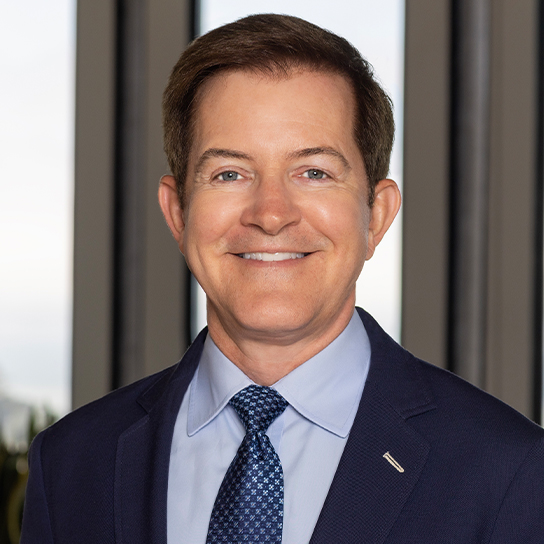
Trenton H. Norris, a San Francisco partner at Hogan Lovells represents the plaintiffs.
"Businesses should not have to risk litigation in order to provide useful information to consumers," Norris told the Daily Journal Thursday.
The plaintiffs say the law reaches beyond deceptive speech to prohibit accurate disclosures for materials that are widely recycled but fall short of the thresholds.
"Even accurate statements such as 'Recyclable where facilities exist' or 'Please check locally for recycling options' are prohibited," the complaint states.
This lawsuit advances three constitutional claims. It argues the law is a content-based restriction subject to strict scrutiny under Reed v. Town of Gilbert, 576 U.S. 155 (2015), and fails because it is not narrowly tailored and ignores less restrictive alternatives, such as public education campaigns or allowing qualified claims. It also contends the statute cannot survive intermediate scrutiny under Central Hudson Gas & Electric Corp. v. Public Service Commission, 447 U.S. 557 (1980), because it restricts speech that is at most potentially misleading and is more extensive than necessary. Finally, it asserts the law is void for vagueness under the Fourteenth Amendment.
On vagueness, the plaintiffs cite ambiguous requirements, including a mandate that materials be "sent to and reclaimed at a reclaiming facility consistent with the requirements of the Basel Convention," which the United States has not ratified. They say California regulators acknowledge gaps in data needed to assess compliance and have not specified how businesses should obtain required information.
The complaint also points to shifting agency determinations, alleging regulators changed the recyclability status of certain cartons multiple times in 2025, leaving companies uncertain about compliance. "Businesses are forced to choose between communicating recyclability to consumers, or otherwise guessing and risking litigation," the complaint states.
The plaintiffs say the risks are immediate, citing more than 30 lawsuits since 2022 challenging recyclability claims under state consumer protection laws, including actions by the attorney general. Potential penalties include misdemeanor charges, civil fines of up to $2,500 per violation, and exposure to class actions.
They further argue the law may undermine recycling by discouraging accurate disposal instructions and creating conflicts with laws in other states that require resin identification codes within the chasing arrows symbol, complicating nationwide compliance.
The plaintiffs seek declaratory and injunctive relief under federal civil rights statutes, along with attorneys' fees.
Douglas Saunders Sr.
douglas_saunders@dailyjournal.com
For reprint rights or to order a copy of your photo:
Email
Jeremy_Ellis@dailyjournal.com
for prices.
Direct dial: 213-229-5424
Send a letter to the editor:
Email: letters@dailyjournal.com