


Apr. 9, 2026
Six-figure law school debt requires more than modest scholarships
A $5,000 scholarship is meaningful--particularly for a first-generation law student--but measured against six-figure debt, it falls short of the problem's scale and demands more from the legal profession.


Arash Homampour
Sole Shareholder
The Homampour Law Firm PC
15303 Ventura Blvd.
Sherman Oaks , CA 91403
Phone: (323) 658-8077
Fax: (323) 658-8477
Email: arash@homampour.com
Southwestern Univ SOL; Los Angeles CA
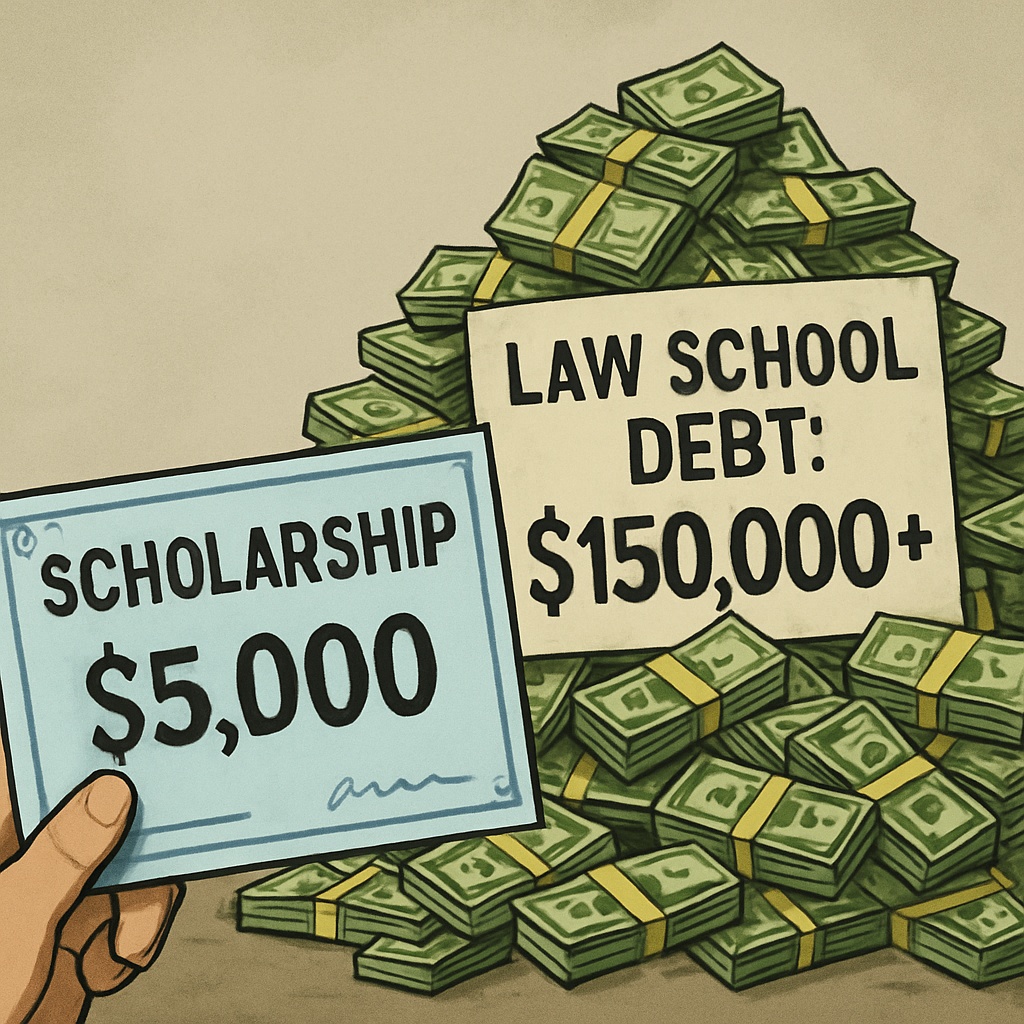
I respect every organization in our profession that funds a scholarship. Recently, I read in the Daily Journal about a $5,000 scholarship, an award that can cover books, bar prep, rent, childcare or a stretch of time when a student can breathe instead of panic. For a first-generation law student, that help is real. But we should still be honest about scale.
The Law School Admission Council (LSAC) issued a funding report showing that members of the 2024 first-year class could expect an average of $76,300 in law school debt at graduation. For first-generation college graduates, that number was expected to be about $84,796. Seventeen percent of the class should expect to owe $150,000 or more. In that context, $5,000 matters, but it does not come close to solving the funding problem.
This is not a criticism of scholarship programs; it is a challenge to the rest of us. The legal profession should not confuse a modest check with a serious answer to law school access. We know how expensive this path is. We know how many gifted students lose ground because they need to work, support family or absorb emergency expenses while trying to become lawyers. LSAC's 2024 Persistence Report finds that more than two out of five 1Ls thought about leaving law school at least a few times during their first year.
If we know all of this, giving back cannot be a seasonal gesture. It has to become part of our professional identity.
Who has the greatest need
Here is the part that should trouble us most. The students who need the most help are often the ones choosing to earn the least. According to the National Association for Law Practice's 2023 Public Service Attorney Salary Survey, the median entry-level salary for a civil legal services attorney is $64,200. Public defenders start at about $69,600. After 11 to 15 years, a legal aid lawyer's median salary reaches just $86,000.
Meanwhile, some of the largest firms now pay first-year associates $225,000 or more, roughly triple what a first-year public interest lawyer earns. At the partner level, the gap becomes staggering. According to Major, Lindsey & Africa's partner compensation survey, the average equity partner at a major firm earns roughly $1.9 million a year. According to industry reports, profits per equity partner at the Am Law 100's most profitable firms have exceeded $7 million to $9 million, and top earners at elite firms have reached $25 million to $30 million. Many of the top plaintiff attorneys earn more than $10 million a year.
A profession that generates that kind of wealth while paying $64,000 to lawyers who defend the accused, represent the poor and protect tenants from eviction has a structural problem that a $5,000 check will never fix.
Why it matters to me
I did not become a highly successful plaintiff's attorney from a position of comfort. I started with less than nothing: no mentor, no money, no cases. My parents were immigrants from Iran who came to this country with nothing. I worked and paid my own way through USC and Southwestern Law School. No one handed me a playbook.
That is exactly why giving back was never an afterthought. Long before I could write checks, I gave what I had: time. I mentored other lawyers, took calls from students I had never met, opened doors when I could and stayed involved with the school that gave me my start. As my law firm grew, my commitment grew with it, first with mentorship and now with real dollars.
On March 13, I sat down with several Southwestern Law School scholarship recipients who are supported through my non-profit There Is A Light Foundation (yes, inspired by the Smiths' "There Is a Light That Never Goes Out" track). In 2024, the foundation made a $1 million commitment to fund public service scholarships at Southwestern for students who demonstrate commitment to public service, leadership and academic excellence, providing 25 $10,000 scholarships annually over four years. Fifty scholarships have already been awarded. Before that, the foundation gave $7,500 public service prizes to 10 graduating students who demonstrated dedication to public service throughout their time at Southwestern.
What stayed with me were their stories: immigration experiences that shaped a student's path; exposure to the criminal justice system that gave someone purpose; personal histories of abuse that now drive them to advocate for others. One recipient, who externs at the ACLU, plans to continue her work in criminal justice reform. Another is focused on representing parents in dependency court. Others are dedicating themselves to tenants' rights, children's rights, immigrant communities and the LGBTQIA+ population. As one recipient put it, the award helps her serve communities that need recovery and reinvestment and helps culturally significant communities resist displacement.
These are not abstract career plans. These are people who will graduate with five or six figures of debt and walk into jobs paying a fraction of what their classmates earn in the private sector because they believe the work matters. They are right. And we should have their backs.
Why we should give
At some point, the question in life stops being what you can get. The real question becomes what you are willing to give. Lawyers spend years building knowledge, credibility, capital and influence. None of that should end with personal success. We should turn some of it outward. This means thinking beyond a simple scholarship announcement.
Paid internships matter. Bar exam stipends matter. Emergency grants matter. Mentorship matters. So do housing help, laptops, mental health support, tuition assistance and simple introductions that open real opportunities. A scholarship can reduce pressure for a moment. A system of support can change a life.
How we can give
For lawyers who want to build that kind of support, the mechanics are manageable, but the structure matters. In California, a nonprofit public benefit corporation can be formed through the secretary of state's office. File a statement of information, apply to the IRS for 501(c)(3) recognition through Form 1023 or Form 1023-EZ, then seek a California tax exemption through Form 3500A (with an IRS determination letter) or Form 3500 (without one).
If the organization receives charitable assets, it generally must register with the attorney general within 30 days by filing Form CT-1, then renew annually with Form RRF-1 as well as the applicable Form 990 or California Form CT-TR-1. It is important to recognize that a new 501(c)(3) is generally presumed to be a private foundation unless it qualifies as a public charity; that distinction affects deduction limits, scholarship procedures and compliance. If a private foundation awards scholarships directly to individuals, its procedures generally must be objective, nondiscriminatory and approved in advance by the IRS.
Lawyers should understand that cash contributions to a qualified 501(c)(3) public charity are deductible for itemizing donors-generally up to 60% of adjusted gross income, a ceiling Congress has now made permanent. Starting in 2026, however, itemizers can deduct charitable contributions only to the extent they exceed 0.5% of adjusted gross income, and top-bracket taxpayers face a further reduction in the value of those deductions. California has its own limits, generally capping charitable deductions at 50% of federal AGI with a high-income phaseout.
Even with these limitations, the tax benefit of a significant gift is substantial. A well-structured donation can reduce the real after-tax cost by roughly a third to nearly half, depending on circumstances. Donating long-term appreciated stock can be especially efficient, potentially avoiding capital gains while generating a fair-market-value deduction. Any unused deductible amount can generally be carried forward for five years. Lawyers advise clients on strategies like these every day; we should apply the same thinking to our own giving.
Lawyers who are not ready to build a standalone organization can still start supporting future lawyers through a donor-advised fund sitting inside an existing 501(c)(3), with the sponsoring organization keeping legal control while the donor retains advisory privileges. A fiscal sponsorship arrangement can raise tax-deductible dollars through an existing nonprofit that retains control and discretion over the funds. Either can work for lawyers who want to start helping now and build something independent later.
None of these funding vehicles requires a grand unveiling. Commit a single contingency fee each year. Set aside a fixed percentage of the firm's net income and treat it the way you treat overhead, as a non-negotiable cost of doing business. Set real criteria, fund real awards, and keep funding them year after year. The profession does not need another press release about generosity. It needs durable commitments that outlast the news cycle.
Conclusion
If we want a system that is truly fair, accountable and humane, we need to support the people willing to do this work-not with token gestures, but with resources that match the scale of the problem. Some of the largest law firms in the country recover hundreds of millions of dollars in a single year. Insurance companies operate on billions of dollars. A $5,000 scholarship, while appreciated, represents a fraction of what those institutions could do without noticing the expense.
A legal career should not be measured only by what you win, what you bill or what you accumulate. It should also be measured by what you build for people who come after you. Fund scholarships for public interest students. Invest in people committed to serving others. You are not just helping an individual. You are strengthening the communities they will serve and the systems they will help improve.
A $5,000 scholarship is good. It deserves respect. But a profession with this much talent, money and influence should expect more from itself. So should each of us.
Do not simply give to get. Discover what every generous person eventually discovers: Giving is the mechanism that connects what you've built to something larger than yourself. When you direct your resources toward people who need them, the impact does not travel in one direction. It reverberates. Call it karma, goodwill or whatever you want. The universe has a way of returning what you put into it-not because you asked, but because generosity creates its own gravity.
Submit your own column for publication to Diana Bosetti
For reprint rights or to order a copy of your photo:
Email
Jeremy_Ellis@dailyjournal.com
for prices.
Direct dial: 213-229-5424
Send a letter to the editor:
Email: letters@dailyjournal.com