


Criminal
Apr. 13, 2026
DAs back bill tightening elderly parole for child sex predators
California prosecutors support legislation raising parole eligibility for sex offenders after controversial cases and disturbing parole hearing details intensify debate over public safety and victims' rights.


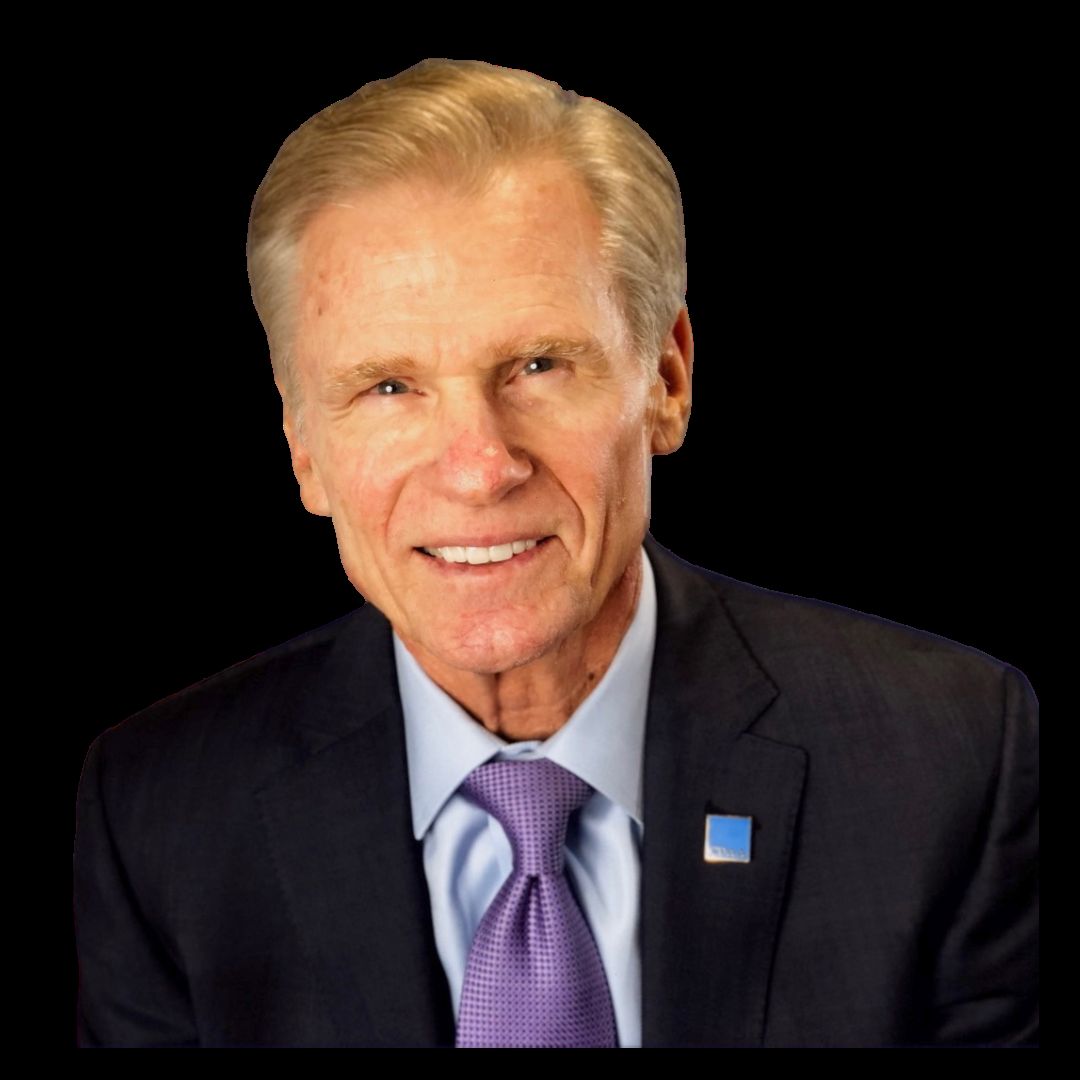
The California District Attorneys Association announced on Friday its support for legislation tightening the state's Elderly Parole Program for child sex predators, citing mounting concern over recent releases and disturbing details from high-profile cases that have intensified scrutiny of the parole system.
Assembly Bill 2727 by Assemblymember Stephanie Nguyen, D-Elk Grove, cleared the Assembly Public Safety Committee on a bipartisan vote on April 7 and advanced to the Appropriations Committee as lawmakers respond to what prosecutors and victims' advocates describe as dangerous gaps in current law.
The bill would raise the threshold for child molesters seeking release under the elderly parole program. Under existing law, such prisoners, including those serving life terms, may be eligible for early parole consideration at 50 after serving at least 20 years.
AB 2727 would increase that threshold for qualifying sex offenders to age 65 with at least 25 years of continuous custody. The bill would also require such inmates to be transferred from prison into state hospital custody under the Sexually Violent Predator (SVP) program rather than being released directly into the community.
"These are significant improvements to existing law and will strengthen public safety in California," the district attorneys said in a statement.
Nguyen said at the committee hearing, "When predators prey on our children, the impact is devastating and it stays with victims for life."
Outside the hearing, Nguyen emphasized that her bill is intended to refine -- not eliminate -- the elderly parole program.
"I am supportive of the Elderly Parole Program. I believe that there have been individuals that have gone through it, and they are doing good in their community," she said. "But there are certain individuals that we need to take a closer look at."
Still, prosecutors say the measure reflects compromise rather than their preferred policy.
"Generally speaking, prosecutors do not want elderly parole for any child predator," said Gregory Totten, executive director of the DAs' association.
Totten noted that while AB 2727 raises eligibility thresholds, it does not make child sex offenders completely ineligible for elderly parole. He also noted the Nguyen's bill was amended in the committee. She had proposed a minimum of 70 years old and 30 years in prison for child sex predators to be eligible.
Totten noted that the bill's requirement for child predators sentenced to life go through the Sexually Violent Predator Act evaluation before full release survived the committee and would be a significant improvement in the law.
Even so, Totten said prosecutors would have preferred stricter limits. "We would have liked all child predators to be ineligible," he said. "But the legislative process is compromise."
The Sexually Violent Predator Act requirement in the bill would apply in the future to inmates like David Funston, 64, who was serving three life sentences and a 68-year term on his 1999 convictions for multiple kidnappings and assaults on children.
The Parole Board found him suitable for release on Sept. 24, 2025, which was his second parole hearing.
Funston was not released, however, because Placer County District Attorney Morgan Gire charged him with a 1996 case of child molestation in Roseville that was never prosecuted. Prosecutors said this happens when they believe the convicted felon will never be released from prison, so there is no need for more trials.
Funston's attorney, Martin A. Jones of Chastaine I Jones in Roseville, said in an email that the charge was dismissed in the interests of justice by the Placer District Attorney, and the office "subsequently assisted in clearing a warrant for this matter in 2024."
Transcripts from the parole hearing have drawn sharp criticism.
Funston admitted that as recently as 2021 he had been masturbating to thoughts of children while in prison. He described a "lapse" in which he fantasized about minors, including an 8-year-old girl who lived across the street from him. He told commissioners he remains attracted to female children and described pedophilia as a lifelong condition.
"There's always a possibility that I'll relapse," Funston said during the hearing. "I want to do everything I can to ensure that I never harm another child."
He also admitted molesting a boy out of a "desire for power and control," saying the victim was targeted because he was "vulnerable and available."
Deputy District Attorney Dean Archibald of Sacramento County warned the panel that Funston was a "very dangerous guy" who posed an unreasonable risk to public safety.
Presiding Parole Board Commissioner Patricia Cassady told Funston he had gained tools to avoid reoffending. "Your present mental state is not the same as the mental state you had at the time of the crime," she said. "You have gained sufficient coping skills ... to avoid repeating past mistakes."
Gov. Gavin Newsom referred the decision back to the board in January for an en banc review, but on Feb. 18, the Board of Parole Hearings reaffirmed the decision.
"Anyone who had a modicum of information about the original case would have been shocked by the Parole Board's decision," Totten said, commenting in his personal capacity. "It was not in the interest of justice and safety."
On Feb. 26, when he would have been freed, the California Department of Corrections and Rehabilitation transferred Funston to local law enforcement custody after Placer County issued the new arrest warrant. DA Gire said the case highlights how changes in law and parole decisions have altered the impact of lengthy sentences.
"To be clear, this individual was previously sentenced to multiple life terms for extremely heinous crimes," Gire said. "However, subsequent changes in state law and recent Parole Board failures have altered the practical effect of those life sentences for the victims and communities at large."
Former Sacramento County District Attorney Anne Marie Schubert, who led the office when Funston was convicted, praised Gire's actions, writing on social media that prosecutors had stepped in "to stop this insanity," while criticizing the state's parole framework.
Totten said Funston's own statements at the hearing underscore prosecutors' concerns.
"He acknowledged he still has a sexual interest in children," Totten said. "From our standpoint, that would fit into very significant concerns we have."
He added that age alone does not mitigate risk.
"We do know that people who are predisposed toward preying on children are a great risk regardless of age," Totten said. "We've prosecuted many well into their seventh decade of life for preying on children."
Funston's case is one of several drawing attention. In Sacramento County, Gregory Lee Vogelsang, 57, a sexual predator sentenced to more than 350 years for kidnapping and molesting at least six boys, was also granted early elderly parole. Following strong opposition from prosecutors and law enforcement, the Parole Board voted in March to reconsider that decision.
In response to a 2014 federal court order to reduce prison crowding, the Elderly Parole Program was signed into law by Gov. Jerry Brown in 2017, allowing inmates 60 and over, having served 25 years, to be eligible for early release. A later law, signed by Newsom, lowered the eligibility to 50 years of age and 20 years in prison.
Newsom said in a recent news conference that he backs increased scrutiny of violent sexual offenders and that his administration is working with lawmakers.
"There are myriad bills pending in the Legislature in and around the elderly parole space," Totten added. "I'm sure there are bills on the issue of transparency of the Parole Board, trying to have more robust processes focused on protecting the public rather than just releasing."
"This is a big topic in the Legislature this year," he said. "There's going to be other bills under consideration."
Laurinda Keys
laurinda_keys@dailyjournal.com
For reprint rights or to order a copy of your photo:
Email
Jeremy_Ellis@dailyjournal.com
for prices.
Direct dial: 213-229-5424
Send a letter to the editor:
Email: letters@dailyjournal.com