


State Bar & Bar Associations,
Ethics/Professional Responsibility
Apr. 14, 2026
State Bar charges 3 attorneys over AI-generated fake citations
Disciplinary actions target lawyers who filed court papers with fabricated AI-generated citations, as regulators stress duty to verify accuracy.


The State Bar has charged three attorneys with misconduct for submitting court filings containing fabricated legal citations generated by artificial intelligence, underscoring that lawyers remain responsible for verifying their work.
The bar issued disciplinary charges against two attorneys and reached a stipulation with a third, all stemming from filings that included nonexistent or inaccurate AI-generated citations submitted without adequate review.
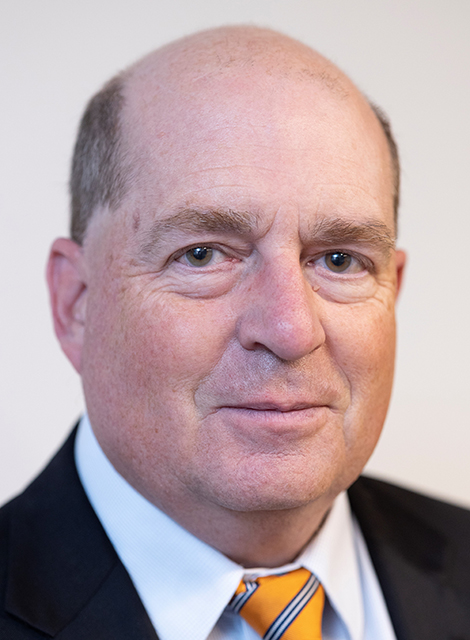
"Whether relying on traditional research methods or emerging technologies like generative AI, attorneys remain fully responsible for verifying the accuracy of their work," State Bar Chief Trial Counsel George Cardona said in a news release. "Courts and clients must be able to trust that the filings attorneys submit are accurate, supported, and compliant with professional standards."
The bar entered into a disciplinary stipulation with Sepideh Ardestani, formerly of Crosner Legal in Beverly Hills, on April 6. She admitted to filing a federal motion containing nonexistent and inaccurate citations that misled the court. The stipulation recommends a one-year stayed suspension, a 30-day actual suspension, and 10 hours of technology-focused continuing legal education addressing AI risks.
Ardestani did not respond to requests for comment.
The stipulation accompanies disciplinary charges against Omid E. Khalifeh of Omni Legal Group in Los Angeles and Steven T. Romeyn of Enara Law PLLC in Scottsdale, Arizona.
Khalifeh faces six counts of professional misconduct for allegedly submitting a nonexistent case citation in a federal trademark matter and falsely certifying that he had verified it.
Romeyn is accused of filing a personal injury pleading containing numerous fabricated legal authorities generated by AI and faces counts for failing to act with reasonable diligence and misrepresenting the filing's accuracy.
Legal ethics experts said the cases reflect established professional standards rather than a new rule specific to AI.
"At this point, given the potential for inaccuracies among certain AI tools, an attorney likely violates the standard of competence by not verifying citations generated by AI," said Merri A. Baldwin of Rogers Joseph O'Donnell PC.
Others said the issue ultimately comes down to basic diligence.
"You need to be able to vet AI just like you would vet a witness at a deposition prior to trial," said Shawn Shaffie of Parker Shaffie LLP. "You don't go to trial not knowing how a witness is going to testify 95% of the time, and the same thing goes with these citations."
Cassandra L. Gaedt-Sheckter of Gibson, Dunn & Crutcher LLP said partial verification of AI-generated work may be harder to defend as awareness of so-called "hallucinations" becomes widespread.
Attorneys also said the discipline signals that regulators expect lawyers to apply existing ethical duties to new tools.
"Lawyers are responsible for knowing the rules of the courts in which they are appearing," said Sharon R. Klein of Blank Rome LLP.
Dylan Ruga of Stalwart Law Group said generative AI can be misused by attorneys looking to cut corners. "In each example, the attorneys have acted irresponsibly and unethically," he said.
Some attorneys differed on whether the discipline was too lenient or too harsh. Ruga described the penalties as "relatively light," predicting stricter enforcement as familiarity with AI grows.
Randall A. Miller of Miller Waxler LLP called the stipulation "particularly aggressive," but said efforts to curb misuse are appropriate.
Experts said expectations around AI use in legal practice are likely to evolve quickly. Vincent Joralemon, an AI law expert at UC Berkeley Law, said attorneys who fail to adopt such tools may eventually face scrutiny as well.
"At some point, the general acceptance in the field will be that it is better to use these tools than to not use them," Joralemon said.
Skyler Romero
skyler_romero@dailyjournal.com
For reprint rights or to order a copy of your photo:
Email
Jeremy_Ellis@dailyjournal.com
for prices.
Direct dial: 213-229-5424
Send a letter to the editor:
Email: letters@dailyjournal.com