


Government
Apr. 22, 2026
New law enforcement tools create opportunities and risks for local agencies
As agencies adopt law enforcement technology to improve investigations, these tools also generate vast records, requiring careful CPRA analysis to determine what must be disclosed.



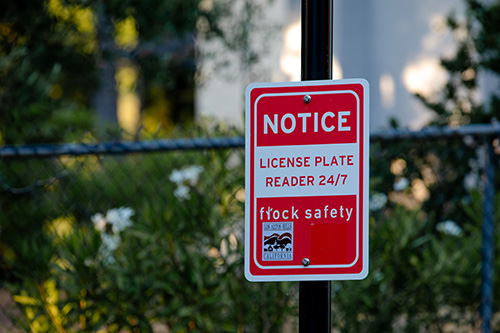
Agencies are increasingly adopting law enforcement technology that increases the efficiency, transparency and safety of investigations. However, these technologies also create time consuming and costly burdens. Police departments have begun using tools like body-worn cameras, license plate readers (LPRs) and unmanned aerial vehicles (UAVs or drones), which provide important advantages. These tools allow distanced assessments to ensure the appropriate resources are dispatched and increase investigation efficiency. These tools also create records which implicate the California Public Records Act (CPRA). The CPRA was enacted to minimize secrecy in government and create a clear framework for the release of government records. The recording capabilities of the aforementioned tools create a large volume of records. The CPRA should be carefully analyzed to determine whether the records must be disclosed.
Agencies should carefully consider the decision to deny requests related to body-worn cameras, LPRs and UAVs. The CPRA provides for the disclosure of government records, but Government Code Section 7923.600(a) exempts records of investigations conducted by local police. Although this exemption is vast, it does not cover all records generated by local law enforcement. For this exemption to apply, the records must be related to an actual investigation. This is especially relevant for body-worn cameras, LPRs and UAVs which can create a large amount of records, not all of which are connected to an investigation. For example, UAVs scan license plates to identify passing vehicles that may be related to an investigation, but in that process, license plates of numerous vehicles with no connection to an investigation are collected. In Castanares v. Superior Court, 98 Cal.App.5th 295, 310 (2023), the 4th District Court of Appeal considered a similar issue and offered the following categories to determine whether Government Code Section 7923.600(a) applies:
· If the record is connected to a specific investigation file, it likely falls under the investigatory exemption.
· If the record was created in relation to an investigation of a violation of the law, it likely falls under the investigatory exemption.
· If the record was created to determine factual circumstances and resources needed for a situation, it's likely not protected by the investigatory exemption.
These distinctions are important because the parsing of the records could create a time-consuming and expensive process for agencies adopting tools and an incorrect determination could lead to costly litigation.
Agencies should carefully consider requests for audio/video recordings related to incidents involving the use of force by peace officers. Government Code Section 7923.625 limits the investigatory exemption in Government Code Section 7923.600(a). Government Code Section 7923.625 requires that agencies disclose audio/video recordings of critical incidents involving the discharge of a firearm by a peace officer or the use of force by a peace officer resulting in death or great bodily injury, but there are situations in which an agency can delay or withhold these records.
Agencies can delay releasing audio/visual recordings of critical incidents that substantially interfere with an active investigation using Government Code Section 7923.625(a). Agencies considering delaying disclosure should consider whether the case is truly active. There have not been many cases discussing what qualifies as an active investigation, but the 3rd District Court of Appeal explained that pending prosecution alone is not sufficient. Sacramento Television Stations Inc. v. Superior Court, 111 Cal.App.5th 984, 1002 (2025). Agencies using this exception should be able to articulate how the investigation is truly active. Furthermore, agencies must know how the release of the record would substantially interfere with the active investigation. Government Code Section 7923.625(a)(1) does not provide an exhaustive list of what qualifies as substantial interference, but it does give the example of endangering the safety of a witness. Agencies electing to delay the release of a record should be prepared to show something as severe as witness endangerment could occur as a result of the release of the record. Agencies choosing to delay the release of a record must give notice of the basis to the requester which could be used as evidence in litigation if the requester protests the agency's decision.
Under Government Code Section 7923.625(b), agencies can withhold audio/visual recordings of critical incidents if the public interest in privacy outweighs the public interest in disclosure. If an agency wants to withhold a recording due to privacy concerns, the agency should ensure that it is the privacy of the subject of the recording that is being protected. Next, the agency should consider whether privacy can be protected by redacting or blurring parts of the recording. If the privacy interests of the subject cannot be protected through redaction or blurring, the agency can withhold the recording, however, the requester is entitled to notice of the basis which could be used as evidence in litigation if the requester protests the agency's decision.
The decision to delay or withhold the release of audio/visual records of critical incidents could lead to costly and risky litigation with courts dealing with the terms of Government Code Section 7923.625 as a matter of first impression.
New law enforcement tools offer exciting opportunities but should be adopted with an understanding of the possible costs. Agencies adopting new tools should ensure there is an understanding of how to determine what must be disclosed under the CPRA. Failing to contemplate these requirements could result in unexpected costs to properly staff responses to requests or faulty determinations that could lead to disastrous litigation.
Submit your own column for publication to Diana Bosetti
For reprint rights or to order a copy of your photo:
Email
Jeremy_Ellis@dailyjournal.com
for prices.
Direct dial: 213-229-5424
Send a letter to the editor:
Email: letters@dailyjournal.com