


Ethics/Professional Responsibility
Apr. 24, 2026
John Eastman's disbarment was for misconduct, not advocacy
Critics say John Eastman was punished for "zealous advocacy," but the State Bar Court found he violated core duties of candor by misleading tribunals, withholding adverse authority and advancing unsupported factual and legal claims.


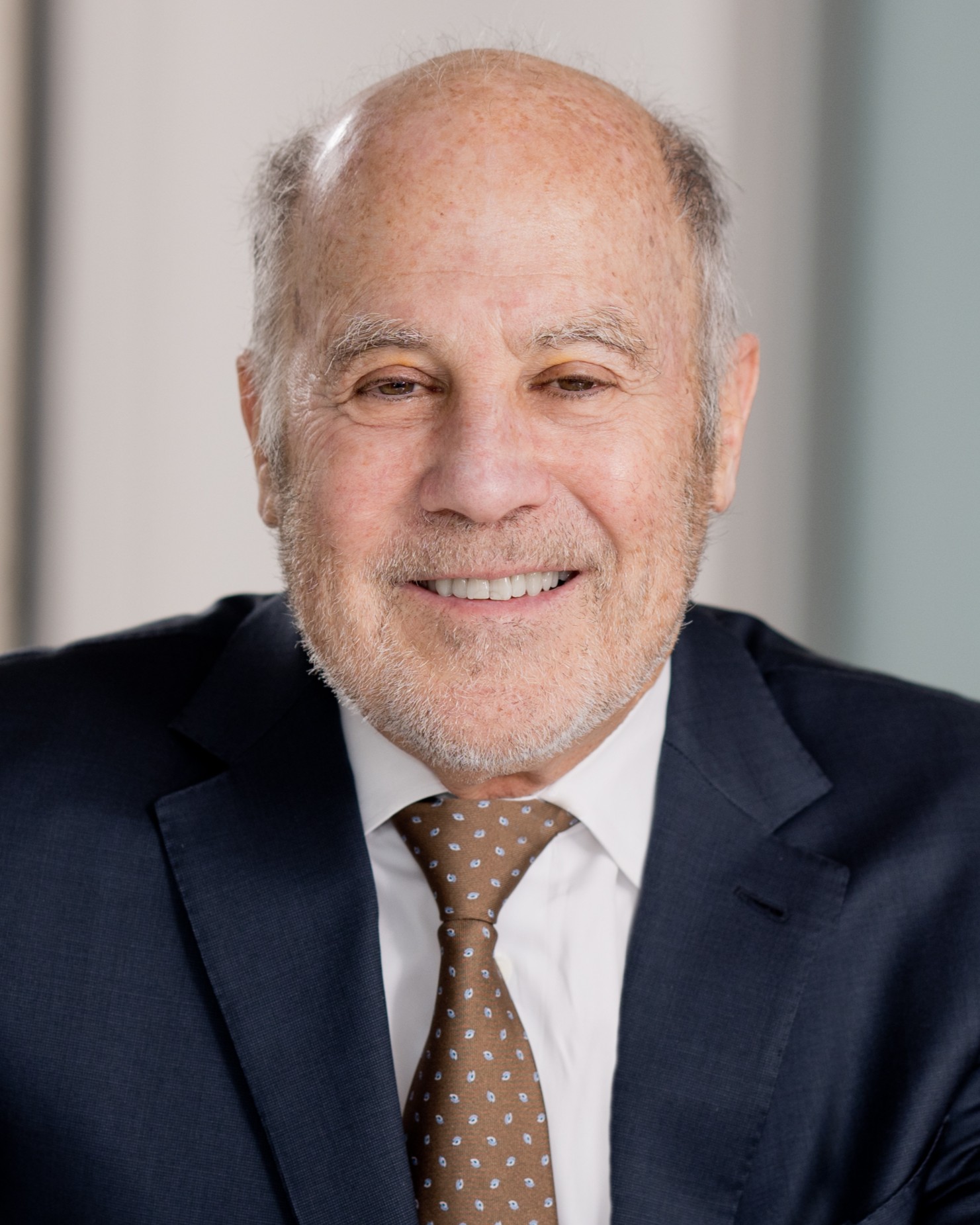
Stephen Kaus
Stephen Kaus is a retired judge of the Alameda County Superior Court, where he served for 12 years until 2024. He is now a private arbitrator and mediator. Prior to that, he was a public defender in Contra Costa County and civil litigator in San Francisco.
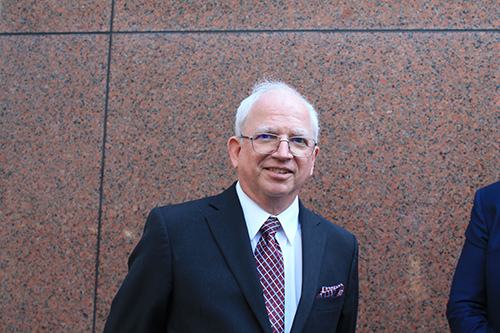
Critics of John Eastman's disbarment by the California Supreme Court argue that he was punished for "zealous advocacy." That characterization is rhetorically effective, but inaccurate because it disregards the California State Bar Court's actual findings.
Lawyers must remain free to represent controversial clients, challenge election procedures and advance novel constitutional arguments. Our adversarial system depends on it. But Eastman was not disciplined for taking an unpopular or novel position, or for losing in court. He was disciplined because he misled tribunals, failed to disclose controlling adverse authority and advanced factual assertions the Bar Court found he knew lacked support. Those are not political offenses. They are classic professional-responsibility violations.
California law has long imposed a duty of candor on attorneys. Business and Professions Code section 6068(d) requires lawyers "[t]o employ, for the purpose of maintaining the causes confided to the member, those means only as are consistent with truth," and "never to seek to mislead the judge or any judicial officer by an artifice or false statement of fact or law." Rule 3.3(a)(2) of the California Rules of Professional Conduct further prohibits a lawyer from failing to disclose controlling adverse authority known to the lawyer and not disclosed by opposing counsel. These obligations are foundational because courts cannot function if lawyers are free to distort either the record or the law.
Failure to disclose adverse rulings. The clearest example of misconduct involved Eastman's participation in filings supporting President Trump's attempted intervention in Texas v. Pennsylvania, in which Texas sought to have the Court rule that procedures in four other states were unconstitutional.
By the time those papers were filed in the United States Supreme Court, multiple courts had already rejected materially similar allegations concerning Pennsylvania's election procedures. The Pennsylvania Supreme Court had ruled against the claims. A federal district court had found key allegations unsupported by evidence. The Third Circuit rejected assertions of outcome-determinative irregularities, stating: "[f]ree, fair elections are the lifeblood of our democracy. ... But calling an election unfair does not make it so. Charges require specific allegations and then proof. We have neither here."
The State Bar Court found that Eastman knew of those rulings, yet pressed these claims and joined Texas on behalf of Trump in alleging outcome-determinative voting irregularities, without informing the court of those prior adverse rulings. The Bar Court properly treated that evidence as relevant to intent and scienter.
This was more than aggressive lawyering. It was a violation of an attorney's duty of honesty to the court as set out in California's statutes and Rules of Professional Conduct.
Unsupported factual allegations. The Bar Court also cited evidence showing that Eastman was aware of the lack of evidence supporting his fraud allegations. Eleven days before filing the motion to intervene, Eastman reportedly acknowledged in a private communication that there was no actual evidence of outcome-determinative fraud in the relevant states, while expressing hope that such evidence might later emerge. The court treated that evidence as relevant to intent and scienter.
The Georgia litigation presented a similar pattern. In Trump v. Kemp, Eastman supported a verified complaint alleging that unqualified persons--including felons, minors, deceased individuals and others allegedly ineligible--had voted. According to the disciplinary findings, those allegations relied on material already shown through prior litigation and expert review to be inaccurate or unreliable.
The complaint also repeated the State Farm Arena "suitcases of ballots" allegation, despite information available at the time undermining that claim. The Bar Court concluded that Eastman was at a minimum willfully blind to contrary facts: a state of mind it treated as equivalent to actual knowledge.
Again, the issue was not that Eastman raised contested questions about election administration. It was that he advanced factual assertions without an adequate basis.
Knowingly incorrect legal assertions. Beyond misconduct in court, in his attempt to change the election result, Eastman used his position as an advisor to advocate legal theories the Bar Court found he knew were erroneous. He encouraged the creation of alternative or "contingent" slates of electors to create uncertainty, although he knew these slates had not been certified by the states' governors and so had no legitimacy.
Then, although Eastman knew that Vice President Mike Pence's task under the Constitution was only to open and count the ballots, not to rule on their validity, he used the false set of competing electors as a proposed strategy for Pence to declare Trump the winner or delay the mandated counting of the electoral votes.
Eastman asserted that he "believed the slates were legitimate as a matter of historical precedent." The Bar Court rejected this claim because Eastman knew his alternative slates had not been certified by each state's governor.
Responses to the decision. In response to his disbarment, Eastman and his defenders accuse California of acting to quash free speech and legitimate advocacy. Those characterizations are difficult to reconcile with the findings of the State Bar Court.
The Claremont Institute "denounces the California State Bar's decision to disbar Dr. John C. Eastman," and asserts that the punishment is a "chilling attack on the core freedoms that safeguard our republic," and declares that "Dr. Eastman's advocacy concerning the conspicuous constitutional irregularities in the 2020 presidential election was conducted within the bounds of well-established legal practice and the Constitution itself." It does not address the Bar Court's findings.
A separate article in The Federalist claimed Eastman's only "offense" was providing a legal opinion on constitutional law.
Those characterizations cannot be reconciled with the findings of the State Bar Court, which show that Eastman violated the basic tenets of honesty and candor that undergird our judicial system.
Reasonable lawyers may debate whether disbarment rather than suspension was the proper sanction. They may contend that some counts were stronger than others. They may also worry, legitimately, that bar discipline should never become a proxy for punishing political dissent or unpopular advocacy.
But describing the Eastman matter as punishment for "zealous advocacy" obscures the actual basis of discipline. The case did not turn on conservative politics, support for Trump, or willingness to aggressively litigate election disputes. It turned on settled rules requiring honesty to courts, disclosure of adverse authority and a reasonable factual basis for serious allegations.
The rules governing lawyers' conduct are most important when the stakes are highest. A profession that asks courts and the public to trust lawyers cannot suspend those obligations in moments of political intensity.
Eastman was entitled to advocate forcefully for his client. His offense was not zeal. It was violating the professional standards that undergird legitimate advocacy.
Submit your own column for publication to Diana Bosetti
For reprint rights or to order a copy of your photo:
Email
Jeremy_Ellis@dailyjournal.com
for prices.
Direct dial: 213-229-5424
Send a letter to the editor:
Email: letters@dailyjournal.com