


Torts/Personal Injury,
California Supreme Court
May 4, 2026
California's 'duty to innovate' creates impossible scenario for researchers
The 2024 decision in Gilead Tenofovir Cases, Gilead Sciences v. Superior Court of the City and County of San Francisco, effectively imposed a new "duty to innovate," creating unprecedented liability for product manufacturers across the state.


Lauren Sheets Jarrell
Vice President & Counsel
American Tort Reform Association
Civil Justice Policy
The California Supreme Court has a chance to bring some sanity back to the state this month as it reviews a case involving a company that was sued because they didn't release a new product quickly enough.
The California Court of Appeal found that even if a product is not defective or unreasonably dangerous, a company can be held liable if it was researching and developing another product that it "knew" was "safer" and did not release that product fast enough. The 2024 decision in Gilead Tenofovir Cases, Gilead Sciences v. Superior Court of the City and County of San Francisco, effectively imposed a new "duty to innovate," creating unprecedented liability for product manufacturers across the state.
While the frustration of learning that a different, possibly safer, medication was not yet available is certainly understandable, that is also part of life in a developing and ever-changing world.
Are we suing PacBell and AT&T for the myriad lost hours spent at home waiting on phone calls in years past when they could have more quickly released mobile telephones? Notwithstanding the plaintiff bar reading this and testing further expansion of this novel liability theory, no, we are not.
Making every new and developing innovation a potential basis for a lawsuit may have the opposite of the intended impact and instead slow the pace of innovation, discourage research and development for product improvements, and undermine safety while purporting to promote it.
A company developing new, safer technologies can potentially face liability regardless of when and how they choose to commercialize that product. If they move too quickly, before ironing out all the kinks, they'll risk liability for a defect. Conversely, if they move too slowly, perhaps by conducting further product testing, they'll now also risk liability for not rolling out the new product soon enough. Faced with a "Sophie's choice" scenario, some may instead opt out of the market and avoid innovating altogether.
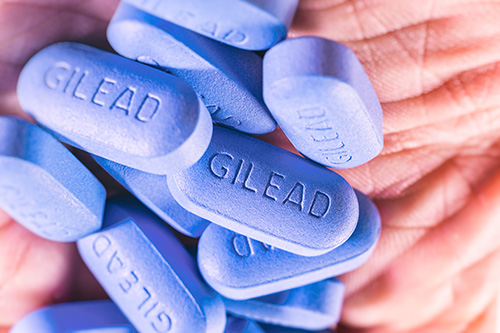
The litigation involves thousands of plaintiffs who suffered side effects from taking a Gilead HIV drug and claim that while marketing that drug, the company simultaneously was delaying the development and release of a potentially safer drug to maximize their profits.
The roughly 20,000-24,000 plaintiffs who took Gilead's drug containing tenofovir disoproxil fumarate (TDF) to treat HIV say it caused bone, kidney and/or tooth injuries--side effects plaintiffs say were fully and properly disclosed. While that drug was on the market, the company was also developing a related drug, tenofovir alafenamide (TAF).
The company says it stopped TAF development in 2004 because, at the time, "it had not distinguished itself from TDF, which had already been on the market for years and had a proven safety and effectiveness profile." They instead shifted focus to continue research and development on "combination medicines containing TDF so that people living with HIV could take a single, once-a-day pill rather than the complex and complicated cocktail of numerous different medicines they had previously been required to take."
The plaintiffs argue that the company "knew" about TAF's improved safety profile during TDF's lifecycle, that Gilead delayed the development and release of the new drug, and that they instead continued selling TDF to maximize profits and extend the commercial life of TDF. However, when the company stopped initial research in 2004, the only study of TAF in humans involved 20 patients taking the alternate drug for two weeks, "which found no safety improvement over TDF."
If allowed to stand, the Gilead decision would create a precedent that would undermine the predictability of products liability law. We'd likely see the judiciary flooded and manufacturers burdened with speculative lawsuits, potentially driving them out of business.
Excessive litigation in California already costs families more than $10,000 every year in a hidden "tort tax" and leads to more than 850,000 jobs lost across the state annually. In Los Angeles, ranked the worst Judicial Hellhole(r) in the country, Angelenos pay an even higher "tort tax" of nearly $4,000 per person--almost $16,000 per year for a family of four.
Creating a "duty to innovate" would likely force manufacturers to increase prices as they attempt to estimate the magnitude of their potential additional liability, putting the entire state further into Judicial Hellhole(r) territory.
The California Supreme Court can protect both consumers and the entrepreneurial spirit of innovation by overturning the lower court in this case and reining in this novel, job-killing liability expansion.
Submit your own column for publication to Diana Bosetti
For reprint rights or to order a copy of your photo:
Email
Jeremy_Ellis@dailyjournal.com
for prices.
Direct dial: 213-229-5424
Send a letter to the editor:
Email: letters@dailyjournal.com