


Judges and Judiciary
May 8, 2026
Judicial mentor program vows to continue beyond Newsom administration
As Gov. Gavin Newsom's administration nears its end, organizers of California's statewide judicial mentor program are emphasizing that the effort to guide and diversify future judges will continue regardless of political leadership changes. Justice Helen Zukin, one of the program's founders, stressed that the program has always operated independently through volunteer judges and justices rather than the governor's office.


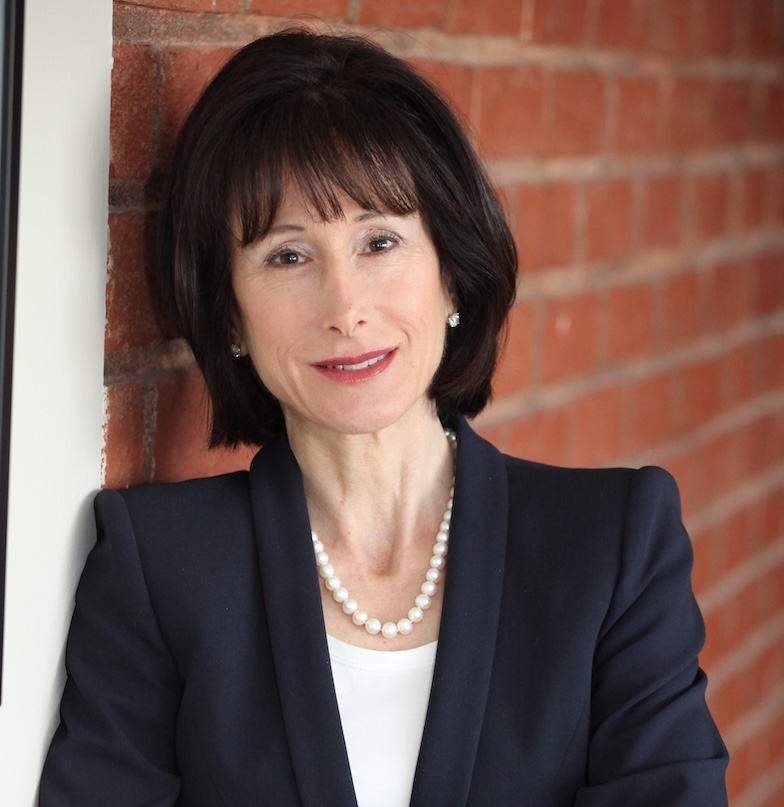
As Gov. Gavin Newsom's administration enters its final stretch, organizers of the California Judicial Mentor Program want attorneys and law students to know that the effort to demystify judicial appointments is not going away.
That message will be front and center during a May 12 webinar titled "Leading an Enriching Life: Enhancing Your Judicial Application," a virtual event featuring former federal judge Jeremy Fogel, retired California Supreme Court Justice Martin Jenkins, 2nd District Court of Appeal Justice Hernaldo Baltodano and Fresno County Superior Court Judge Amy Guerra. Jennifer Chen, a research attorney with the Court of Appeal, will moderate the discussion. Chen and research attorney Vivian Sapthavee helped develop the program.
The annual program, hosted by the California Judicial Mentor Program, is designed to help attorneys better understand the path to judicial service while also encouraging broader career fulfillment, mentorship and community involvement.
"This program was designed in the very beginning as a judges' program," Justice Helen Zukin of the 2nd District Court of Appeal said Thursday. "It wasn't the governor's program, but the governor's office supported it."
Zukin, who founded the program, said attorneys have increasingly approached her with concerns about whether the mentorship effort might fade once Newsom leaves office next year.
"People are coming up to me and saying, 'So is the program about to end?'" Zukin said. "There's a lot of relief when I respond, 'Oh, okay, great. So, I can still get a mentor next year if I want one.'"
The mentor program began nearly six and a half years ago as a pilot project in Los Angeles County Superior Court before expanding statewide to all 58 trial courts and the courts of appeal. It was developed with the support of Jenkins, who at the time served as Gov. Jerry Brown's judicial appointments secretary before later joining the California Supreme Court.
Jenkins said mentorship played a defining role in his own career and remains critical for attorneys who otherwise might never envision themselves on the bench.
"I had several [mentors]," Jenkins said in an interview Thursday, naming retired federal Judge Thelton Henderson, retired California Supreme Court Justice Ming Chin and attorney William McGinnis among those who guided him. "I would not have had the career I had without them."
"There were no judges, lawyers in my neighborhood," Jenkins added. "I didn't know any people who did these jobs."
Jenkins said the mentor program helps remove some of the mystery surrounding judicial appointments by giving aspiring judges direct access to jurists who have already navigated the process.
"They demystify the process," Jenkins said. "It provides an opportunity for anyone who's interested in becoming a judge to have a real-time experience with a judge who has navigated the process successfully themselves."
Although Newsom's current Judicial Appointments Secretary Luis Céspedes has continued to support the effort, organizers emphasize that the program has always operated independently through volunteer judges and justices.
That independence recently gained another layer of permanence when the program formally became housed at the Berkeley Judicial Institute, led by Fogel at UC Berkeley School of Law.
"That's a really wonderful home for the program," Zukin said.
The May 12 webinar will revisit themes that have drawn overwhelming interest in prior years, including career fulfillment, networking, mentorship and "imposter syndrome" -- the self-doubt many judges say they experience even after significant professional success.
Zukin recalled that a similar panel two years ago featuring Jenkins and Fogel attracted such a large audience that the online platform crashed. Jenkins served on the state trial and appellate courts and the federal district court, while Fogel served on the federal district court and Santa Clara County Superior Court.
"We had 800 people trying to get on this program," Zukin said.
Jenkins joked that the interest likely was not because of him.
"There were probably people who saw my name and said, 'I'm not watching,'" he said, laughing.
Still, Jenkins said programs like this resonate because many lawyers quietly consider judicial service but hesitate to openly pursue it.
"A lot of people become judges because they try a case or have experience with a judge and the judge pulls them aside and says, 'You ever thought about being a judge?'" Jenkins said. "That's how most people come to this."
He added that mentorship can encourage attorneys to pursue opportunities they otherwise might dismiss as unattainable.
"These programs give people an opportunity to gain some real-time understanding of what the process is and what the job is like," Jenkins said, "in a way that helps them make a decision about whether they want to opt in, where they normally opt out."
Organizers say the discussion is intended not only for attorneys considering judicial appointments, but also for law students, early-career lawyers, midcareer practitioners and judges interested in appellate work.
"We have targeted the entire landscape," Zukin said. "We know everybody is interested in these particular issues."
Panelists will discuss the importance of community engagement, mentorship and professional involvement -- qualities that frequently appear in judicial applications reviewed by governors' offices.
"The job of being a judge is public service," Zukin said. "For those doing the vetting, whether someone is already committed to giving back to any particular community is important."
The webinar also reflects the mentor program's growing emphasis on developing the judicial pipeline much earlier in lawyers' careers.
"We realize that the pipeline starts much earlier," Zukin said. "There's a lot of education we want to do for newer lawyers and for law students in particular."
Jenkins said California has made progress toward diversifying the bench but emphasized that more work remains.
"We are on the road," Jenkins said. "It's a continuum."
He noted that recent administrations have expanded appointments beyond traditional backgrounds to include public defenders, administrative law judges and attorneys from practice areas such as family law and probate.
"The palette of diversity is broad," Jenkins said. "And we still have work to do."
Over time, organizers say they have seen tangible results from the statewide mentorship effort. Numerous attorneys who participated in the program have gone on to apply for judicial appointments, and some have ultimately joined the bench.
"We see a more diverse bench, and not just by people's ethnicity or background, but by practice area," Zukin said.
She stressed, however, that participation in the mentor program carries no guarantee of appointment.
"The governor's office doesn't know necessarily that they went through the program," she said. "Just going through the program is absolutely no guarantee you get appointed."
Instead, organizers say the value lies in helping attorneys better understand the application process, identify professional gaps and connect with mentors who can offer candid guidance.
"We all need mentors," Zukin said. "They can see us going forward in a way that we don't see yet."
The May 12 webinar runs from 12:15 p.m. to 1:30 p.m. and is open to attorneys, judges, law students and members of the legal community statewide. Registration is free.
David Houston
david_houston@dailyjournal.com
For reprint rights or to order a copy of your photo:
Email
Jeremy_Ellis@dailyjournal.com
for prices.
Direct dial: 213-229-5424
Send a letter to the editor:
Email: letters@dailyjournal.com