


Business Law
May 12, 2026
Musk lawyer presses Altman on honesty in OpenAI trial testimony
OpenAI CEO Sam Altman testified Tuesday that the company remains committed to its founding mission despite Elon Musk's claims that it abandoned its nonprofit principles. During cross-examination, Musk's attorney questioned Altman about allegations of dishonesty and his temporary ouster from the company.


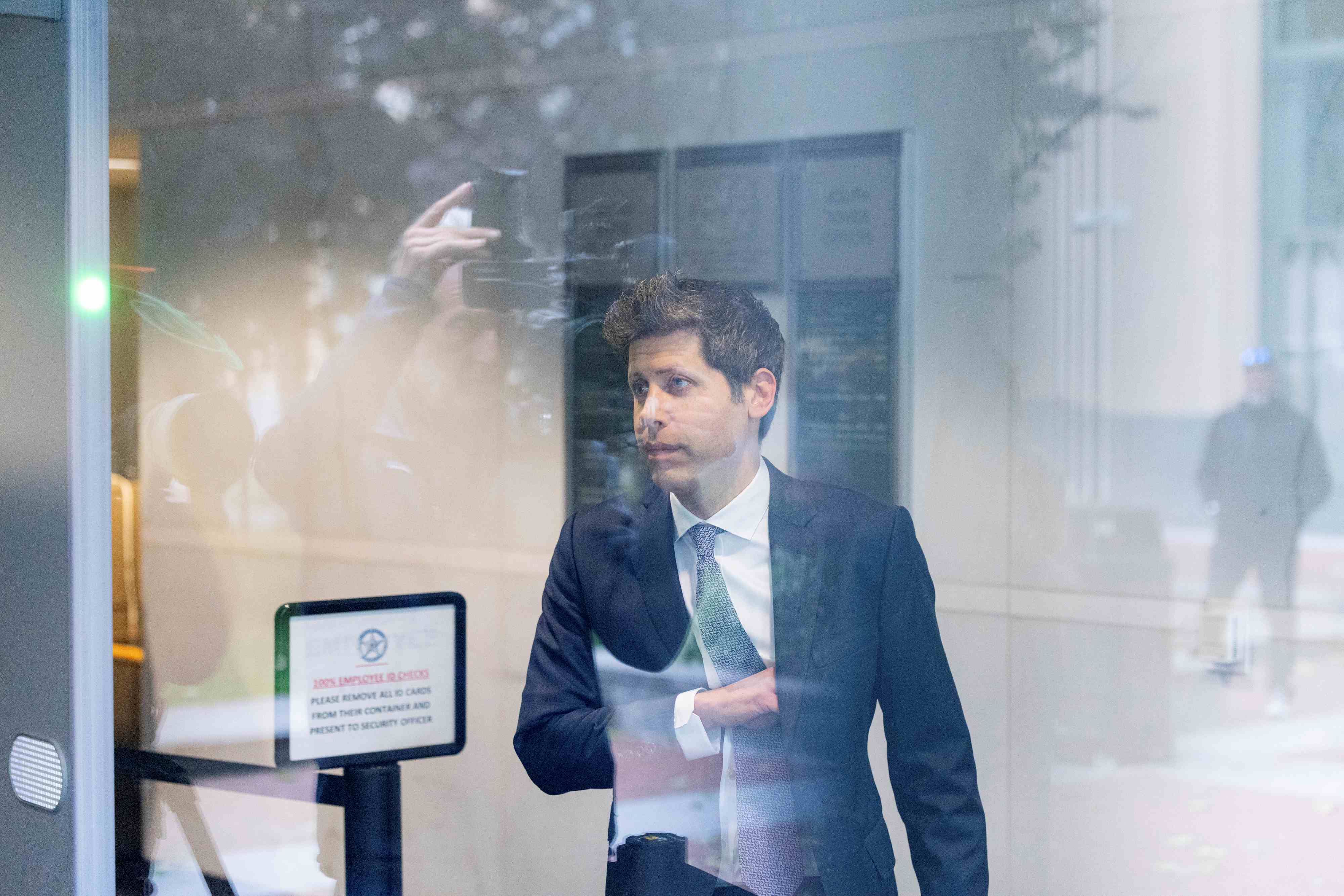
Elon Musk's lawyer wasted no time Tuesday asking OpenAI CEO Sam Altman about reports, board statements and testimony suggesting he's consistently lied to people within the company.
"I believe I am an honest and trustworthy businessperson," Altman testified.
The defendant whose name is on the case took the stand Tuesday in Elon Musk's lawsuit against OpenAI for breach of charitable trust, telling the jury that he and his fellow co-founders had fended off Musk's power grabs to make the company's nonprofit and for-profit ventures equally successful.
"I think it's wonderful that, through the hard work of thousands of people... we have been able to create -- I'm not sure if it's the largest or one of the largest -- nonprofits in the world," Altman said, in response to a question from his attorney, William Savitt of Wachtell, Lipton, Rosen & Katz. Musk v. Altman et al., 4:24-cv-04722 (N.D. Cal., filed Aug. 5, 2024).
But Musk's attorney, Steven F. Molo, saw the CEO's integrity as rife for questioning.
"Are you completely trustworthy?" Molo asked with the first question of his cross-examination.
After Altman answered that he believes so, Molo responded with several versions of the same question.
"Should the jury believe your testimony?" Molo asked. It should, Altman said. "Do you always tell the truth?" Molo asked. Typically, Altman said, he tells the truth, although he's told the occasional lie. Is it true, Molo asked, that "you were repeatedly called deceptive and a liar?"
"I have heard people say that," Altman conceded.
Molo's most creative formulation of the question came later in the examination, asking Altman if he's "a person who tells people things because you believe that's what they want to hear, whether they're true or not."
The OpenAI Foundation board voted to fire Altman in November 2023 for not being "consistently candid," a point Molo kept coming back to.
"I do have doubts that was the full reason," Altman said, before adding, "they asked me to come back the next morning."
Altman told the jury that he had accepted the board's decision before they reversed course.
"I almost didn't come back because I was so upset," Altman said. But he believed the company and its mission were under threat, "so I was willing to run back into a burning building to try to save it."
Molo eventually made his way to the central issue of the lawsuit - OpenAI's current structure -- but not before mentioning a few more people and government bodies he believed Altman has lied to, prompting U.S. District Judge Yvonne Gonzalez Rogers to remind the jury that "lawyers' questions are not evidence."
Musk claims his $38 million in donations helped found the venture as a nonprofit committed to developing safe AI before Altman and Brockman turned it into a for-profit valued above $800 billion, with the help of a trio of investments by Microsoft.
Altman had just told the jury that Musk tried to obtain control of the venture's for-profit before leaving when his co-founders refused his demands, in response to Savitt's questions. Musk suggested creating a for-profit, wanted control of it, and eventually tried to roll the venture into Tesla, Altman said. But the other co-founders weren't comfortable with one person controlling the venture, he said.
But Molo pressed him on the point, asking if he'd been "fixated" on becoming CEO as well. Molo brought up an email chain in which Altman's co-founders questioned his motives and asked if his political aspirations -- Altman said he'd considered running for governor -- had anything to do with his desire for power within the company.
Under the company's current structure, the board -- which includes Altman -- decides on the CEO, Molo pointed out.
"Do you think you'd ever fire yourself?" Molo asked.
"I have no current plans to do so," Altman said.
After the remaining co-founders decided to create a for-profit, they sent out a term sheet to potential investors, which Musk's team has repeatedly pointed out included profit caps and urged investors to consider any investment as if it were a donation. Altman clarified that profit caps were only removed after company leadership's understanding of what it needed to remain competitive had changed.
Each investment and structural change represented the best way to fund the nonprofit, which has equity in the for-profit, Altman said.
"I do not believe that I could have taken any actions to get much more than $200 billion into a nonprofit," Altman said.
When Molo asked why the nonprofit didn't have any full-time employees until just before the start of the lawsuit, Altman responded that its equity is its primary form of funding and isn't liquid.
"It didn't have access to assets and the ability to make grants until very recently," Altman said.
When Musk texted him that the $10 billion 2023 Microsoft investment removing the return caps was a "bait and switch," and he responded, "I agree it feels bad," Altman said he was simply trying to calm his former co-founder down.
"He would get very upset" when OpenAI did well, Altman said.
But Molo pointed out that later in the text, he offered Musk equity in the for-profit.
"You offered him a bribe?" Molo said over an objection from the defense.
Under Savitt's re-direct examination, Altman told the jury that he'd thought "incredibly highly of Elon," but felt the Tesla CEO had "abandoned" his co-founders when he walked away in 2018.
"We were, kind of, left for dead," Altman said.
"Elon Musk wanted Elon Musk to be in control?" Savitt asked and Altman affirmed.
Each of Musk's public outbursts against the company since, Altman speculated, have been motivated by jealousy that the company succeeded without him.
Despite Musk's claims, Altman said he believes he's always acted in the best interest of the nonprofit.
"I think that at every step of the way, I have done the best I could to maximize the value of the nonprofit," Altman said.
Daniel Schrager
daniel_schrager@dailyjournal.com
For reprint rights or to order a copy of your photo:
Email
Jeremy_Ellis@dailyjournal.com
for prices.
Direct dial: 213-229-5424
Send a letter to the editor:
Email: letters@dailyjournal.com