


Torts/Personal Injury
May 18, 2026
Chris Dolan got pissed, and it resulted in a historic verdict
Fresh off a record-setting Alameda County settlement, plaintiffs' lawyer Chris Dolan discusses suing police agencies, exposing misconduct through video evidence, and why cases against authority still drive his practice.


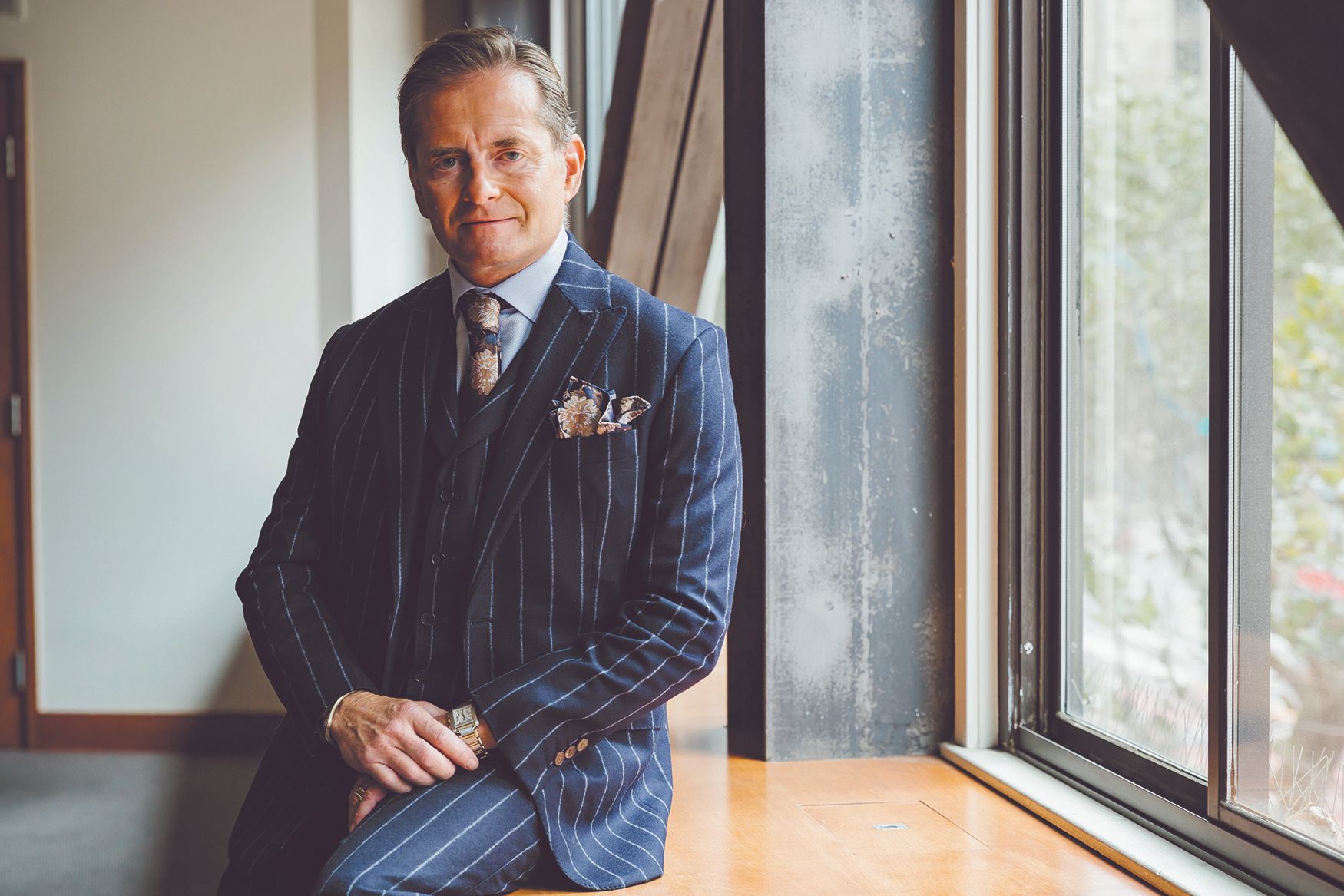
A case must meet one of three requirements for San Francisco powerhouse trial lawyer Christopher Dolan to consider taking it on.
"It has to either make me a profit, change a policy or piss me off," Dolan said.
He was speaking by phone Thursday from Cabo San Lucas, where he was teaching at the annual trial college of another powerhouse in the plaintiffs' bar, Gary Dordick.
Cases against law enforcement agencies, Dolan said, rarely make money, but they usually satisfy at least one of his other two motives.
Over more than three decades in practice, Dolan has built a reputation as one of California's most aggressive plaintiffs' lawyers, taking on Uber, Amazon and other major corporations. But a quieter throughline in his career has been lawsuits accusing police officers and sheriff's deputies of excessive force, dishonesty and abuses of authority.
Those cases now make up roughly 10% of his practice, he estimates, though they consume far more of his time.
"They drag their feet. They don't produce documents. You've got to go to court all the time, do motions to compel," Dolan said.
Sometimes, law enforcement cases do make money - a lot of money.
His latest high-profile victory came last week, when Alameda County agreed to pay $36 million to settle a wrongful death lawsuit arising from the 2022 murders of Benison and Maria Tran in Dublin. Their killer, Alameda County sheriff's deputy Devin Williams, had failed a psychological evaluation before being hired by the sheriff's department.
The settlement is believed to be the largest in California history involving alleged misconduct by an off-duty law enforcement officer. It will reportedly be funded primarily through insurance and a shared risk pool.
According to the lawsuit, Maria Tran called deputies to her home weeks before the killings after Williams showed up outside her house banging on the door and refusing to leave. Dolan alleged responding deputies protected Williams because he was "one of us." Body camera footage later showed deputies handling Williams differently after he identified himself as a fellow sheriff's deputy.
Dolan argued the footage exposed a culture of favoritism and concealment inside the department.
"What body cameras changed is now we get the truth," he said. "We don't get it from police officers, but we get it from the body camera."
A large study found that police body cams have encouraged both officers and civilians to behave more cautiously during law enforcement encounters, and smaller studies in Rialto and Las Vegas found large reductions in civilian complaints and use-of-force incidents when officers wore cameras.
Dolan said the cameras have also transformed civil litigation against police agencies by replacing traditional "he said, she said" testimony with visual evidence juries can see for themselves. But he said some officers have adapted, sometimes turning off microphones or strategically muting conversations during critical moments.
"Even then, in this case, they were turning off their body cam video while they were talking about what to do," Dolan said. "They're very aware of how they manipulate the body cam video."
Despite the settlement, Dolan said he remains troubled that deputies involved in the Tran response reportedly remain employed by the sheriff's office.
"If we can't trust them, then the whole social compact breaks down," he said.
Williams was convicted in 2024 of double murder and is serving a sentence of 50 years to life in prison. A representative for the sheriff's department could not be reached Friday for comment.
Alameda County Sheriff Yesenia Sanchez, who was not leading the department at the time of the shooting, told media outlets last week that the sheriff's office has since strengthened its hiring practices by enhancing background investigations and increasing supervisory oversight and accountability throughout the hiring process.
The Alameda case is not the only police shooting on Dolan's mind.
He is also representing the parents of Ricardo "Ricky" Ramirez Jr., a 20-year-old Richmond resident shot and killed by LAPD Sgt. Michael Pounds during an undercover operation in South Los Angeles in July 2024.
Ramirez and his friends, visiting Los Angeles from Northern California, were "driving around the Figueroa corridor, looking at the crazy prostitute scene," Dolan said. "Some car comes up behind him, and [was] tailing him."
The lawsuit alleges Pounds, driving an unmarked vehicle with tinted windows, followed Ramirez's car despite no crime having occurred. When Ramirez approached the vehicle to ask why he was being followed, Pounds allegedly shot him through the window without identifying himself as a police officer, Dolan said.
The LAPD released video of the incident, showing Ramirez running toward Pounds' driver's side door and being shot through the window.
During a recent deposition, Dolan said Pounds testified he fired because he saw only a "shadow" approaching him through the tinted glass.
"I said, 'You never saw a gun, you just saw a shadow?'" Dolan recalled. "'You've ever been told that you can just shoot a shadow because you think it has a gun?'"
The case has become another example, Dolan said, of how video evidence can reshape police litigation. While no body camera footage exists, he said neighborhood surveillance footage could contradict key portions of the officer's account.
A representative for the Los Angeles Police Department could not be reached for comment.
The Ramirez lawsuit also reflects a recurring theme in Dolan's police cases: what he describes as officers escalating situations unnecessarily before resorting to deadly force.
"They often use it as their first effort," he said of police shootings. "It's supposed to be the last resort."
That theme also appeared in Rice v. City of Roy, a Washington state police shooting case Dolan took over just four days before trial during the COVID-19 case backlog in California. There, he represented two men shot by an officer after a snowy UTV pursuit. Dolan used footprints left in the snow to argue the officer created the danger himself by stepping into the vehicle's path before firing.
"I got to Washington on a Friday. Trial started Monday. And the lawyer didn't even have [copies of] all the depositions," he recalled. "I'm like, What the fuck? The defense lawyers said, 'Well, let's exchange exhibits we are going to use during opening.' I said, 'Yeah, let's do that.' And they sent over these photographs and everything. And I said, 'Funny,' those were the same ones I was going to use.' So, I used theirs. And it told the whole story."
A federal jury ultimately returned a $3.2 million plaintiffs' verdict, what Dolan said was one of the largest police shooting verdicts in Washington state history.
A past president of the Consumer Attorneys of California and the San Francisco Trial Lawyers Association, Dolan has recently obtained multiple multimillion-dollar jury awards involving catastrophic trucking collisions, traumatic brain injuries, amputations, and wrongful death claims, while also helping shape public-safety discussions involving commercial trucking, storefront crash prevention, and roadway safety.
"I've known Chris for almost 20 years. He outworks everyone and out thinks them," Dordick said in an email from Cabo San Lucas. "Chris is one of the handful of trial lawyers that can persuade a jury and do all of the law and motion work himself. He has an insane work ethic, often working all night and staying awake for several days until the work is done. Chris is known for taking on impossible cases and gets incredible results."
Though Dolan now handles nationally watched litigation, his skepticism toward authority traces back much further.
Raised in Connecticut, he describes growing up in an abusive household where accountability was absent. After law school, he rode a motorcycle across the country with $500 in his pocket before settling in San Francisco.
"I don't have a problem with authority," he recalled telling a law professor years ago. "I have a problem with illegitimate authority."
That instinct, he said, still drives his practice today.
"I think there should be accountability," Dolan said, "especially if it's somebody in a position of authority."
David Houston
david_houston@dailyjournal.com
For reprint rights or to order a copy of your photo:
Email
Jeremy_Ellis@dailyjournal.com
for prices.
Direct dial: 213-229-5424
Send a letter to the editor:
Email: letters@dailyjournal.com