


Antitrust & Trade Reg.
Jun. 24, 2026
Lawsuit claims AI helped drive up California gas prices
Federal complaint says Kalibrate software helped gas station operators use competitor data to coordinate prices, raising an early test of California's new algorithmic pricing law.


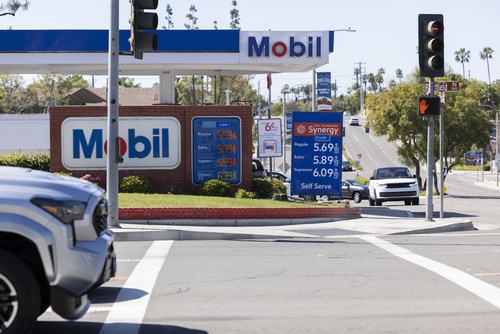
A new lawsuit alleges gas stations used AI-driven pricing software to raise fuel prices in California, violating a state law enacted last year.
The federal complaint filed Monday claims Knowledge Support Systems Inc., doing business as Kalibrate, has been using competitor data to help clients elevate prices and reduce competition.
The lawsuit also names retailers including Albertsons, BP, Circle K, Marathon, 7-Eleven, Speedway, TravelCenters, and Walmart. Neither Knowledge Support nor several of these retailers responded to emails seeking comment on Casciani et al. v. Knowledge Support Systems Inc., 2:26-cv-02211-CSK (E.D. Cal., filed June 22, 2026).
According to the lawsuit, the defendants operate more than 1,700 gas stations, which is about 10% of the total in California.
"Californians are being forced to pay surcharges that cannot be explained by crude oil costs, refining costs, environmental regulation, or taxes," wrote Constantine P. Economides, representing the proposed class of customers as founding partner at Dynamis LLP in Miami. "Part of the cause of California's astronomical fuel prices is an illegal algorithmic price-fixing scheme orchestrated by the algorithmic pricing company Kalibrate and some of the state's largest fuel retailers."
Economides argued the potential profits from digital collusion are huge "in a state where even a one-cent increase at the pump costs drivers over $134 million annually." He claimed the actual price increases were far higher: six cents higher than stations not using the Kalibrate Fuel Pricing algorithm, rising to 30 cents "in areas where a high proportion of gas stations have adopted."
The case could become an early test of AB 325, which took effect this year. Economides wrote that the law "was enacted to make clear that companies cannot evade liability for fixing prices by delegating their illegal trusts to an algorithm." The bill amended California's 1907 antitrust law, the Cartwright Act, to restrict the sharing of algorithms that companies could use to coordinate prices without communicating directly. It applies broadly, not just to gasoline sales.
AB 325 passed with mostly party-line votes amid opposition from the California Chamber of Commerce and other business groups. In an opposition letter to lawmakers, the chamber wrote that the bill would ban "extremely common tools" like pricing algorithms. The letter argued AB 325 used "ill-defined terms and ambiguous standards" and that price-fixing schemes were already illegal under existing laws.
But AB 325's author, Assembly Majority Leader Cecilia Aguiar-Curry, D-Winters, argued that artificial intelligence had created a new way to hide collusion.
"I don't know that facts about this lawsuit and, as a practice, I don't comment on pending or ongoing litigation," Aguiar-Curry said in an email when reached Tuesday. "But I'm proud of the work we did on AB 325. It's groundbreaking legislation in our efforts to make life more affordable for working families. And any companies that collude to drive up prices for Californians should face consequences."
According to its marketing materials, Kalibrate's tools are used by 80% of domestic fuel retailers around the country, though no other state has an algorithmic-pricing law as broadly applicable as California's. The company's software is used in 70 other countries.
Economides also quoted liberally from Kalibrate's marketing materials. These include promises the tool could help retailers avoid "sacrificing margin" or triggering a "downward spiral" in local prices. Economides also quoted language claiming the company would help stations achieve "restoration ... a phenomenon where nearly all gas stations in a market raise their prices contemporaneously."
For years, Consumer Watchdog President Jamie Court has urged California officials to scrutinize alleged price manipulation in the gasoline market, especially at the refinery level. Court is not involved in the case but praised the filing.
"It's a very compelling complaint as someone who has watched the California gasoline market for the last 26 years," Court said in an email. "The sharing of data among competitors makes a case there is a tacit agreement to overcharge consumers that undermines a competitive marketplace, particularly in more rural areas that have less competition to begin with."
Malcolm Maclachlan
malcolm_maclachlan@dailyjournal.com
For reprint rights or to order a copy of your photo:
Email
Jeremy_Ellis@dailyjournal.com
for prices.
Direct dial: 213-229-5424
Send a letter to the editor:
Email: letters@dailyjournal.com