


Torts/Personal Injury
Aug. 5, 2026
Hueston Hennigan wins Allergan bellwether summary judgments
Judge Lawrence Riff ruled that plaintiffs who elected explant breast surgery without a diagnosis, a manifested defect or a physician recommendation suffered no legally cognizable injury under California law.


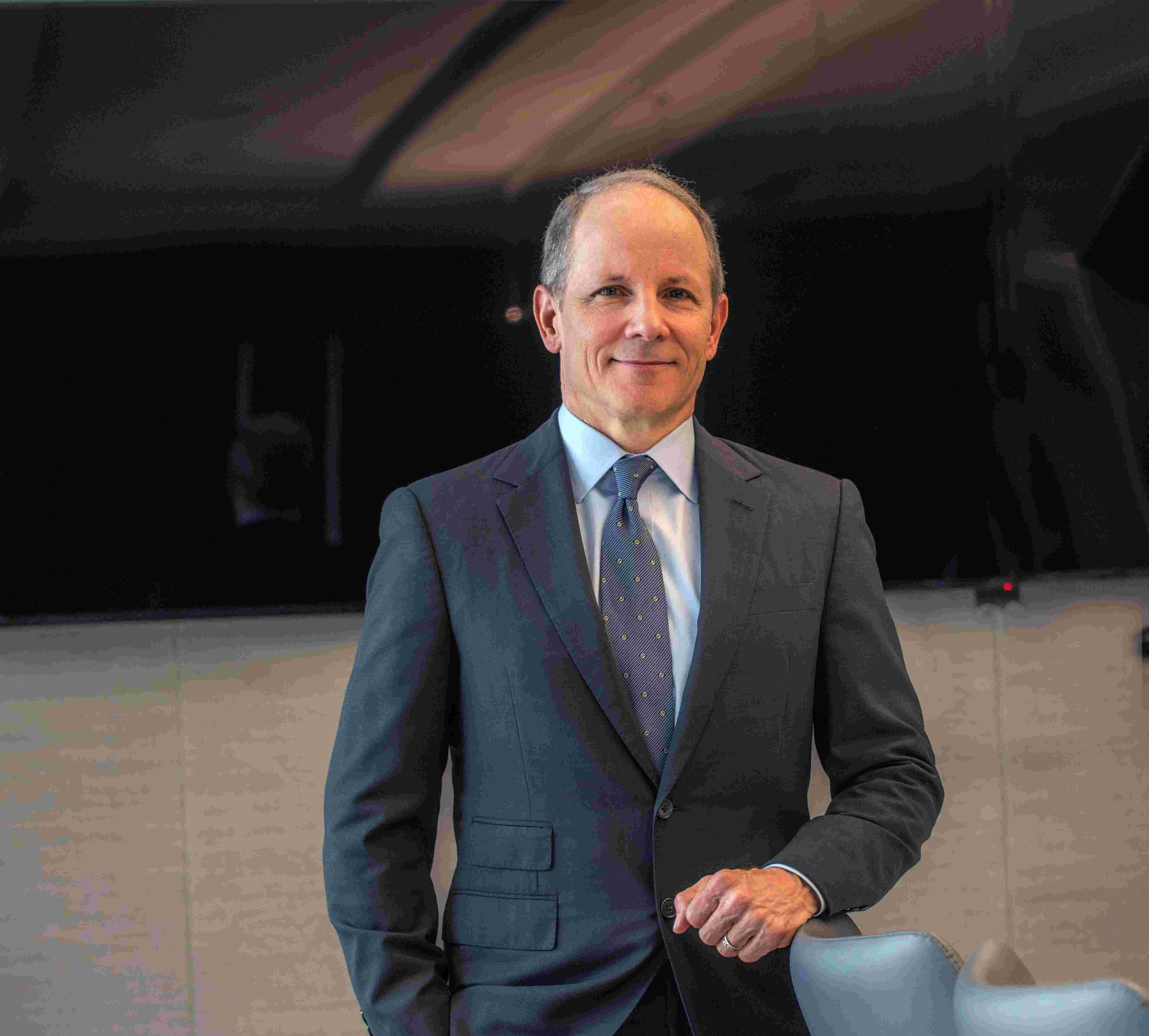
Hueston Hennigan won summary judgment for AbbVie subsidiary Allergan in the first two bellwether cases in the coordinated BIOCELL breast implant litigation, securing rulings that are expected to affect similar cases pending in Los Angeles County Superior Court.
The decisions also vacated the first bellwether trial, previously scheduled for September, and are expected to lead to stays of other cases in the coordinated proceeding while the issue is reviewed on appeal.
Judge Lawrence P. Riff made clear he viewed the issue as one likely destined for appellate review. Although he concluded he was bound by Khan v. Shiley Inc. (1990) 217 Cal.App.3d 848, he questioned whether that precedent ultimately should control the Allergan litigation.
"It is a distinction to be sure and perhaps our Court of Appeal will find that distinction takes this case out of the Khan rule," Riff wrote. "But the Court, applying the law as it sees it, believes Khan controls."
In identical footnotes, Riff added that if he were "at liberty to write on a clean slate," he "would find a triable issue of fact as to whether plaintiff's decision to undergo the explant procedure was reasonable under the circumstances, and would bifurcate that issue for trial."
Riff issued the first ruling Friday in Lupe Rodriguez v. Allergan, Inc., et al., No. 30-2024-01448006-CU-PL-CXC, and the second Tuesday in Mary Donovan v. Allergan, Inc., et al., No. 30-2021-02076155-CU-PL-CJC. Both are part of Allergan Implant Cases, JCCP No. 5104. Lead case: Cari Dietzel v. Allergan, Inc., et al., No. 19STCV30672, (L.A. Super. Ct., filed Aug 28, 2019).
John Hueston argued the summary judgment motions for AbbVie. Along with partners Moez Kaba, Christine Woodin, and Vicki Chou, Hueston Hennigan serves as lead U.S. trial counsel for the company, whose Allergan subsidiary recalled BIOCELL textured breast implants in 2019 because of a potential association with the rare cancer breast implant-associated anaplastic large cell lymphoma, or BIA-ALCL.
The litigation includes approximately 1,700 individual lawsuits and a nationwide class action pending in three venues, including the Los Angeles proceeding and multidistrict litigation in the U.S. District Court for the District of New Jersey. Plaintiffs allege manufacturing defects, failure to warn and misrepresentation arising from the recalled implants.
The coordinated proceeding presented a question that had not previously been addressed in a bellwether summary judgment ruling: whether plaintiffs who elected prophylactic explant surgery after the recall, but who never developed BIA-ALCL and whose implants never manifested a defect, could recover damages arising from the surgery and its consequences.
Riff answered that question by concluding California law does not recognize those injuries.
"Persons can suffer adversities and harms of many types, but not all are recognized by the law as sufficient to support a claim for relief," Riff wrote. "Those that do support such a claim are considered 'cognizable;' those that do not are not."
He explained that the concept is often policy-driven, asking "whether considering a harm cognizable will have a collateral effect upon society that is intolerable for one reason or another."
The judge relied principally on Khan, in which the recipient of a recalled artificial heart valve that had not malfunctioned could not recover damages based on the possibility of a future failure.
Riff described the Allergan litigation as presenting a related question: whether California law distinguishes between a medical device that may malfunction in the future and one alleged already to be in a "risk-producing state" that could later result in disease.
"The distinction between (a) and (b) -- the nature of the future risk -- is without legal difference," he wrote. "The court finds that the question before it is controlled by the Khan rule."
Despite their different factual circumstances, Rodriguez and Donovan failed to establish a legally cognizable injury because their claimed damages arose from elective explant surgery rather than any manifested defect in their implants, Riff concluded. He therefore granted summary judgment without reaching Allergan's remaining arguments.
Laurinda Keys
laurinda_keys@dailyjournal.com
For reprint rights or to order a copy of your photo:
Email
Jeremy_Ellis@dailyjournal.com
for prices.
Direct dial: 213-229-5424
Send a letter to the editor:
Email: letters@dailyjournal.com