


Torts/Personal Injury
Sep. 3, 2026
Tesla's dangerous design problem
Tesla's camera-only driving system and electronic door handles share the same dangerous design philosophy: abandoning proven redundancy for technological elegance, with preventable deaths as the consequence.


Brett Schreiber
Singleton Schreiber LLPPhone: (619) 488-6699
Email: bschreiber@singletonschreiber.com
Thomas Jefferson SOL; San Diego CA
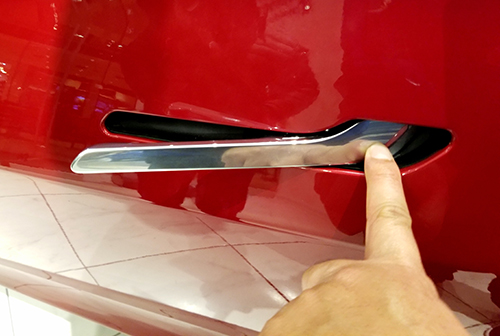
For years, Tesla sold American consumers a dream: a car that could see the road better than any human driver, inching toward full autonomy with every software update. The reality, documented in federal crash investigations, NHTSA and NTSB recommendations, and dozens of lawsuits, has been far more dangerous. At the center of it sits one engineering philosophy: Tesla's insistence that cameras alone are sufficient to perceive the world, a choice the rest of the industry has rejected. A second, quieter choice now sits beside it. Tesla decided to re-engineer the door handle.
The gamble: Tesla removes radar
Autopilot launched in 2014 on what engineers call sensor fusion. Radar excels at measuring distance and velocity in rain, fog and darkness; cameras supply visual context; the fusion of the two is more reliable than either alone. Waymo, Mobileye, Ford's BlueCruise and GM's Super Cruise all still rely on that redundancy for a straightforward reason: no single sensor works in every real-world condition.
Tesla's fusion architecture failed early anyway. In the May 2016 death of Joshua Brown in Williston, Florida, the camera misclassified a white semi-trailer as bright sky, while the radar detected the trailer, but the software filtered the return as a likely overhead sign. Neither sensor corrected the other. The vehicle applied no braking. Brown died. Fusion is only as good as the software arbitrating between the two: an algorithm that suppresses radar returns conflicting with camera input fails in precisely the scenario redundancy was supposed to survive.
A few years ago, Tesla removed the forward-facing radar from newly produced vehicles in favor of "Tesla Vision," eight cameras and nothing else. Elon Musk's stated rationale has been that humans navigate with vision, therefore cameras alone will suffice. This obviously ignores that human vision comes bundled with a very sophisticated brain, binocular depth perception, and millions of years of evolutionary training. By his logic, since humans can breathe with their nose, submarines just need a snorkel. Like their fusion architecture before it, Tesla's vision-only system began having immediate failures. One well-documented failure is that most Tesla vehicles cannot safely identify activated caution lights of emergency vehicles. This has led to a rash of crashes by Teslas on Autopilot into first-responder scenes. Today, hundreds of thousands of their vehicles still drive blindly down the road, being unable to appreciate an activated caution light.
No map, no boundaries
Every competing system deployed at scale pairs perception hardware with high-definition maps and limits enforced by geofencing. Super Cruise engages only on pre-mapped divided highways; Waymo operates only inside mapped service areas. Those vehicles use live sensor data not to discover the road but to confirm that reality matches the map, and they hand control back when it does not. Tesla has no such map. Its cars work out every road from scratch and will engage on construction zones, unmarked rural roads, and urban intersections the system was never validated to handle. NHTSA's investigation produced a 2023 recall covering every vehicle they had ever manufactured. The remedy was a software nag, not a fix to the perception architecture.
The escape room in your door
The mechanical door handle is a solved problem and has been for a hundred years. A lever, a rod, a latch, a spring. It works when the engine is dead, when the battery is dead, when the car is upside down in a ditch, and when the person pulling it has never seen the vehicle before. No training, no manual, no software. Tesla re-engineered it anyway, replacing a century of settled design with flush exterior handles and interior buttons that need electrical power to release the latch. When the power goes, so does the door.
What remains is a manual release: hidden, unlabeled, located differently in the front doors than the rear, and on some models, absent from the rear seats altogether. Tesla has turned the exit from a burning car into an escape room. Somewhere in the cabin is a concealed lever. Find it under the window switch, or beneath a speaker grille, or behind a panel you must pry off. Solve the puzzle and you live. That premise is entertaining when the price of admission is $40 and the clock is a novelty. It is lethal when the clock is a lithium-ion fire and the players are a passenger with a broken arm, a child strapped in a car seat or a bystander yanking at an exterior handle that has retracted flush into the door.
The consequences are hiding in plain sight. NHTSA opened a defect investigation last year into Tesla vehicles after complaints of children trapped inside, and investigators found the handles may fail when the electronic locks do not receive enough voltage from the battery. There have been news reports of well over a dozen deaths in which occupants or rescuers could not open the doors of a Tesla that had crashed and caught fire. Just last week in China, Tesla was forced to recall millions of vehicles over their door handles. The proposed fix is not to redesign the handle, but to add labels telling occupants where the manual release is. A recall consisting of a sticker is an admission that the design cannot be operated without instructions. Therefore, it's a flawed design.
The pattern is identical to the radar story. A proven, redundant mechanical system was removed in service of styling and software elegance, leaving a failure mode no one inside the cabin can diagnose in the seconds available. Here, the safer alternative design is neither hypothetical nor expensive. It is the handle on every other car in the parking lot.
What this means for trial lawyers
What's past is prologue. Both stories support the same claims: design defect, failure to warn, a feasible, safer alternative Tesla already built. Everyone in the industry knows the technology doesn't work, yet Tesla keeps doubling down and preventable deaths keep happening. The civil justice system has to hold the line. History shows jurors aren't afraid to hold Tesla accountable when Autopilot fails; they just need to understand why. A door that won't open, they understand instantly.
Submit your own column for publication to Diana Bosetti
For reprint rights or to order a copy of your photo:
Email
Jeremy_Ellis@dailyjournal.com
for prices.
Direct dial: 213-229-5424
Send a letter to the editor:
Email: letters@dailyjournal.com