


Ethics/Professional Responsibility
Sep. 4, 2026
The trust accounting toolkit: Navigating California's trust accounting resources
The State Bar offers California attorneys a range of educational tools, guidance and support to help them comply with client trust accounting requirements and avoid potential disciplinary problems.


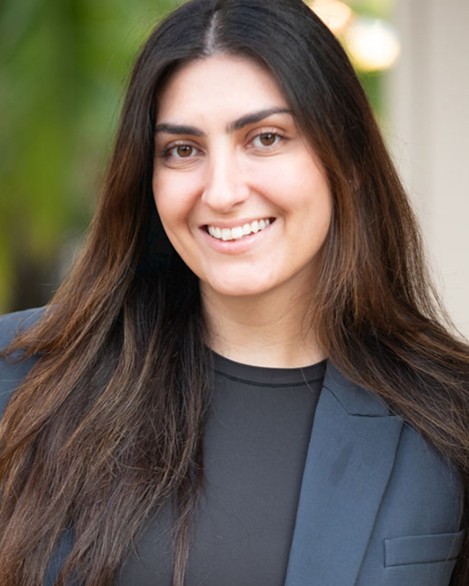
Natalie Manoukian
Law Clerk
Erin Joyce Law, PC.
Natalie Manoukian earned her bachelor's degree in political science from California State University, Northridge in 2020. Currently, Natalie is pursuing her Juris Doctor at Southwestern Law School with the goal of becoming a practicing attorney.

The Client Trust Account Protection Program (CTAPP) has strengthened the State Bar's oversight of attorneys' handling of client trust funds, first through mandatory registration of every IOLTA and non-IOLTA trust account held by California licensees and then through annual compliance reviews of trust account activity for selected licensees. Under Rule 2.6 of the Rules of the State Bar, an attorney selected for review must cooperate with the State Bar, complete a trust account compliance review, provide requested trust account records and fulfill any requirements mandated by a corrective action plan. Rules of State Bar of Cal., rule 2.6. Selected attorneys must also designate a State Bar approved CPA to conduct the review, with the attorney responsible for all expenses. Id.
One of the glaring problems already identified by the State Bar's Division of Attorney Regulation through both the voluntary compliance reviews launched in 2024 and the completed compliance reviews of the selected attorneys in 2025 is that many law firms do not properly reconcile their trust accounts monthly, as required by Rule of Professional Conduct 1.15.
At first, the three-way reconciliation process may seem daunting and inscrutable. But the State Bar offers a variety of online resources to help guide attorneys through the trust account reconciliation process. These resources range from informational courses, frequently asked questions, templates, informational videos, access to a multitude of publications on the subject and an ethics hotline. State Bar of Cal., Client Trust Accounting Resources and Training, State Bar of California. The State Bar also provides attorneys with template reconciliation forms, video guides and video explanations on how to use the provided materials. Id. These templates are optional resources that are available to ensure attorneys learn how to efficiently and effectively maintain their trust accounts and complete the monthly reconciliation process. Id.
Most notably, the State Bar now offers three e-learning courses on trust accounting. State Bar of Cal., E-Learning Portal, State Bar of California. The first program is Practical Trust Account Reconciliation. Id. This is a hands-on program intended to teach the essentials of mandatory trust accounting and how to complete monthly three-way reconciliations. Id. The program will provide attorneys with one hour of participatory MCLE credit in ethics. Id. And if the attorney does not need the MCLE credit, or if the law firm wants its bookkeeper or other staff to take the course, it is free. The State Bar wants to widely disseminate the materials so that law firms and lawyers understand how to handle entrusted funds in compliance with their obligations under Rule 1.15.
Another course is the Fundamentals of Client Trust Accounting. State Bar of California, E-Learning Portal. The course is available to all licensees and covers the rules and statutes governing client trust account duties. Id. Specifically, the course covers rules and statutes governing trust accounting responsibilities and how to properly receive, maintain and account for client funds with step-by-step instruction. Id. This course also carries one hour of participatory MCLE credit in ethics. Id.
The third course is on Disrupting Implicit Bias. State Bar of California, E-Learning Portal. This course was developed to ensure continued compliance with the Rules of the State Bar. Id. It covers different types of bias and how to address unintended bias in the legal system and its overall impact on the legal profession. Id. Participants will receive one hour of participatory MCLE credit in elimination of bias for the bias-reducing strategic subtopic. Id.
Additionally, the State Bar offers the 2025 Ethics Symposium Self-Study courses. State Bar of California, E-Learning Portal. These are a series of self-study MCLE courses from the 2025 Symposium presented by the Committee on Professional Responsibility and Conduct (COPRAC). Id. There are three self-study courses. Completion will provide attorneys with 1.25 hours of participatory MCLE credit in ethics for each course. Id.
The e-learning portal also has a frequently asked questions page for those in need of information. State Bar of Cal., E-Learning Portal: Frequently Asked Questions, State Bar of California. The guide addresses how to access and use the portal and complete the educational courses. It also addresses technical concerns with the program. Id. The FAQ guide categorizes all questions into three groups: General E-Learning Portal FAQs, Troubleshooting FAQs and New Attorney Training Program FAQs. Id. The FAQs serve as a reference tool to aid attorneys with specific compliance questions.
If attorneys find themselves feeling overwhelmed by the available State Bar resources, the Client Trust Accounting self-assessment may be a good starting point to narrow down what each individual attorney and practice needs. State Bar of Cal., Self-Assessment: Client Trust Accounting, State Bar of California. After completing the 12-question self-assessment, attorneys are provided with feedback directly related to their needs and are directed to resources that are tied to their needs. Id. The assessment is eligible for up to one hour of self-study MCLE credit. Id.
The State Bar publishes a Handbook on Client Trust Accounting for California Attorneys. State Bar of Cal., Handbook on Client Trust Accounting for California Attorneys (2024). This handbook is a useful reference for understanding compliance with trust account recordkeeping requirements. Id. The handbook contains relevant rules and concepts pertaining to client trust accounting, instruction on opening and using a client trust account, recordkeeping, reconciliation and various State Bar opinions on the matter. Id.
Ethics opinions by the State Bar and local California bar associations relating to trust accounting are available through the State Bar as an additional resource. State Bar of Cal., Client Trust Accounting Resources and Training, State Bar of California. Reviewing the opinions can provide clearer insight into a variety of concerns related to trust accounting.
For attorneys with questions concerning client trust accounting rules and standards, the State Bar directs them to an Ethics Hotline. State Bar of Cal., Client Trust Accounting Resources and Training. For questions related to CTAPP or IOLTA, a separate contact number and inquiry form are available through the Licensee Records and Compliance Inquiry process. Id.
Overall, the State Bar provides attorneys with a range of resources to help them understand and remain compliant with client trust accounting requirements. State Bar resources such as e-learning courses, the Client Trust Accounting Handbook, ethics opinions, the self-assessment and assistance hotlines are all accessible through the State Bar's website. Attorneys should familiarize themselves with these resources and utilize them to strengthen their understanding of trust accounting and avoid confusion that could lead to an unfortunate contact with the State Bar's disciplinary arm.
Submit your own column for publication to Diana Bosetti
For reprint rights or to order a copy of your photo:
Email
Jeremy_Ellis@dailyjournal.com
for prices.
Direct dial: 213-229-5424
Send a letter to the editor:
Email: letters@dailyjournal.com