


Sep. 18, 2026
Douglas Gilliland brings civil rights focus to mediation
After 35 years as a civil rights litigator, Douglas S. Gilliland uses his courtroom experience to help parties assess risk, overcome adversarial instincts and find common ground.


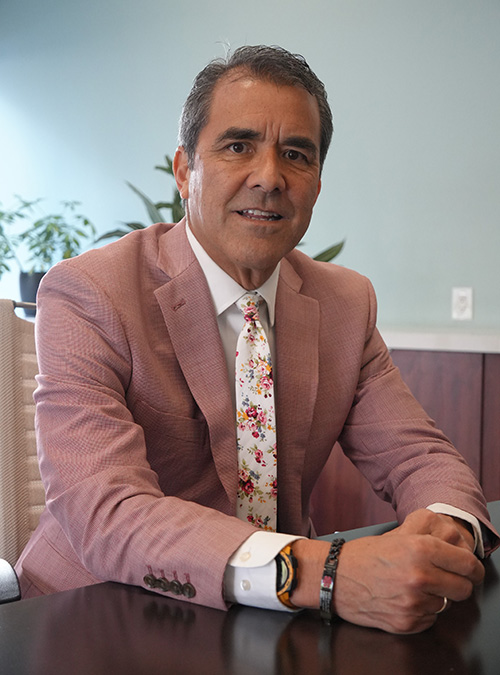
After 35 years as a civil rights litigator, Douglas S. Gilliland discovered that some of his most productive settlement discussions occurred far from a mediation room.
He began resolving cases directly with opposing counsel, sometimes over coffee or breakfast, and found that an informal setting could strip away some of the emotion and adversarial instincts of litigation. The experience eventually prompted Gilliland to study mediation at Harvard Law School, complete advanced mediation training through the American Bar Association and attend the 2025 Mediation Summit in Chicago.
Today, Gilliland, of Gilliland Mediation, volunteers with the Los Angeles County Superior Court's Mediation Volunteer Panel and specializes exclusively in civil rights disputes, including excessive force, false arrest, police misconduct and wrongful death cases.
Gilliland said becoming a neutral required him to rethink how he uses his experience.
"As a mediator, my success comes from enabling discussions that allow each side to modify their own conclusions about settlement without telling them what to do," he said.
Listening is central to that approach, particularly in emotionally charged civil rights disputes.
"If a litigant (and counsel) feel they are not being heard, the process breaks down," Gilliland said, adding that a mediator must continue listening throughout the proceeding rather than simply during the opening discussions.
When parties are far apart, Gilliland focuses their attention on risk rather than fault. In civil rights cases, he said, the composition of a jury can dramatically affect the outcome because jurors often bring strong views about liability. He encourages attorneys to consider that uncertainty rather than rely on what another lawyer obtained in an unrelated case.
His volunteer work has also taught him another skill: "Knowing when to shut-up."
"Anyone can ask a question," Gilliland said. "But not everyone listens to the answer."
Gilliland handles about six volunteer mediations annually and accepts only civil rights cases. He hopes the court's mediation program will eventually evolve toward a model built around such specialization.
For Gilliland, mediation provides a temporary respite from the pressures of litigation.
"The adversarial system can be exhausting," he said. "During mediation we create a bubble that is cloaked with confidentiality in which I can work to bring peace into the case for one day."
For reprint rights or to order a copy of your photo:
Email
Jeremy_Ellis@dailyjournal.com
for prices.
Direct dial: 213-229-5424
Send a letter to the editor:
Email: letters@dailyjournal.com