


Military Law
Oct. 6, 2026
The commander's dilemma
Military readiness can conflict with programs designed to prepare service members for civilian life. This article examines why commanders must defer or deny transition assistance and the need for change.


4th Appellate District, Division 3
Eileen C. Moore
Associate Justice
California Courts of Appeal
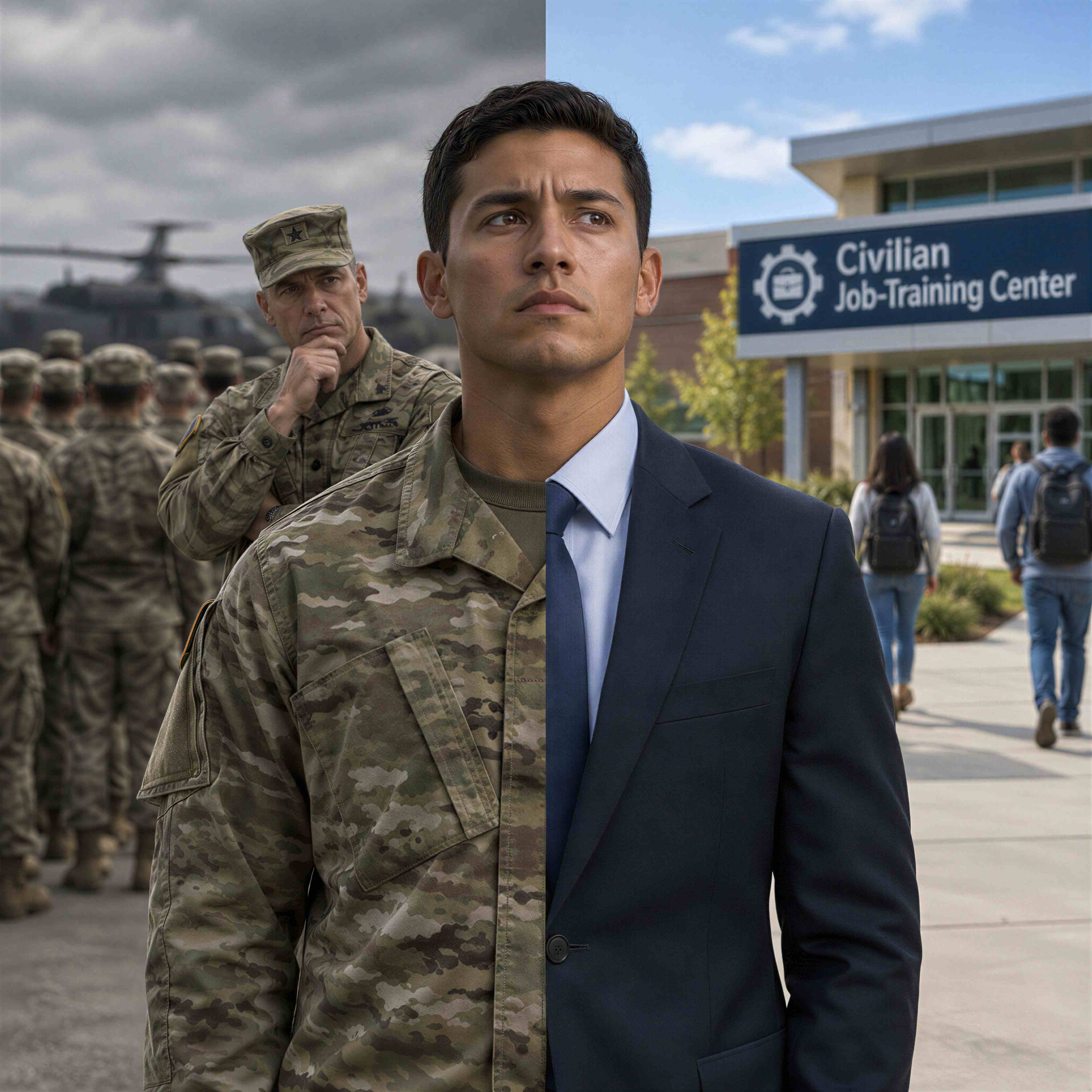
Do you ever wonder why the civilian world bears such a heavy burden with regard to rendering assistance to returning service members? Some come home unprepared and unable to successfully transition back into civilian life. Our courts are regularly called upon to respond to this phenomenon. Here in California alone, there are 48 Veterans Treatment Courts. Most counties also have military diversion courts. All of our family courts have a statutory duty to provide veterans with a list of resources. Family Code § 211.5. And California has its own Department of Veterans Affairs, separate from the federal government's VA. Plus, there are thousands of public and private veteran-related organizations throughout the state.
It sounds like such a good idea that the military should prepare its troops to transition into the civilian world to lessen the need for the non-military public to render so many services to veterans. If the military took a "stitch in time" approach, there would no doubt be a decrease in veteran suicide, homelessness, mental health issues, family problems and involvement in criminal activity.
In fact, there are programs within the military geared toward preparing soldiers to transition back into the civilian world. However, one of the reasons these programs don't always work is that commanders are required to have their troops ready to deploy. That requirement creates a real dilemma for commanders when they are faced with requests for transition training.
This article will attempt to explain why commanders must either defer or deny involvement in the existing programs to assist service members in making smooth transitions to civilian life and explore a need for change.
The Transition Assistance Program
The Transition Assistance Program, TAP, is congressionally mandated. 10 U.S.C. §§ 1141--1153. TAP is geared toward improving pathways to reentry to civilian life. TAP training includes self-assessment, individualized counseling, and tier assignments.
Service members must begin participating in TAP no later than 365 days before separation or retirement, but they may start as early as 24 months beforehand. 10 U.S.C. § 1142.
The commander or designee must sign Form DD-2648, the Service Member Pre-Separation/Transition Counseling and Career Readiness Standards eForm. The DD-2648 is a prerequisite for Form DD-214, the service member's discharge papers.
Despite statutory requirements, a Government Accountability Office report found that 70% of service members did not start TAP more than one year in advance, as required. The report also found that nearly a quarter of the service members who needed maximum transition support did not get that support.
SkillBridge
SkillBridge is a program created by the Department of Defense, DoD, that allows transitioning service members to participate in civilian job training, including internships and apprenticeships during their last 90 days in the military. Since it is not required by statute, it is voluntary and not an entitlement. It needs a commander's approval. Often, a military branch requires completion of the TAP program in order to qualify for SkillBridge. Thus, should TAP training begin late, a service member might not qualify for SkillBridge.
Basically, the SkillBridge program connects troops with over 3,000 authorized public and private organizations. The program is attractive to employers because the military continues to compensate the service member during the training period. Employers are generally required to show a high percentage of hire rates for service members who complete SkillBridge.
Mission readiness is a commander's primary responsibility. Thus, commanders must verify that a service member's absence won't degrade the unit's ability to perform essential tasks. That's difficult for commanders since SkillBridge requires a service member to spend months away from the unit without a replacement.
The heart of the problem
These programs sound good. Right? But this is the military, and commanders have manning requirements.
Units tapped for an upcoming mission are generally required to have 90% of their troops ready and mission capable. That means the composition of the unit must have the right MOS (literally, that means Military Occupational Specialty; but basically means job qualifications), must have the required rank, cannot be away somewhere for training, and must be medically ready to go. Other units that are not expected to be ready to deploy are only required to be substantially ready to deploy; only 80% to 89% of troops in those units need to be ready to go. Still, other military units only have to be marginally ready, with 70% to 79% ready to deploy.
So, when a service member is due for the TAP program or requests the SkillBridge program, the commander is faced with a tough decision. Some of the troops in the unit are detailed for required training. Some have medical problems. Others are on leave due to a family emergency.
Since TAP is required by law, a commander cannot deny a request but can defer it. There is a 90-day rule that requires that the program be completed 90 days prior to separation. That kind of time frame involves cramming course requirements. Also, under some circumstances, a service member may meet TAP qualifications virtually, which doesn't involve the same networking possibilities that in-person interactions offer.
If the commander determines a service member is not ready for civilian life in that the person doesn't have a job or housing or a planned budget, the military has something called a "warm handoff." In that case, the service member is passed off to the VA or the Department of Labor. However, it can take months for those agencies to see a veteran after separation from the military. At that point, the new veteran may already be unemployed, homeless and generally feel hopeless.
As to SkillBridge, a January 2026 article in Register-Guard reported that one private employer received 149 applications from service members, reflecting a strong interest in the program. Of those, only 27 candidates earned command approval.
The DoD gives transition a low priority
The federal government's current allocation of resources exemplifies the lack of emphasis placed on transition. While the DoD budgeted more than $2 billion for recruitment for 2024, just $160 million was dedicated to TAP. Critics of the low priority the DoD gives to transition point to the military's still using its 1940s-era model of recruit and replace that worked well when we had a draft. The model depends on a high turnover of recruits. But with an all-volunteer military, high turnover is a trend from the past when the high costs of recruiting and marketing were not as much a part of the military budget.
Suggested solutions to solve the commander's dilemma
The Veterans Justice Commission, part of the Council on Criminal Justice, reports to Congress. The commission has only 15 members and is headed by former Defense Secretary Chuck Hagel. Another former Defense Secretary, Leon Panetta, is also a member, as am I. The commission recommends the DoD make transition a core mission. It states that presently "supporting transition conflicts with commanders' primary and most essential responsibility--maintaining mission readiness."
As a practical matter, the Veterans Justice Commission points out that when service members experience a seamless transition into civilian life, they are more likely to speak positively about their military experience. By contrast, the dearth of effective transition programs results in veterans being less inclined to encourage others to enlist.
Specifically, the Veterans Justice Commission recommends the DoD establish Joint Transition Centers where transitioning service members can access therapy, housing support, and employment services in one location. The programs would be similar to what SkillBridge presently offers, but command approval would not be required.
On April 15, 2026, the director of the Veterans Justice Commission, retired Army Brig. Gen. David MacEwen, testified before the U.S. Senate's Committee on Veterans Affairs. General MacEwen told the senators: "It is nothing short of tragic that those who once wore the cloth of our nation now wear the cloth of incarceration. We sent them. We used them. Now we must do better and stand by them, ensuring they have the support to return to their families, communities, and country."
The Veterans Justice Commission endorses the identification of individuals at high risk for post-service issues like homelessness, substance abuse or criminal behavior about 180 days before separation from the military. That way, the military would move away from its present military justice model for performance and disciplinary issues. That present model involves less-than-honorable or dishonorable discharges that often result in no services from the VA after discharge to those who most need them.
With regard to those undergoing involuntary separation from the military for misconduct or medical reasons, the Veterans Justice Commission suggests they be transferred to a transition center 90 days before discharge.
Conclusion
States, cities and the public, in general, bear the costs associated with poorly managed transitions from the military into the civilian world. The 2022 annual report of the VA states that inadequate transition support has immediate consequences for service members such as high rates of suicide in the first year following transition.
Long-term economic consequences of inadequate transition were reported by Military Times. An estimated $26.4 billion cumulative price tag just for violent crime results from post-9/11 combat exposure. One study found that in 2018, lack of successful transition of returning service members cost the civilian world about $190 billion in addition to the $100 million spent annually by the military for unemployment insurance benefits. Not included in those numbers are the costs of community support that provides housing and food for former military families.
The suggestions of the Veterans Justice Commission involving increased attention and services for service members before they separate from the military make a lot of sense. Congress could make those changes happen.
Submit your own column for publication to Diana Bosetti
For reprint rights or to order a copy of your photo:
Email
Jeremy_Ellis@dailyjournal.com
for prices.
Direct dial: 213-229-5424
Send a letter to the editor:
Email: letters@dailyjournal.com