


Oct. 16, 2026
Hey judges: Civility is a two-way street
Any serious discussion about civility must include an examination of how judges, cloaked with the mantle of public trust, manage their responsibilities and act toward lawyers and litigants.


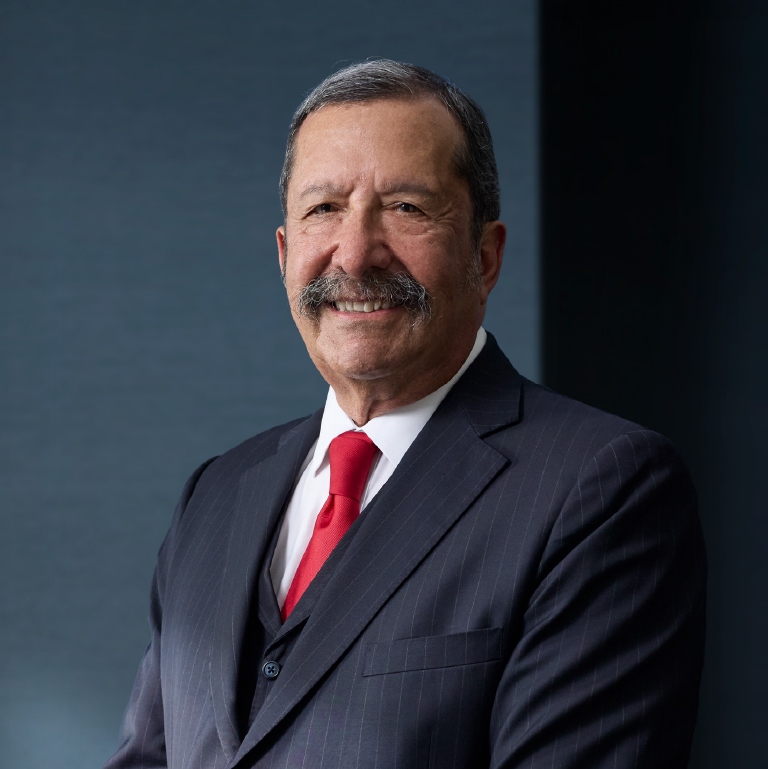
Socrates P. Manoukian
Judge (ret.)
Neutral, Signature Resolution
Southwestern University Law School, 1977

Civility between lawyers, professional responsibility and anti-bias training have been an aspirational lodestar for both lawyers and judges. Bench and bar programs have repeatedly covered these topics, and legal organizations have created their own codes of professionalism, such as those adopted by the Santa Clara County Bar Association in 1992 and incorporated into that county's Local Rules of Court.
While anti-bias training and civility programs are important, they won't address the underlying problem unless we finally acknowledge one of its key drivers. If there really is a breakdown in civility in the legal profession, the problem begins and ends with the judicial branch. Any serious discussion about civility must include an examination of how judges, cloaked with the mantle of public trust, manage their responsibilities and act toward lawyers and litigants.
Apart from reports by the Commission on Judicial Performance concerning extreme cases of errant judges, there does not appear to be the same level of discussion about judicial civility as there is about civility among lawyers. Yet judges occupy a unique position, entrusted with people's lives and fortunes. They should be regularly reminded that they work for the public and not the other way around.
Cases now take longer
It's a bedrock principle of the law that "justice delayed is justice denied." But today's cases are taking substantially longer to resolve than in years past. Some might argue that judges aren't working as hard as they once did; others will blame lawyers for the slowdown in litigation. There may be truth to both views, but it's also true that funding for courts has been cut back at the same time that cases have become more complicated due to new legislation and appellate decisions.
The Trial Court Delay Reduction Act (Government Code Section 68600 et seq.) was enacted in 1986 as a pilot project and formally applied statewide, effective July 1, 1992. The TCDRA drastically altered the management of civil cases in California. The California Judicial Council was directed by the Legislature to promulgate "standards of timely disposition" of civil and criminal actions. (Government Code Section 68603, subd. (a).) In establishing these standards, the Council was to be "... guided by the principles that litigation, from commencement to resolution, should require only that time reasonably necessary for pleadings, discovery, preparation, and court events, and that any additional elapsed time is delay and should be eliminated."
Following this mandate, the Council promulgated California Standards of Judicial Administration, § 2.1 et seq., setting time standards for resolving cases. Under Rule of Court 3.714, general civil cases other than a small claims or unlawful detainer are to be resolved as follows: 75% within 12 months; 85% within 18 months; and 100% within 24 months. Limited civil cases are to be resolved as follows: 90% within 12 months; 98% within 18 months; and 100% within 24 months.
This isn't happening. Many civil cases take years to resolve. Some counties report that it may take up to three years to obtain a trial date in a family law case. The Council's 2026 annual Court Statistics Report shows statewide caseload trends for the 10-year period from 2015-16 through 2024-25 that fall woefully short of the prescribed time standards. To reduce delays, judges and local bar groups should meet regularly to determine if there are more efficient ways of combining pending related cases from different departments in front of a single judge.
Cases should rarely be continued
Judges regularly continue cases before them, failing to recognize the steep costs litigants and others pay whenever a case is continued. Before issuing continuances, judges should bear three things in mind.
First, delays in case resolution are both expensive and nerve-wracking for the parties. Each time a case is continued, lawyers must explain to their nervous clients that their matters will take longer and cost more to resolve. The unemployed plaintiff will wait longer for recovery. The personal injury plaintiff will continue stressing about medical bills. The civil defendant will have a cloud of uncertainty hanging over their future. The criminal defendant's quest for exoneration will be delayed. The family law litigant will wait longer to "move on to the next life."
Second, it is a basic proposition of calendar management that trial continuances are disfavored and should only be granted on an affirmative showing of good cause. (California Rules of Court, Rule 3.1332(c); Penal Code Section 1050.) Continuances should not be granted unless such a showing is made.
Third, open courtrooms settle cases. Judges should never underestimate the effect of saying, "Counsel, your request for a continuance is denied. Call your first witness."
All cases should be treated with courtesy
The wise Socrates (what a name!) said the following: "Four things belong to a judge: to hear courteously, to answer wisely, to consider soberly, and to decide impartially." (as quoted in Etzel v. Rosenbloom (1948) 83 Cal.App.2d 758, 765.)
The great Judge Learned Hand set a high standard for judicial civility, professionalism and judging without bias: "Justice does not depend upon legal dialectics so much as upon the atmosphere of the courtroom, and that in the end depends primarily upon the judge." (Brown v. Walter, 69 F.2d 798, 800 (2d Cir. 1933).)
Legal commentators have long observed that the conduct of judges during trials may subtly affect jury decision-making. (See, e.g., Judge's Nonverbal Behavior in Jury Trials: A Threat to Judicial Impartiality (61 Virginia. L. Rev. 1266 (1975).) Some commentators even try to predict outcomes in bench trials based on the behavior of the judge. (See Calibrating the Scales Of Justice: Studying Judges' Behavior in Bench Trials (68 Indiana Law Journal (Fall 1993).)
In Love v. Wolf (1964) 226 Cal.App.2nd 378, a jury verdict for the plaintiff was reversed after the Court of Appeal found 60 instances of flagrant misconduct by plaintiff's counsel. While observing that "[a]ggressive advocacy is not only proper but desirable," the court noted that "[a]n able, highly respected, jurist of many years' experience and a well-earned reputation for courtroom control presided at this trial. Loss of such control in this case is unexplained and to us very puzzling."
In Etzel v. Rosenbloom (supra), a verdict for the plaintiff was reversed when the Court of Appeal found that the remarks of the trial judge constituted prejudicial misconduct. These included comments that the defendant was not telling the truth, that the defendant's car struck the plaintiff and that defense counsel was trying to keep the facts from being presented to the jury. The appellate court concluded that "[T]he trial of a lawsuit is a serious matter, and the courtroom is not the forum in which the buffoon should ascend the bench to display his wares."
All cases are important
Some judges refuse to handle certain types of cases. Many won't take unlawful detainers or small claims appeals. Others will brag that "I try cases only when the coroner is a witness" or--when given a family law case--"I do not adjudicate pots and pans" or "I don't handle kiddy law cases."
All judges should remember the work ethic of the Hon. Edward Weinfeld, who served as a U.S. district judge in the Southern District of New York from 1950 until his death in 1988. Judge Weinfeld, who worked 12-hour days and did his own research, gained a reputation as a dedicated jurist whose decisions were rarely reversed. He oversaw many notable trials of public significance but maintained that every case was important to the parties. He dealt with each case in the best way he could, believing that no litigant deserved second-class treatment, regardless of how small the claim or familiar the crime.
Case interruptions should be justified
Judges are expected to be present and attentive when a case is before them, but there are times when a judge's absence may be excused. When a judge interrupted a preliminary examination in a murder case to attend a one-day Judicial Council meeting, the California Supreme Court held that the proper administration of justice may require judges to take part in activities and projects away from court responsibilities. (Stroud v. Superior Court (2000) 23 Cal.4th 952.)
"[I]t is well settled that postponements or interruptions arising from the laziness or indifference of either counsel, or from chronic or routine court congestion caused by improper court administration or by the state's failure to provide the judges and facilities necessary to meet the foreseeable caseload, is no excuse for infringing an individual defendant's rights to expeditious treatment."
"On the other hand, scheduling conflicts arising from " 'exceptional circumstances,' i.e., 'unique [and] nonrecurring events,' may sometimes justify particular delays." (citing People v. Johnson (1980) 26 Cal. 3d 557, at p. 571; Rhinehart v. Municipal Court (1984) 35 Cal. 3d 772, at p. 782.)
The court concluded that "the determination whether delays caused by judicial schedule conflicts were abuses of discretion must proceed case by case, applying principles of common sense to the totality of circumstances."
Judges who take 20 days a year to attend noncourt functions and up to 30 days of vacation time--as many as 50 days a year--for matters other than managing court calendars are abusing their positions. The public's business should come first.
Conclusion
In Gregori v. Bank of America (1989) 207 Cal.App.3d 291, Justice Anthony Kline quoted the Bard on civility between litigants: "As Shakespeare observed, it is not uncommon for legal adversaries to 'strive mightily, but eat and drink as friends.'" (The Taming of the Shrew, Act I, scene ii.)
Having only recently retired from the bench, I know that civility still shows up in the courtroom. I know that most judges still remember that they are "appointed, not anointed." I also know that, even though they understand that mediation can alleviate court congestion, judges have legitimate concerns about a two-tier "Rich Court, Poor Court" justice system.
Providing alternative means of resolving disputes is a critical safety valve for the underfunded and overburdened court system, but all litigants deserve the ability to bring their cases into a courtroom and have them heard by thoughtful, caring and considerate judges.
Submit your own column for publication to Diana Bosetti
For reprint rights or to order a copy of your photo:
Email
Jeremy_Ellis@dailyjournal.com
for prices.
Direct dial: 213-229-5424
Send a letter to the editor:
Email: letters@dailyjournal.com