


Oct. 16, 2026
Scott's sanctions opinion warns lawyers they are 'not mere mouthpieces'
Justice Nathan R. Scott of the 4th District, Division 3, who co-chairs the Orange County Bar Association's civility task force, sanctioned a lawyer $25,000 for baseless accusations against a trial judge. He seeks retention Nov. 3.


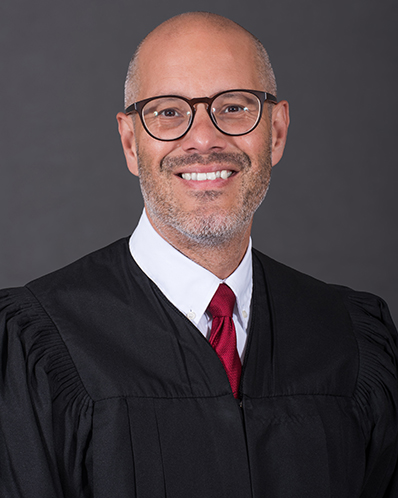
An advertiser can trumpet a product without disclosing its flaws, and a speechwriter can promise what a candidate cannot deliver. "The law is not one of those professions," Justice Nathan R. Scott of the 4th District Court of Appeal wrote in January, sanctioning an attorney $25,000 for accusing a family law judge of bias and conspiracy.
"Lawyers are not mere mouthpieces for clients," Scott wrote for a unanimous Division 3 panel in N.D. v. Superior Court (2026). "At times, the only correct professional judgment is to tell the client, 'no.'"
Attorney T. Matthew Phillips sought reassignment of his client's disqualification motion. He offered no record supporting allegations that the judge "actively retaliates" against his client and made a hearing "magically disappear," and that some orders were "fake." Phillips largely conceded the accusations lacked record support but said he and his client "earnestly believe" them.
That was not enough, Scott wrote. "Dissatisfaction with a ruling, however deeply felt, is not itself evidence of judicial misconduct." Too many lawyers, he added, "mistake the need for zealous advocacy with a 'the customer is always right' policy." The court referred the matter to the State Bar.
Since 2023, Scott has co-chaired the Orange County Bar Association's Civility Task Force. As a trial judge, he quoted the association's civility guidelines in every tentative ruling.
Gov. Gavin Newsom named Scott to the appellate court in November 2024. He seeks retention for the remaining eight years of his predecessor's term on Nov. 3.
Scott has also examined the law's unexpected meanings for familiar words.
A mother's handwritten 2006 will left everything to one daughter and "Nothing and Nothing" to her son. In 2018, she signed a notarized revocation prepared by her son. A trial judge ruled the document had "canceled" the will.
Scott reversed in Estate of Boyajian (2025). "One might cancel a subscription online or by phone call," he wrote. "But back in the Gilded Age, our high court gave 'cancel' a narrow, hyper technical sense." That interpretation still requires marking the will itself, and a stand-alone revocation without a property disposition is not a new will. The rule, Scott acknowledged, is "an ancient concept, perhaps in need of revisiting."
Before becoming a judge, Scott had never tried a case. A 1999 Harvard Law graduate, he worked at Kirkland & Ellis LLP and Cox, Castle & Nicholson LLP.
"I still didn't try any cases," he told the Daily Journal in 2013. "I got experience getting ready for trial."
From 2005 to 2012, he was a research attorney for Justice Raymond J. Ikola on the court he now serves. In a letter supporting his nomination, Ikola stated that Scott "writes with a natural economy of language," explaining complex legal analysis in prose "easily understood by those who must digest his analysis."
Gov. Jerry Brown appointed Scott to the Orange County Superior Court in 2012. Asked about his preparation for the bench, Scott pointed to a year spent as a bank teller after graduating summa cum laude from UCLA. The job taught him to convey decisions to upset members of the public and to take "the complicated stuff and [make] it more straightforward," he said.
In a motorcycle accident trial involving sound evidence, Scott seated a hearing-impaired juror. Experts recreated the motorcycle's sound at different speeds, and lawyers questioned the juror with a sign language interpreter before agreeing she could evaluate the evidence.
"It is so important, again, to have these real Californians in the courtroom, sitting as jurors, so that the entire community is represented," Scott told the appointments commission.
At his confirmation hearing, Chief Justice Patricia Guerrero noted that several lawyers who had lost cases before Scott said they agreed with his rulings anyway.
Decisions must be not just right, Scott replied, but "articulated in the right kind of way, so that the right messages are sent." He added, "We have to be careful with our words."
Laurinda Keys
laurinda_keys@dailyjournal.com
For reprint rights or to order a copy of your photo:
Email
Jeremy_Ellis@dailyjournal.com
for prices.
Direct dial: 213-229-5424
Send a letter to the editor:
Email: letters@dailyjournal.com