


Law Practice
Oct. 21, 2026
Big Law, small opportunities? The case for plaintiff-side practice
Plaintiff-side personal injury practice offers lawyers transitioning from Big Law more opportunities to gain hands-on litigation and trial experience, exercise independent judgment and make a direct, meaningful difference in clients' lives.



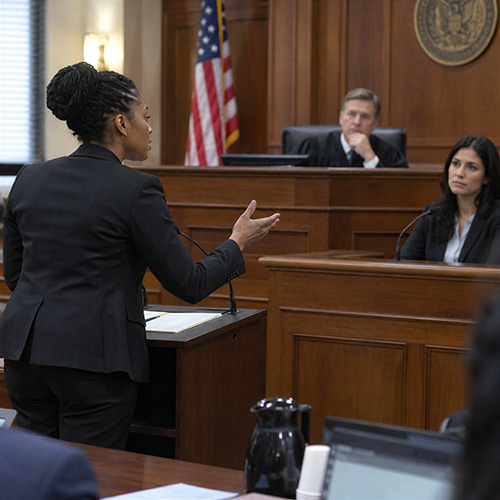
Years ago, a junior associate at a large firm asked to take a deposition. The matter was pro bono. The witness was peripheral. Nothing that could be said in that deposition would have changed the outcome for the client, which was the point: it was the rare chance to learn by doing with no one's interests at risk. The partner and senior associate never responded. The deposition went to someone else. The associate eventually went somewhere else, too.
That story is not unusual, and it is not an indictment of large firms. The firm was protecting a client, which is what firms are supposed to do. But the episode captures a truth that law students and young lawyers rarely hear: the most prestigious path in the profession is not always the one that lets a lawyer practice law the most or in a meaningful manner.
The case for "Big Law" is real. Disputes between companies with billions at stake teach a junior lawyer that every claim needs a source, that an argument must survive the strongest response, and that deep preparation is not optional. Those habits become part of a lawyer's character and go wherever the lawyer goes.
But the structure that produces those habits also rations the experience that turns them into judgment. On a matter large enough to justify a team of 12 attorneys, the decisions that matter are made by one or two people, and the associates who drafted the brief may never argue it. Depositions are taken by the partner. Trials are rare, and when they happen, the junior lawyer's seat is in the gallery. The work is excellent, but opportunities for younger lawyers to gain meaningful courtroom experience are scarce.
The frequency problem
Plaintiff-side personal injury practice inverts that ratio. The matters are smaller in dollars and larger in volume, and each case needs someone to decide what to investigate, which experts to retain, when to push and when to settle. A lawyer two years into a plaintiff-side practice may have taken more depositions, argued more motions and sat through more mediations than a seventh-year associate at a large firm. The reps come weekly, not yearly.
That frequency changes how skill develops. The commercial litigator who learned to reconstruct a transaction from a million documents now reconstructs a collision from a dashcam clip, a maintenance log and three witnesses, and does it again next month on different facts. The method is the same. The muscle gets used far more often.
The learning does not stop. Medical causation, liability disputes and proof of future damages are their own disciplines, and a lawyer who has not mastered them owes the client the honesty to study or to bring in someone who has. But a lawyer trained to absorb an unfamiliar industry in a month already knows how to do that. The subject changes. The capacity to learn it does not.
It also makes room for creativity. A case with a modest budget and a difficult liability picture cannot be won by outspending the other side. It is won by finding the angle: the inspection record nobody requested, the corporate witness who knows more than the designated one, the demonstrative that makes a jury understand what a torn rotator cuff means to a person who uses their body for a living. Big Law teaches thoroughness. Plaintiff practice rewards ingenuity and gives a lawyer enough at-bats to develop it.
You will also get as much exposure to the courtroom as your heart desires. Trial experience, which large firms discuss in recruiting materials and seldom deliver, is simply part of the job. Defense counsel and insurers know which plaintiff's lawyers will try a case. That knowledge shapes every negotiation before it.
The impact problem
The other half of the argument is about who the work is for, and I am not here to disparage corporate litigation at the highest levels.
A corporate client in a nine-figure dispute will be fine either way. The outcome matters to balance sheets and to careers, but the company will exist next year regardless. The client in a personal injury case is a person whose life has been reorganized around something that happened in a few seconds, and who may never again be able to do the job, lift the child or sleep through the night. For that person, the result is not a line item. It is whether there is care at home, whether the mortgage survives, whether the future is manageable. Whether there is hope.
A lawyer who can bring Big Law discipline to that client offers something rare: the thoroughness institutional parties purchase by the hour, sometimes for thousands of dollars an hour, directed at someone who could never afford it. The impact is immediate, personal and visible in a way that the largest commercial case rarely is.
These clients are rarely polished. They may struggle to describe their limitations, return to work before they should, or have good days an adjuster will treat as proof of nothing wrong. Their lawyer's job is to present their lives faithfully, without asking them to perform a role.
None of this excuses the lawyer from the obligations that make the work worth doing. The preexisting condition gets investigated rather than hidden. The expert gets the bad records with the good ones. The client, not the firm, decides whether to settle, and gets a candid account of the risks before deciding. A substantial demand is not improper because it is substantial, but it has to be true. Creativity in service of the facts is advocacy. Creativity in place of them is something else.
The road less traveled
Our profession tends to describe a career in order of prestige, with the large firm at the top and everything else as a departure from it. That framing undersells the alternatives. For a lawyer who wants to decide things, try things and see the outcomes of the work in a human life, the path out of Big Law is not a step down. It may be the first time the training gets used at full strength.
The associate who wanted to take the deposition of no consequence eventually took hundreds of consequential ones and changed hundreds of lives for the better. That is not a story about leaving. It is a story about finally getting to practice.
Submit your own column for publication to Diana Bosetti
For reprint rights or to order a copy of your photo:
Email
Jeremy_Ellis@dailyjournal.com
for prices.
Direct dial: 213-229-5424
Send a letter to the editor:
Email: letters@dailyjournal.com