


Nov. 6, 2026
Areg Sarkissian looks beyond winning to find practical resolutions
Civil litigator Areg A. Sarkissian brings 15 years of experience to the mediation table, where he emphasizes listening, candor and helping parties weigh the risks of continuing their fight.


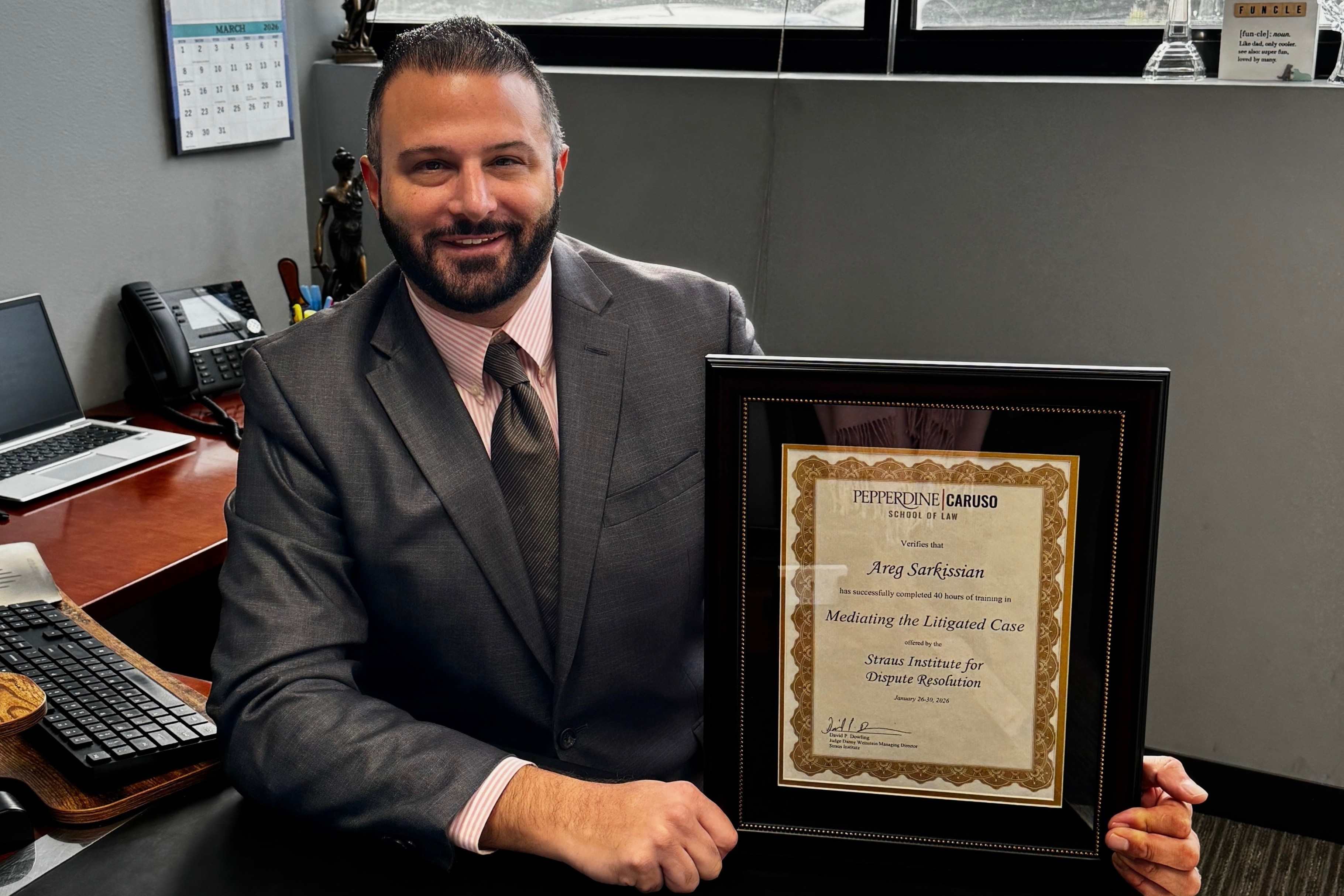
After 15 years as a civil litigator, Areg A. Sarkissian has learned that the same set of facts can look very different depending on where someone is sitting.
That lesson is central to his approach as a mediator.
"My experience as an advocate taught me that every case looks different depending on which side of the table you are sitting on," Sarkissian said. "As a mediator, I try to understand what is driving each party's position before focusing on settlement."
Sarkissian, of Sarkissian Law Group, practices civil litigation with an emphasis on real estate, business and contract disputes. He recently joined the Los Angeles County Superior Court's Mediation Volunteer Panel.
After years representing clients, Sarkissian said he wanted to put that experience to work differently. He had seen firsthand the time, expense and stress litigation can impose and was attracted to mediation because it allows parties to retain control over the outcome.
"Mediation gives parties an opportunity to resolve their disputes on their own terms rather than leaving the outcome entirely in the hands of the court," he said.
Sarkissian said building trust begins with listening.
He wants parties to know they have had a genuine opportunity to explain their positions and concerns. But listening does not preclude candor.
"Parties may not always agree with what I tell them, but they should know that I am being fair, respectful and equally candid with both sides," he said.
One of the greatest challenges, Sarkissian said, arises when litigants become so focused on proving they are right that they lose sight of whether continued litigation makes practical sense.
"Litigation naturally creates an adversarial mindset," he said. "Part of the mediator's job is to help the parties separate the desire to win from the question of what outcome actually makes sense for them."
When parties begin far apart, Sarkissian tries not to become distracted by their opening numbers. Instead, he examines what is driving their positions, identifies the risks of continued litigation and searches for smaller areas of agreement.
"Sometimes progress comes gradually, and patience is an important part of the process," he said.
Serving as a neutral has also reinforced for Sarkissian the uncertainty inherent in litigation. There are often several reasonable interpretations of the same evidence, he said, and the concerns driving a dispute are not always legal or financial.
For Sarkissian, that makes mediation fundamentally an exercise in problem-solving.
"Every dispute involves different personalities, priorities and obstacles, so there is no single approach that works in every mediation," he said.
His advice to new mediators reflects that philosophy: "Listen more than you speak, especially at the beginning."
For reprint rights or to order a copy of your photo:
Email
Jeremy_Ellis@dailyjournal.com
for prices.
Direct dial: 213-229-5424
Send a letter to the editor:
Email: letters@dailyjournal.com